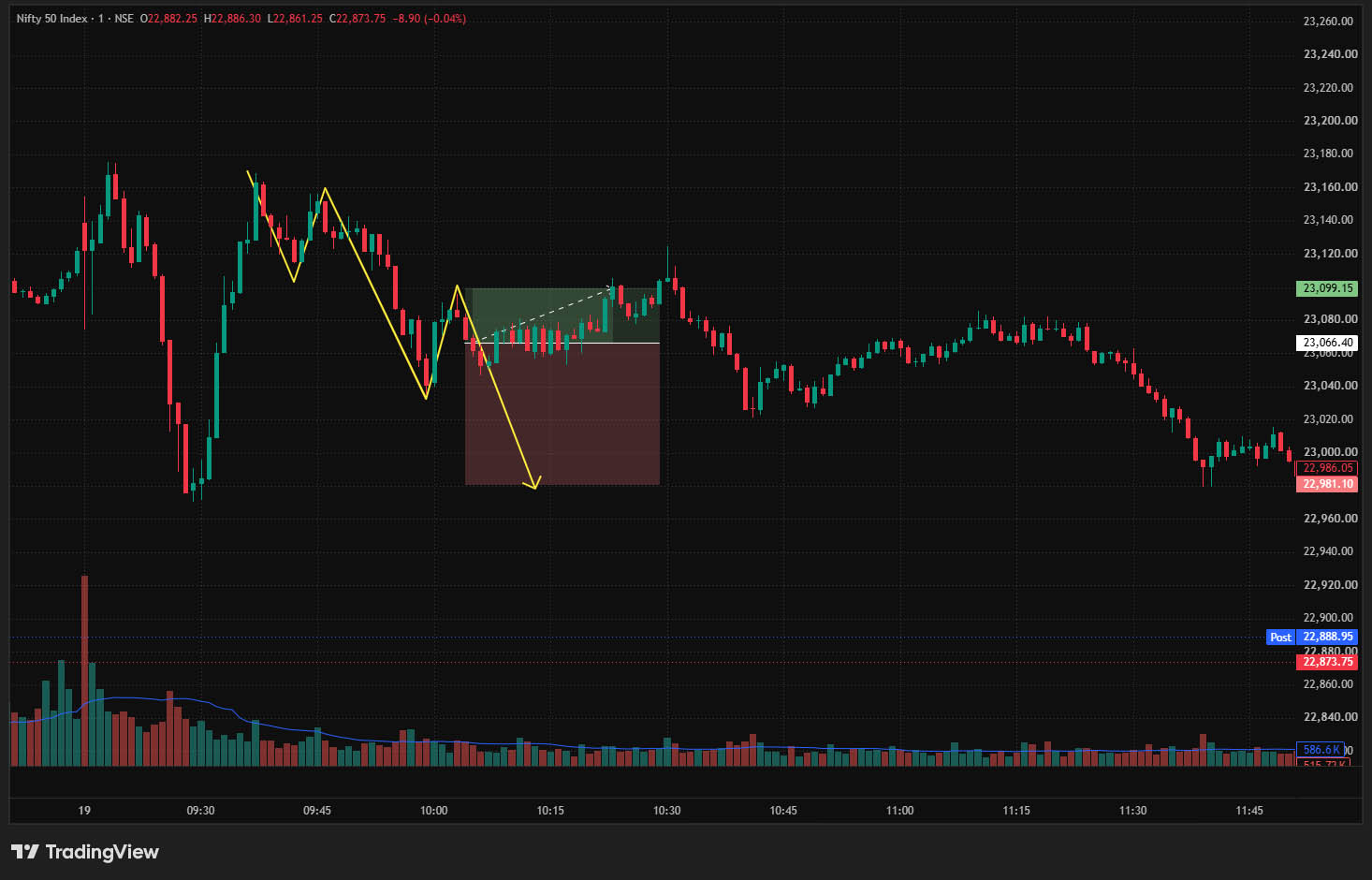
I need Help Analysing My Trade Entry — Stop-Loss Hit Before Target
Today, I entered a Put Option (PE) trade expecting the market to move downward. However, the market reversed, hit my stop-loss (SL), and then reversed again and moved in my original direction to reach my target.
I want to understand where I went wrong in my analysis or entry.
My questions:
Did I enter too early before bearish confirmation?
Did I mistake a liquidity sweep or market retracement for a genuine bearish move?
Was my entry incorrect, or was my stop-loss placed too close to the market structure?
How can I distinguish a genuine trend reversal from a temporary pullback that hits my SL before continuing in the expected direction?
My objective: I want to improve my entry timing and stop-loss placement rather than simply increase my SL distance.
Experienced traders, what would you analyse first in this situation? If possible, please explain using market structure and price action.
Try spreads… Setting a stoploss in this whipsaw mkt may be unwise.. go with major trend. If at all u want to trade directional with SL, then use some good volatility indicator like ATR. for selling options I rely on ADX and never enter the trade if the major trends ATR is above 25 and rising. U may even do the most simple setup of daily or previous day /week high low break for entry. High / Lows of higher timeframe are generally sacrosanct as entire trading world hasn’t been able to breach it till it’s broken. All the best
IMO if you have Trading account size less than 10L or Full time market experience Less than 3 years, better stay away from options.
Remember, No entry is perfect entry but how you handle trade post entry makes all difference. There are many Jane street types already actively working.
Note: If you are in options just to make quick profits , you may join 91% loss making retail traders club sooner.
First and foremost don’t trade on 1 Min TF that too in indexes at least start working on 5 Min. and from the chart its visible that you have supply at 23160 around where the price rejected Twice and if you are scalper you should take some 15 points and have to exit or else your entry should be 23130 to 23160 area and your SL should above 23160 as per the structure and you tried entering on 1Min TF Pull back which i dont think so a good entry unless for quick scalps because you are chasing the market which is already moved 50 percent either your R:R should support around 0Points stop or else just observe let the price moves and journal it for future entries
From what you describe, the direction was right but the stop sat inside normal noise. When price pokes just past an obvious swing and then reverses, that’s often stops being taken out before the real move, and a stop placed just beyond the obvious level is exactly where that sweep tends to go.
Two things that helped me:
Wait for a candle close back through the level you’re trading instead of entering on the first touch.
Put the stop beyond the swing that would actually prove the idea wrong, not a fixed number of points. A wider stop means a smaller quantity, so cut lots until the rupee risk stays the same as before.
If you’re trading options, plan the stop on the NIFTY chart itself rather than on the premium, since the premium also moves with IV and time decay. Logging the next 20 such trades with where the stop was versus the nearest swing will show quickly whether the stops are too tight or the entries are too early.