When it comes to ETFs, you need to observe 2 numbers - Price and the NAV. What you see on the trading platforms is the price the market is willing to pay, not the price of the underlying value. The AMC’s, at the end of the day disclose the NAV, which more or less represents the true value of the underlying.
Now, coming to your original question, the purpose of an ETF or an Index fund is to mimic the returns of the index. Not to underperform it or overperform it, but track the returns of the underlying index as closely as possible.
But in India, we’ve seen a few instances where Index funds had overperformed the index. This can be attributed to the poor management of the fund. You might ask, what’s wrong with a higher return? The mandate of an index fund is to mimic the index and if it overperforms then, that’s a red light and investors are better off staying away from the fund.
Why are the returns of 2 ETFs, tracking the same index different?
Because of the tracking error.
The Fund Manager would not be able to invest the entire corpus exactly in the same proportion as in the underlying index due to certain factors such as the fees and expenses of the Scheme, corporate actions, cash balance, changes to the underlying index and regulatory restrictions, which may result in Tracking Error with the underlying index. The Scheme’s returns may therefore deviate from those of the underlying index.
“Tracking Error” is defined as the standard deviation of the difference between daily returns of the underlying index and the NAV of the Scheme. The Fund Manager would monitor the Tracking Error of the Scheme on an ongoing basis and would seek to minimize the Tracking Error to the maximum extent possible. There can be no assurance or guarantee that the Scheme will achieve any particular level of Tracking Error relative to performance of the underlying Index. - NIFTY BeES SID
This is the reason why the reason of the funds differs from the Index in NAV terms.
Why does it differ in prices?
The simplest answer is supply, demand, liquidity. Take a look at this chart. It shows the prices of the some top ETFs( in particular order) and the performance against the Index.
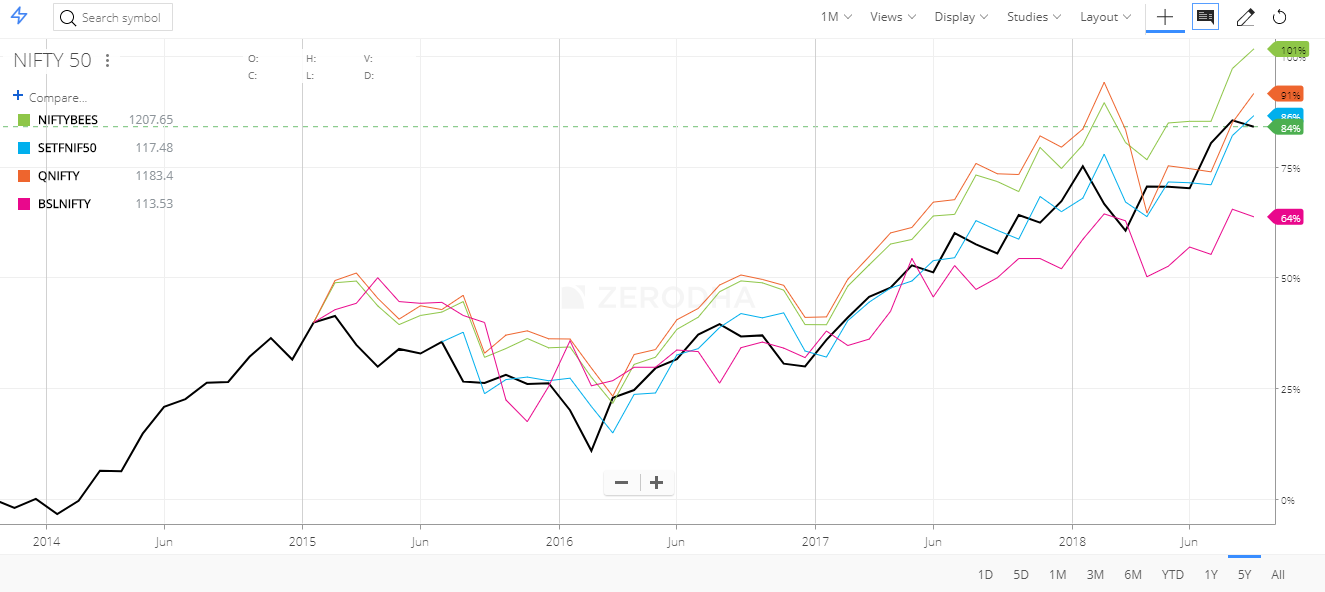
In an ideal world, the price and the NAV should closely track the index. But in India passive products aren’t exactly popular. They make up just about 4% of the AUM of 25 lakh crores vs that of 35% in the US
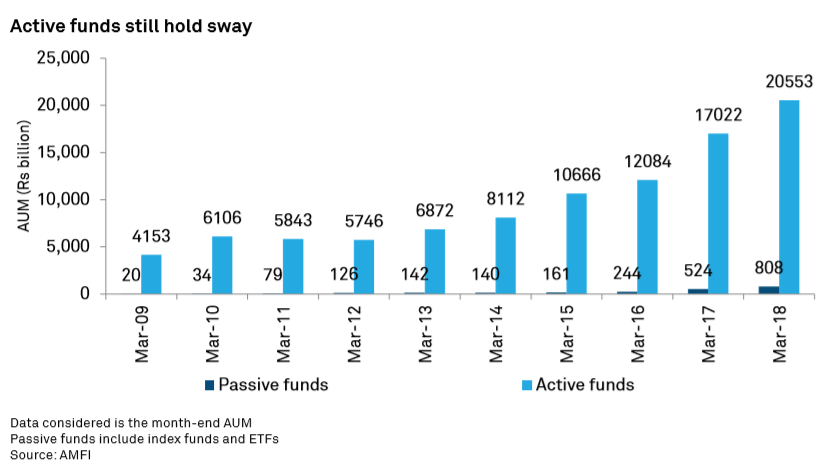
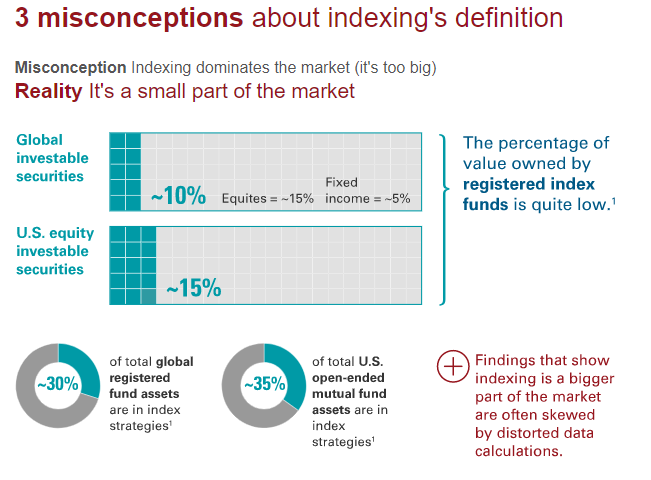
For example, let’s compare the top ETFs by AUM that track the S&P 500 and their price movement vs the index.
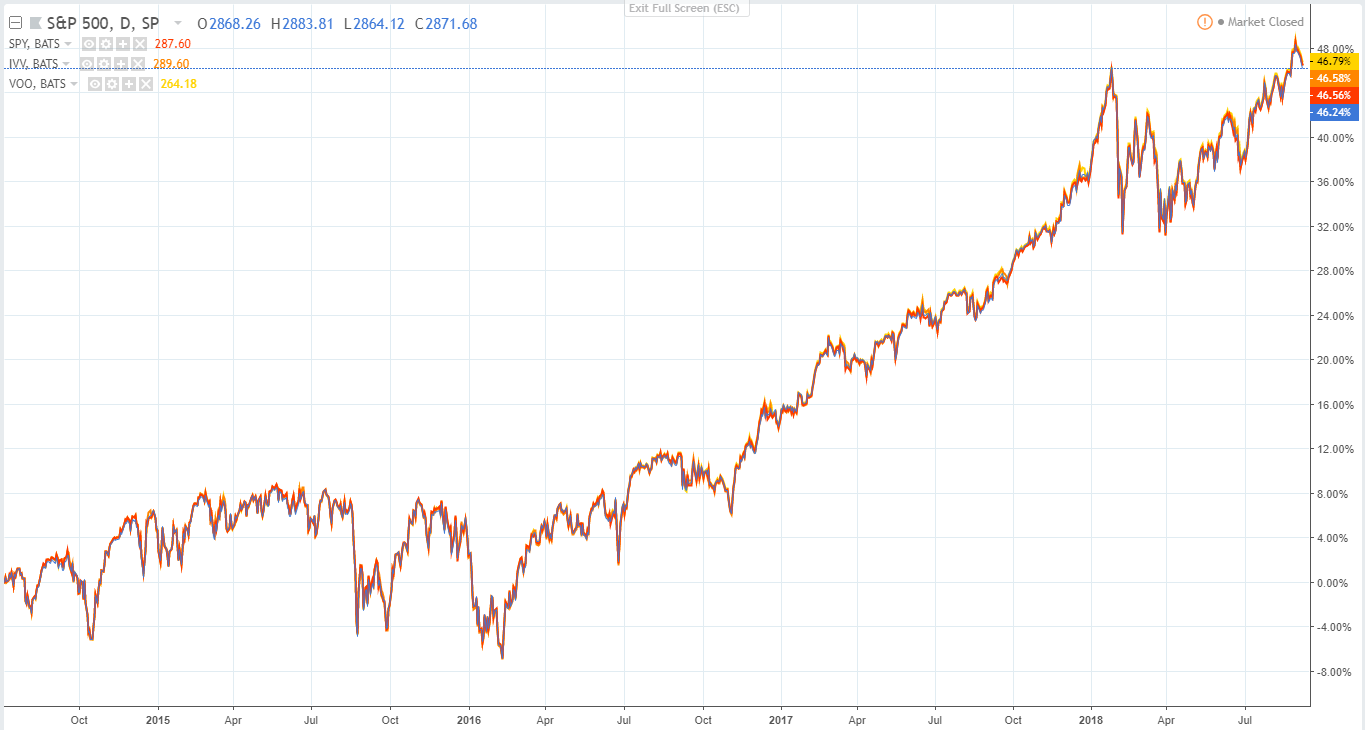
This chart shows the comparision of SPDR S&P 500 ETF Trust, iShares Core S&P 500 ETF and Vanguard S&P 500 ETF vs the S&P 500. As you can see, all three closely hug the index. By the way these 3 ETFs have over $530 billion in assets.
In India all the Nifty ETFs put together won’t cross the Rs 50,000 crore mark. Out of this SBI Nifty 50 ETF alone account for Rs 38,800 crores.
Hope this explains your query