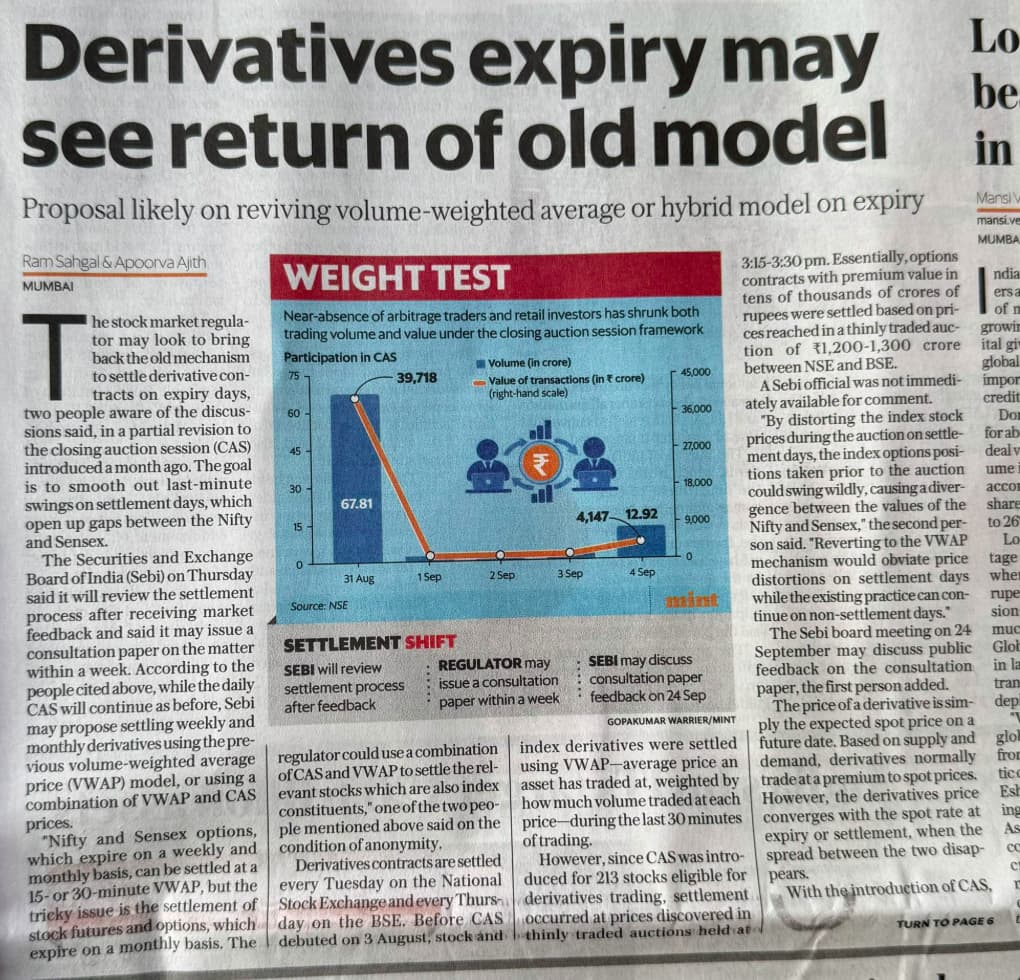
SEBI is monitoring all transactions closely, guess they may consider this as manipulation, check this case.
In that case, the orders were cancelled and apparently were never intended to be executed. The purpose was allegedly to influence option prices and profit from that movement.
In the cases I mentioned, however, the sell orders are genuine and are actually intended to be executed. They are not fake or spoof orders.
If Case 1 is considered manipulation, I can understand the reasoning.
But Case 2 seems different and, to me, appears fair. Otherwise, how is a genuine seller supposed to participate in the CAS on BSE?
BSE also has higher transaction charges while generally having lower volumes. In Case 2, I am willing to sell only if I receive a better price. If my genuine sell orders also reduce volatility in the SENSEX expiry price and make the closing price more stable, that seems like a legitimate market outcome.
If I do not place the sell order, the SENSEX could potentially expire at a higher level. So if I am genuinely willing to sell my holdings at the specified price, and the orders are executed, why should the fact that I also benefit from a lower SENSEX expiry automatically make the transaction manipulative?
Isn’t that essentially how trading works? A participant provides liquidity or price discovery to the market and, in return, may profit from the trade.
I would be interested to know where the legal/regulatory line is drawn in such a situation. @siva
Can someone from Zerodha’s legal or compliance team also comment on this hypothetical case?
Note: This is purely a hypothetical scenario and a random thought for discussion. I am not referring to any actual trades or transactions.
@KD61 Let us start with why this seller needs to participate in CAS on BSE ?
Next, can review the SEBI PFUTP Regulations, 2003 [Last amended on December 05, 2025], and how they were applied in the recent Ex-Parte Interim Order in the matter of manipulative trades during CAS on SENSEX expiry at BSE- August 13, 2026 that penalised the entities for fraudulent manipulatives trades.
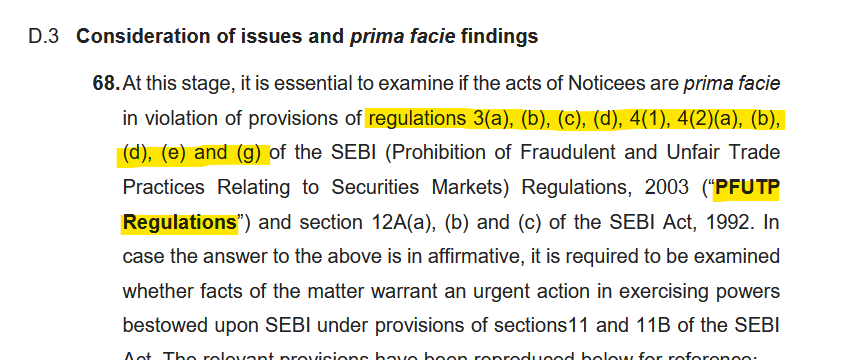
IMHO, 4(2)(b) and 4(2)(e) of SEBI PFUTP regulations
appear to be especially relevant in the hypothetical scenarios you described above.
(b) dealing in a security not intended to effect transfer of beneficial ownership but intended to operate only as a device to inflate, depress or cause fluctuations in the price of such security for wrongful gain or avoidance of loss;
(e) any act or omission amounting to manipulation of the price of a security [including, influencing or manipulating the reference price or bench mark price of any securities];
PS: FWIW, in the hypothetical cases above,
the market behaviour that results in a net profit is not a given.
So, it sounds like a lose-lose, 
- if market doesn’t co-operate, then lose,
- and if it does, the regulator penalises for manipulation, then lose.
We are not the right ones or we don’t have any authority to confirm if something like that is legal or not.
But on personal note I can say SEBI may not consider it as legal even that is technically within the bounds, so better avoid doing those kinds.
1 Like
Any way to confirm this from SEBI / BSE / NSE? Can we email them?
Case 2 seems genuine. In fact, they should be happy that I saved the index from volatility.
https://www.sebi.gov.in/contact-us.html contains email-addresses of various offices
and an online contact form as well.
If the intent is to move the market in your favor it is manipulation. But how would you prove intent? One way is to systematically prove that you always made trades to make loss in one segment like the cash but consistently made profit in another segment say derivatives and your position is enough to move the market and you did that over and over again and again. That’s what got Jane street and even then they are disputing it.
2 Likes
Hi one basic doubt. In the CAS, the stocks bidding happens.what i want to know is whether the stock orders actually get executed at. 3.28 PM or 3.30 PM, or the bidding is only to get closing price and no orders get executed for the people who bidded during CAS window? .
If the answer is yes, then what I don’t understand is that how come sensex price on expiry shows 2000 points down…because this means that so many people are ready to get their order executed at such a low price of stock…like seller of the stock…why would be seel his stocks at such a low price…
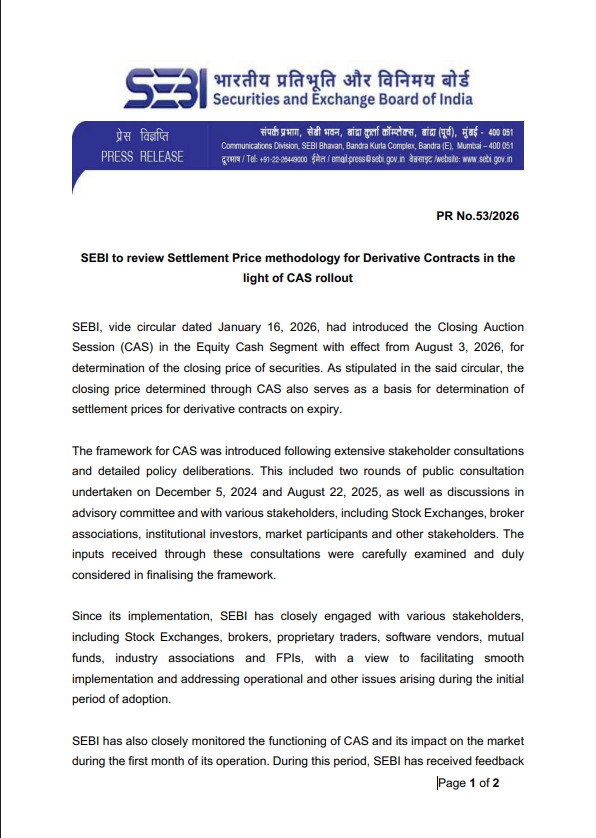
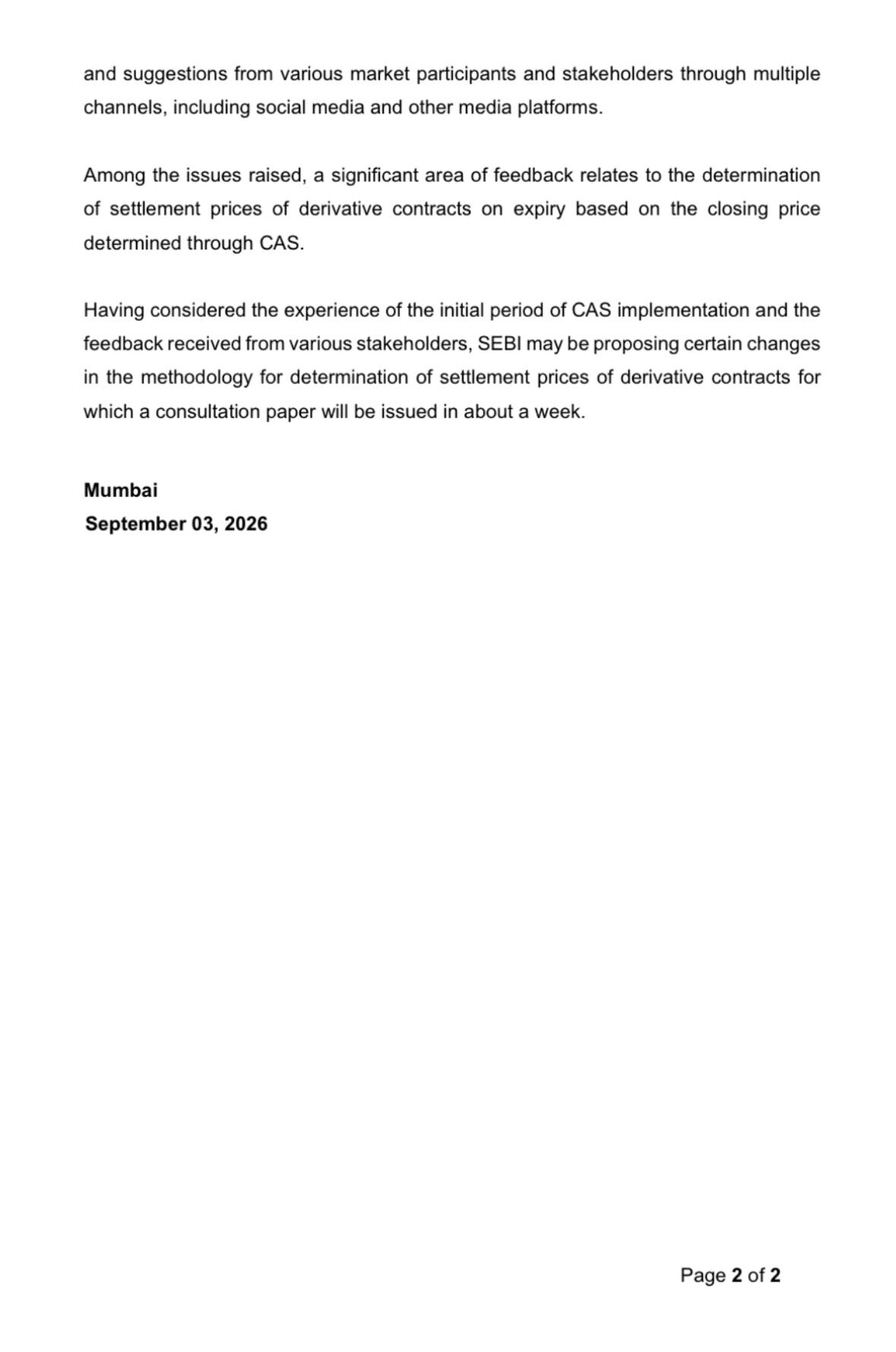
Thank god, but knowing SEBI, they’ll just double down to “save” investors
2 Likes
1 Like
Now that SEBI is already in mind to change CAS . Should they not halt this till they get something updated.
Those egoistic babus dont care. They never punched even a single fno order in their lifetime
1 Like
If derivative contracts are excluded from integrating CAS prices, CAS becomes totally useless. They might as well as have not implemented it.
1 Like
Every time SEBI circular mentions taking feed back from from various market participant and various stake holders , i am wondering who are the , really the "STAKE HOLDERS " 
2 Likes
The ones who send these babus “gifts” so that they can continue to legally loot the public
2 Likes
SEBI willnever accept as failure
Only In india Stock market rules will change Month on Month
SEBI is trying to follow USA market
Here no liquidity other then two index - bringing more rules - nifty will not move anywhere
1 Like