Comparing GoldenPi, Wint Wealth, and Grip Invest

Over the past few years, retail investors in India have gained access to direct bond investing through platforms like GoldenPi, Wint Wealth, and Grip Invest. These platforms fall under SEBI’s regulated Online Bond Platform Provider (OBPP) framework, meaning they follow strict compliance norms for investor protection.

But here’s the truth:
:point_right: They are not the same product in disguise.
:point_right: Each platform targets a different type of investor.

Let’s break them down.

:point_right: Personal note: I’ve been actively investing and monitoring multiple bond platforms around 2 years, tracking returns, defaults, liquidity, and overall user experience. This review is based on both hands-on experience and market understanding.

:yellow_circle: GoldenPi Review — Best for Variety & Flexibility

GoldenPi is one of the largest bond marketplaces in India with a massive inventory.

:mag: What I Observed

  • Massive bond inventory (corporate bonds, SDLs, G-Secs, tax-free bonds)
  • Wide range of yields (from safe to high-yield/risky)
  • Minimum investment: ~₹10,000
  • Account creation: Asks for your your existing Demat account number OR helps you open one
  • Support quality: Good. Got prompt replies to my email queries.

:+1: What I Like

  • Huge selection — best in India
  • Unmatched variety — you can actually build a diversified bond portfolio
  • Better control over risk vs return
  • Access to instruments not easily available elsewhere

:-1: Cons

  • Can be overwhelming for beginners
  • Requires understanding of credit risk
  • Some bonds are high-risk/high-yield

:point_right: Verdict:
GoldenPi is like a stock exchange for bonds — powerful, but you need to know what you’re doing. It is for serious investors. If you know what you’re doing, it’s the most powerful platform in India right now.


:green_circle: Wint Wealth Review — Best for Beginners & Safety

Wint Wealth takes the opposite approach: curation over choice.

:mag: What I Observed

  • Curated list of ~50–75 bonds
  • Only Senior secured bonds
  • Returns typically ~8–11%
  • Minimum investment can be as low as ₹1,000–₹10,000
  • You will get additional 0.25% return if you invest using within first 7 days.
  • Account creation: Creates a new Demat account.
  • Support quality: Good.
    • They provide WhatsApp + Email support.
    • Email: Got prompt replies to my email queries.
    • WhatsApp : Response times on WhatsApp chat support was slow at times.

:+1: What I Like

  • Beginner-friendly UI & explanations**
  • Lower risk due to pre-screened bonds
  • Predictable returns (FD alternative)
  • Educational content is strong

:-1: Cons

  • Limited bond selection
  • Less flexibility in choosing risk/returns
  • You don’t get access to the full bond market
  • Slightly lower return potential compared to DIY platforms

:point_right: Verdict:
Wint Wealth feels like a “fixed deposit replacement with better returns”.


:large_blue_circle: Grip Invest Review — Best for Alternative Fixed Income

Grip Invest is slightly different — it started with lease financing & alternative assets before adding bonds.

:mag: What I Observed

  • Offers:
    • Corporate bonds
    • Lease-backed investments
  • Investment memos and detailed documentation
  • Account creation: Usually uses your existing Demat (depends on product)
  • Support Quality: Got prompt replies to my email queries

:+1: What I like

  • Unique investment options beyond bonds
  • Higher return opportunities
  • Good documentation & transparency

:-1: Cons

  • Some products carry higher risk
  • Not purely a bond platform
  • Past user concerns around defaults in certain assets (community feedback)

:point_right: Verdict:
Grip Invest is suitable if you want to experiment beyond traditional bonds, but it’s not my first choice for core fixed-income allocation.

:brain: Which One is the Best?

Let’s be clear — there is no single “best” platform. It depends on your investing style:

:1st_place_medal: Choose GoldenPi if:

  • You want maximum options
  • You understand credit risk & YTM
  • You want to build a custom bond portfolio

:2nd_place_medal: Choose Wint Wealth if:

  • You are a beginner
  • You want FD-like simplicity
  • You prefer curated, safer options

:3rd_place_medal: Choose Grip Invest if:

  • You want diversification beyond bonds
  • You’re okay with slightly higher risk
  • You want exposure to alternative fixed income

:bulb: Final Verdict (Straight Answer)

  • Best Overall (Advanced Users): GoldenPi
  • Best for Beginners: Wint Wealth
  • Best for Diversification: Grip Invest

:point_right: If I had to recommend ONE for most people:
:arrow_right: Start with Wint Wealth, then move to GoldenPi once you understand bonds better.


:warning: Important Reality Check

No matter which platform you choose:

  • Bonds are not risk-free
  • Higher yield = higher risk
  • Always check:
    • Credit rating
    • Issuer financials

:checkered_flag: Closing Thought

After 2 years of real investing experience:

  • Bonds are one of the most underrated asset classes in India
  • They sit perfectly between:
    • Safety (FDs)
    • Growth (stocks)

:point_right: If used properly, bonds can:

  • Stabilize your portfolio
  • Generate steady income
  • Improve risk-adjusted returns

Disclaimer:
This article is for informational purposes only and not investment advice.
4 Likes

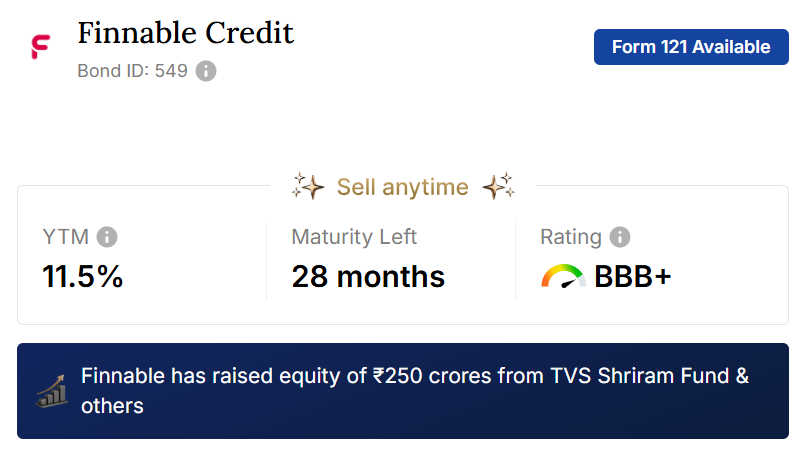
Wow, how do you define risk as lower? They are literally selling BBB+ rating.

and somehow you are touting this as safe investment options :slight_smile:

Of course whenever referrals are involved, advice quality is always doubtful.

Practically you are trying to earn money out of referrals in name of this comparison post, which I am sure is against community guidelines :slight_smile:

1 Like

Thank you for sharing!!

Also, as per SEBI (and exchange guidelines), sharing such referral incentives is not allowed, unless you are authorized person of trading member. That’s why zerodha had to stop their referral scheme.
So most likely this is illegal too.

INSP63425.pdf

It made me wonder why other brokers were still offering referral commissions even after this circular was issued. Then I found out that this circular you are quoting from has actually been put on hold and isn’t currently enforceable, following feedback from brokers.

https://nsearchives.nseindia.com/content/circulars/INSP66284.pdf

What “kept in abeyance” actually means

This is crucial legally:

  • The circular is not cancelled
  • But it is not currently enforceable
  • It is essentially paused pending further decision

Reason:

  • Industry (brokers, associations) raised concerns
  • NSE is reconsidering the rule via Brokers’ Industry Standards Forum
2 Likes

These companies themselves want you to share and refer, and earn

https://www.gripinvest.in/referral

I think guidelines don’t apply to them.

I’ve had a positive impression of GoldenPi ever since the early days, well before their collaboration with Zerodha. During the account opening process, it genuinely felt like they were focused on helping investors, and I got the sense that the founder or CEO (I believe it was the same person) was deeply committed to building a reliable service for bond investors in India. I’m not sure if that leadership is still directly involved after the Zerodha partnership, but if I were looking for a platform for bonds and those form of Investment Instruments today, GoldenPi would still be my first choice.

My understanding is that referral links are allowed with proper disclosure. However, to keep things simple and avoid any concerns, I’ve removed them. The goal of my post is to share real experience—especially since bond investing is still not widely understood in India. Even today, less than 1% of people invest directly in bonds, with many still unaware of the option or hesitant to explore it

I totally agree with it. But by saying BBB+ bonds are “Safe” you are not making it simple.
Bond investing is not understood because it is complex.

Making blanket statements like platform “is best for safety” and has “lower risk”, regardless of what they are selling, does not help new investors.

2 Likes

Risk exists in almost every investment today—even fixed deposits are not completely risk-free, as we’ve seen instances of bank-related issues over the past year. Wint Wealth is often considered relatively safer compared to platforms like GoldenPi and Grip Invest because it focuses and lists only senior secured bonds and they invest 5% in every bond as per their policy.

By whom? :slight_smile:

Anyways, I do not want to argue on this, since at least you have come clean on referral part.
I firmly believe, new investors should not be dabbling in lower credit rated bonds, because they are inherently more risky (does not matter which platform is selling it)

If you were actually trying to educate, try explaining what credit rating means and how a bond should be selected (based on various parameters) by new investors, rather than making blanket statement like which platform is safer than other.

2 Likes

I had already mentioned in my post that bonds are not risk-free and that investors should always assess credit risk and the issuer’s financials. The purpose of my post was to share my experience with the investment platform I used. I’m comparing three platforms—Wint Wealth primarily lists curated bonds, which is why I’ve described it as a relatively safer option compared to the other two. I’ve invested in even BBB- rated bonds on Goldenpi and haven’t encountered any issues so far.

I clearly mentioned in personal note at the beginning that this review is based on my hands-on experience and understanding of the market. You’re free to disagree, but you can’t tell others what they should or shouldn’t say :slight_smile:

If you feel it’s important to elaborate on credit risk, you’re welcome to create a separate post explaining it :slight_smile:

True.
Feels good to see follow-up discussion in this topic-thread so far.

Just want to add to the meta-discussion that...

Some of the opinions in the original post, the ones with absolute statements felt like hasty generalizations, and not to be taken literally / at face value. With referral links in the mix, such listicles come across as low-effort marketing spam. Good that it’s removed, so we can focus on the topic at hand without wondering if the account got hacked and is being used to spread spam. :sweat_smile:

PS: Not sure about others, but seeing multiple tell-tale signs of LLM-output distracted me from what might be any genuine opinions / some original thoughts. Trying to focus on what might have been the original thoughts, and responding below…


A pet-peeve of mine with all these “bond platforms” is their attempt to obfuscate the details. hiding behind the “we were only trying to simplify investing in bonds” excuse. Here’s one such instance discussed on this forum, that i can recall.

It will be a nice study to identify/highlight the dark-patterns sprinkled throughout such platforms.

BTW, any other platforms considered/evaluated?
Especially ones that did not fare as well, and why?

2 Likes

I have definitely found paytm money the worst. They have absolutely no idea how bonds work, and randomly put up data in name of simplification.
I remember, last year a guy was complaining that he got sold a bond assuming he will get 30% yield.
There was typo in prospectus, and paytm money calcualted yield based on typo, without any real world knowledge of bond investing.

My problem is, making bond investing simple is difficult, as bonds are complex products. Besides most of them are long dated. You buy something because your platform showed you some fancy numbers in their dashboard. Only at or near maturity (which might be 3-5 years away) you realize that math did not math, like in the case you pointed out

1 Like

Check indiabonds … extremely popular and easy interface… wide variety with bonds ranging from high yield to State guaranteed

Nice summary, there are also other bond platforms like:

IndiaBonds
The Fixed Income

1 Like

One of the key points I learnt after starting to invest in Bonds is never to go by YTM as it is based on XIRR.
This inflates the yield depending on how the payout is structured. It can be marginal or upwards of ~1%.