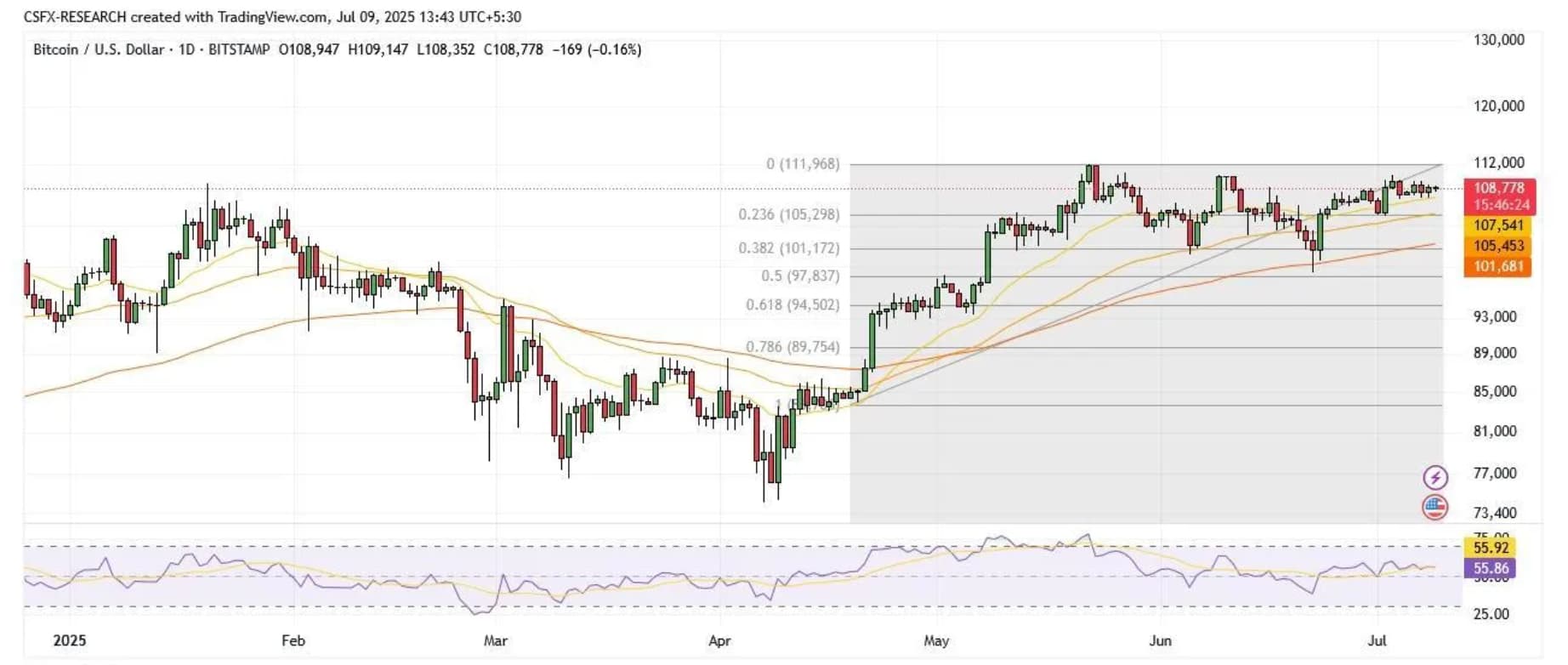
Bitcoin price today hovers around $109K as traders brace for potential fallout from new tariff announcements.
Bitcoin edged slightly higher on Wednesday, maintaining a muted trend as investors remained cautious amid fresh U.S. tariff announcements and ahead of the upcoming “Crypto Week” in mid-July, which may offer regulatory clarity. The cryptocurrency has seen limited movement since last week, with traders hesitant to take strong positions due to lingering uncertainty around U.S. trade policies. On Tuesday, President Trump announced a 50% tariff on copper imports and signaled imminent tariffs on semiconductors and pharmaceuticals. This followed Monday’s dispatch of tariff letters to 14 countries, outlining sharp duties—including a 25% levy on goods from Japan and South Korea and up to 40% for others—set to begin August 1. These measures have fueled concerns of a global economic slowdown, prompting reduced appetite for risk assets like crypto. Investors now look ahead to “Crypto Week,” beginning July 14, when U.S. lawmakers are expected to advance at least three key bills focused on digital asset regulation.
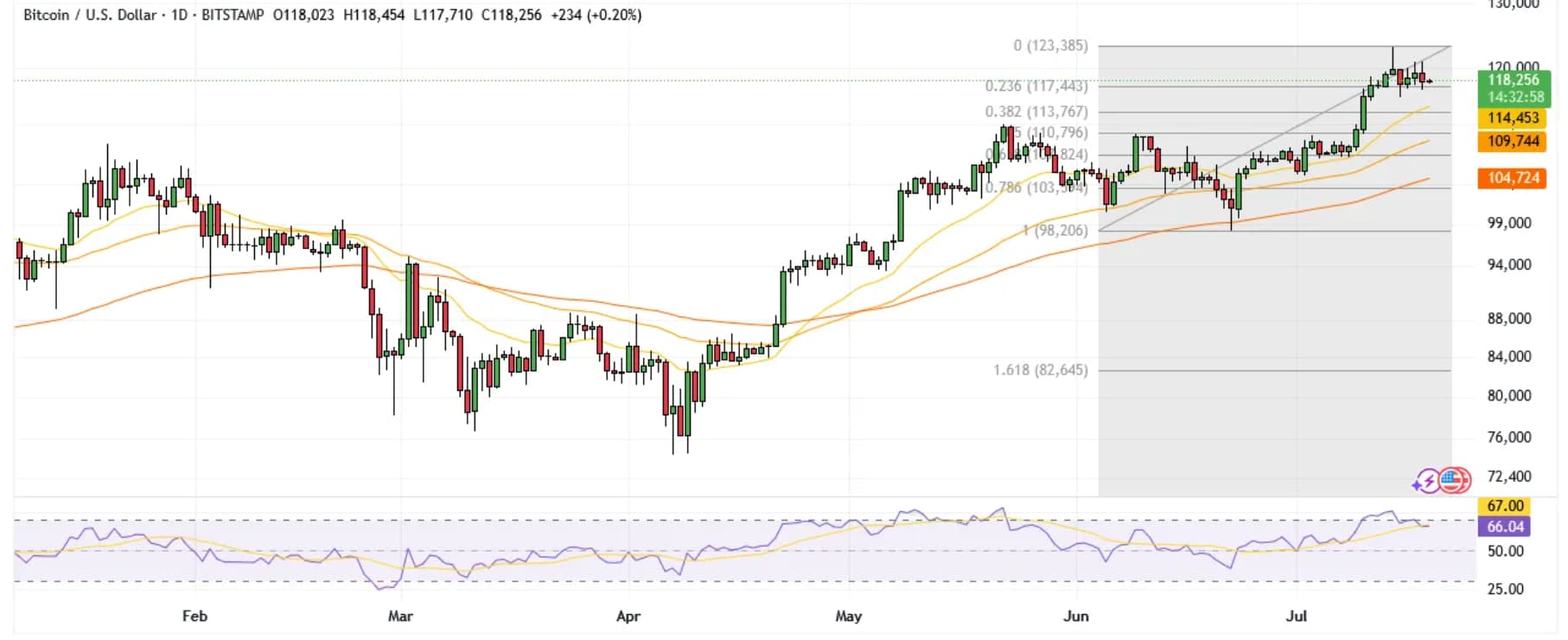
Bitcoin (BTC) delivered a strong showing this week, reaching a new all-time high of $123,218 early on before easing back and consolidating near the $118,000 mark by Friday. Bitcoin continues to face strong buying interest as it hovers near the key $120,000 resistance level. However, upward momentum remains limited due to a resilient U.S. Dollar and declining institutional inflows. Uncertainty ahead of the Federal Reserve’s upcoming policy decision has kept market participants cautious, while persistent outflows from spot Bitcoin ETFs and subdued on-chain activity signal weakened short-term demand. Regulatory developments also weigh on sentiment, with increased scrutiny of crypto platforms in both the U.S. and Europe adding to market hesitancy. Additionally, falling trading volumes and heightened volatility in altcoins reflect a broader risk-off environment in the crypto space. In the week ahead, Bitcoin’s price direction will largely depend on key U.S. economic indicators such as PMIs and Durable Goods Orders, which could shape investor expectations around Fed policy and influence overall market appetite.