Does losing money in Derivative Trading truly equate to "paying for experience"?

As i said i used to trade with 1 qty SBIN. Basically for 5-6 years i traded very less, not very often, as i tried to gain confidence and basically failed with any theory i picked up or was popular on traderji etc.

In stocks, even a bit with options( when they were not popular like today) and a bit of futures, but mostly cash.

I knew it was not going to be profitable due to fixed costs, but i can calculate its profitability at higher capital. Aim is not to reach actual profitability with low capital but to get some kind of proof that something can actually work.

More capital is not free lunch in terms of costs as slippage starts increasing rapidly. At scale, I traded stocks cash, not derivatives. In options i guess this matters less.

If derivatives needs more starting capital, then its probably logical that a beginner should not touch it unless capital to experiment is trivial for him. Anyway, one has to decide this himself. Look at failure rate, and decide how much is ok to pay as tuition fees.

If one has 1L to trade, better not trade. What’s the point ? If one has much more, one can wait to get an edge instead of squandering it away without proof.

A lot of the psychological issues get mitigated once you know reasonably enough that what you are doing works over larger sample. Yes on scaling, issues can crop up. But not so much if you do it in steps. And, if you dont have edge and you trade with scale, do you really think emotions will be less ?

You say it from pov of someone who has an edge. I am saying from pov of someone who doesnt know if he has an edge and likely doesnt. Two different things.

Thats my view anyway, loads of people here have cried about losing lakhs and lakhs of money. If they go by above, they could have avoided that - and probably given up at some stage as most dont make money.
2 Likes

By less, if you mean 1 lac, then I agree the odds are stacked against the trader in FnO. IMO bare minimum one needs 5 lac, preferably 10 lac, to size safely and make the overall transaction costs digestable. But other than that, more capital is not the solution to profitability as a directional trader…

Ofc higher capital (20 lac +) opens up OS, which has an inbuilt edge, but can also can be very risky without financial prudence.

1 Like

Recent SEBI data proves it.

1 Like

Warren Buffet also a biggest option Trader to

3 Likes

This shared video analyzes Berkshire Hathaway’s 10-K annual reports (specifically from 2008 and 2014). My Key Obsevation:

  1. He is Not an Intraday/Short-Term Trader: Unlike retail options traders who trade weekly or monthly contracts, Buffett sold 15- to 20-year ultra-long-term options [01:49].
  2. (Capitalizing on Float) He used the upfront premiums collected from selling puts as cheap float/capital to generate investment returns over decades before the contracts matured [02:54].

This video itself shows he used derivative for long term Investment purpose (15-20 Years) not for any short term Profits. I’m afraid to say none of retail derivative traders ever used derivative for even more than a Year contract. Gamblers are bound to loose irrespective of account size & Data speaks volume.

4 Likes

well , the point is not how he used it , point is he traded in Derivatives or not.

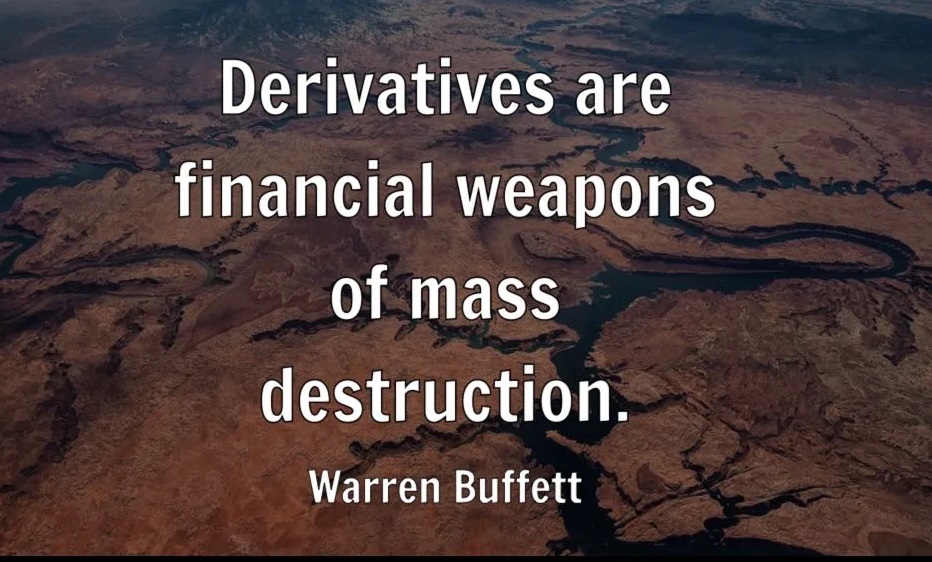
and also the same Warren Buffet also said " Risk comes when you Don’ know what you are doing " applying it to his saying " Derivatives are financial weapons of mas destruction " its like if you don;t know to drive your car , you can blame it on Roads , Blame it on Government and people around there , also you can blame on your car also :grinning:

One more Video about Trading from a successful Trader & an entrepreneur.

Most of the time it is just lost money. A loss only becomes experience if you can name one decision you would make differently, and then you actually practise that decision. “The market was against me” is not a lesson. “I added size after the invalidation had already printed” is a lesson, and only if the next similar situations are handled differently.

The catch is how people review. After the day is over, the mistake looks obvious because the outcome is already on the chart. That review does not train the moment when you did not know the ending. So the same tuition gets paid again.

A cheaper loop, before size goes up:

  1. Write what was visible at the decision, not what happened after. Hypothesis, invalidation, and the size you had planned.
  2. Replay a similar session with the right side of the chart hidden. Decide, then reveal. Do not edit the note after the reveal.
  3. Keep live size small until the journal shows that specific error less often. If the same error repeats, the earlier losses were not tuition. They were the same trade.

Paying the market to find out you cannot follow a rule is an expensive way to learn something a replay and a journal can show you first. Neither one makes anyone profitable. They just stop you confusing pain with progress.

Disclosure: I am building a small NSE chart-practice tool that randomises historical sessions so you cannot already know how the day ended, and logs the decision. It is on a waitlist, not a broker, and not signals. The public demo uses placeholder data. If the method above is useful: NSE Trading Practice Simulator | Replay Trader

if the discussion is specifically about options, retail traders do not realize that the odds are extremely difficult and stacked against them whether selling or buying. Retailers think backtesting a strategy is good enough, but it aint in options, primarily because you are competing against prop trader and hedge fund algo machines with bigger pockets and a trading infrastructure you cant possibly compete…example being backtesting volatility. most traders backtest on simplistic platforms like stock mock etc…there smallest timeframe is 1 min. these days volatility is made to swing so wildly within 30 sec - 1 min candle that most options hit their SL and then many times it reverses (recent examples being CAS related candles and earlier ones were JANE street type pump/dump) - basically seller loses when SL hits, buyer loses when later it reversed and volatility crushes…no point for retailers to trade in options. Cash market is much wider and much easier to backtest play in longer timeframes…compare your trading infra (stock mock kind of data and ur retail broker) to the infra props and jane street type of hedge funds have (leased lines where they can see and execute orders faster than ur retail broker shows and backtested data spanning multi year and milli second timeframes to model all possibilities along with brute cash power to move markets as needed for few seconds/ minutes which aint expensive for a few minutes - maybe a few millions cost per expiry for 1-2 candle panics) How can retail really compete (along with crazy tax as percentage of each trade). i moved to futures and cash long time - no point trying to prove you know trading in such adverse market conditions…just my 2 cents