Has the Indian Stock Market Failed Us? Why I’m Looking to US Stocks for the Future

A couple of years ago, I would’ve never even entertained the idea of moving my investments away from India. The narrative back then was clear: India is growing, and the stock market is where all the wealth is going to be made. I believed it. Heck, I wanted to believe it.

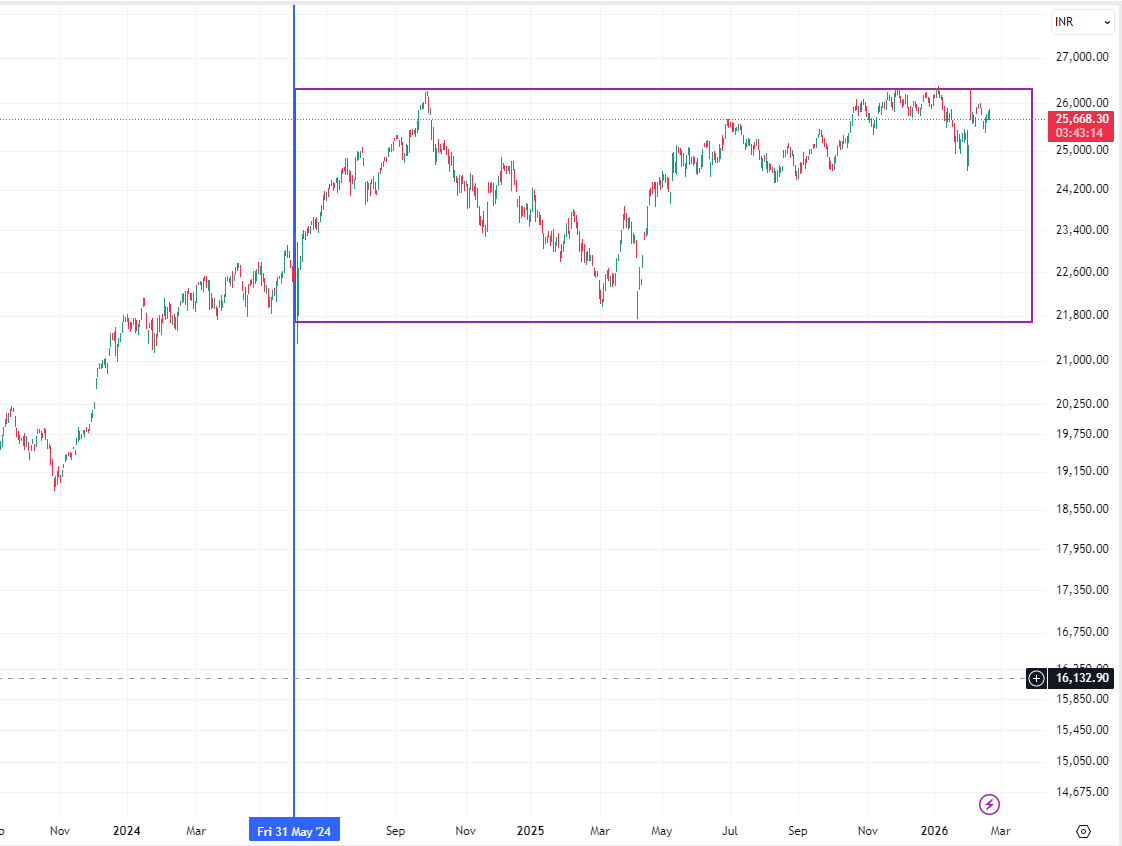
But today, after watching the Indian market’s under performance over the last 1.5 to 2 years, I’m starting to feel let down. The market just hasn’t generated any meaningful wealth for its investors during this period. Sure, the large-cap indices like the Nifty and Sensex have held their ground, but let’s be real—they’re not delivering anything close to what we were hoping for. And as for the mid-cap and small-cap stocks that once seemed like the future of Indian investing? They’ve taken a hit that feels personal.

The promise of India’s flourishing stock market seems to have faded away. These small and mid-cap “jewels” that were supposed to deliver the next big wave of growth have mostly just lost value, with little hope in sight. And I’m not the only one feeling this way, right?

So, now I’m looking at US markets. I’ve heard about brokers integrating US equities into their platforms (even in beta), and honestly, it’s got me thinking. The US market offers stability, diversification, and growth potential that feels more in line with what I’m hoping for. It’s hard to ignore the opportunity, especially when you realize how stagnant things have been locally.

I’ve watched enough of India’s budget announcements turn into micro-events as the capital markets are concerned. Maybe that’s just how it works here, but it’s frustrating when you have most of your life savings tied up in a market that barely seems to move the needle.

I’ve got 80-90% of my savings invested in Indian equities. And I feel I have every right to voice my concerns about the direction this market is going. Am I the only one thinking that maybe it’s time to look beyond India, even if just for diversification?

Here’s the thing: even with all the political and economic chaos happening in the US—whether it’s election drama, policy shifts, or ongoing challenges—their markets still seem to hold steady. People may not be happy with what’s going on politically or economically, but their investments? They’ve held firm. The US markets seem to offer a level of resilience that we just don’t see here in India, and that’s what’s drawing me in.

The US has a track record of weathering storms, whether it’s political turbulence or economic downturns, and yet the market keeps on going. That kind of stability, especially when you’re trying to preserve and grow your wealth, is something I’m seriously considering now.

Would love to hear from others who feel the same or have made the switch to US stocks. Let’s talk about it.
3 Likes

1-2 year is nothing. I have seen 5+ year periods when markets underperformed FDs. And those are usually good times to invest. Also if you want to make it worse, look at Indian market returns in USD. Before covid it was even worse.

Go look at 20-30 year old charts year by year of different indices to get some feel of it, although its different when you see it day by day. Then look at weekly and monthly and see the noise go away.

This current period is coming on back of very good returns after covid fall, so its basically expected and lack of downside movement is actually being very kind to you. If you cant hold through such periods and have a need to move stuff around, then imo you shouldnt invest in Equities as you dont understand them.

Current env is very mild, things can get a lot lot worse. Not saying they will.

There is no guarantee that US markets will outperform going forward, or vv. Diversification is fine, but do realize that sometimes most equities will become correlated and fall together. You can also diversify into Debt and gold long term, but gold is pretty volatile right now and had a bit of a excess move.

4 Likes

Don’t have expectations looking at past performance. If you were bullish on India 2 years back, then there is no reason to be not bullish now. You are getting same prices which were there 2 years back. And in most cases even lower. The best time to invest is when people lose hope. 4 to 5 years of underperformance is very normal. The catching up of average will happen after that. So if you go away, you may even miss out on 20 to 25 percent return in next 2 years. You never know.

4 Likes

i will invest in gsec , and reit and invit - not this much of problem here -

in nifty - lot of problem - RBI problem, SEBI problem, FII problem, FM Problem, Slaughter MF investor

2 Likes

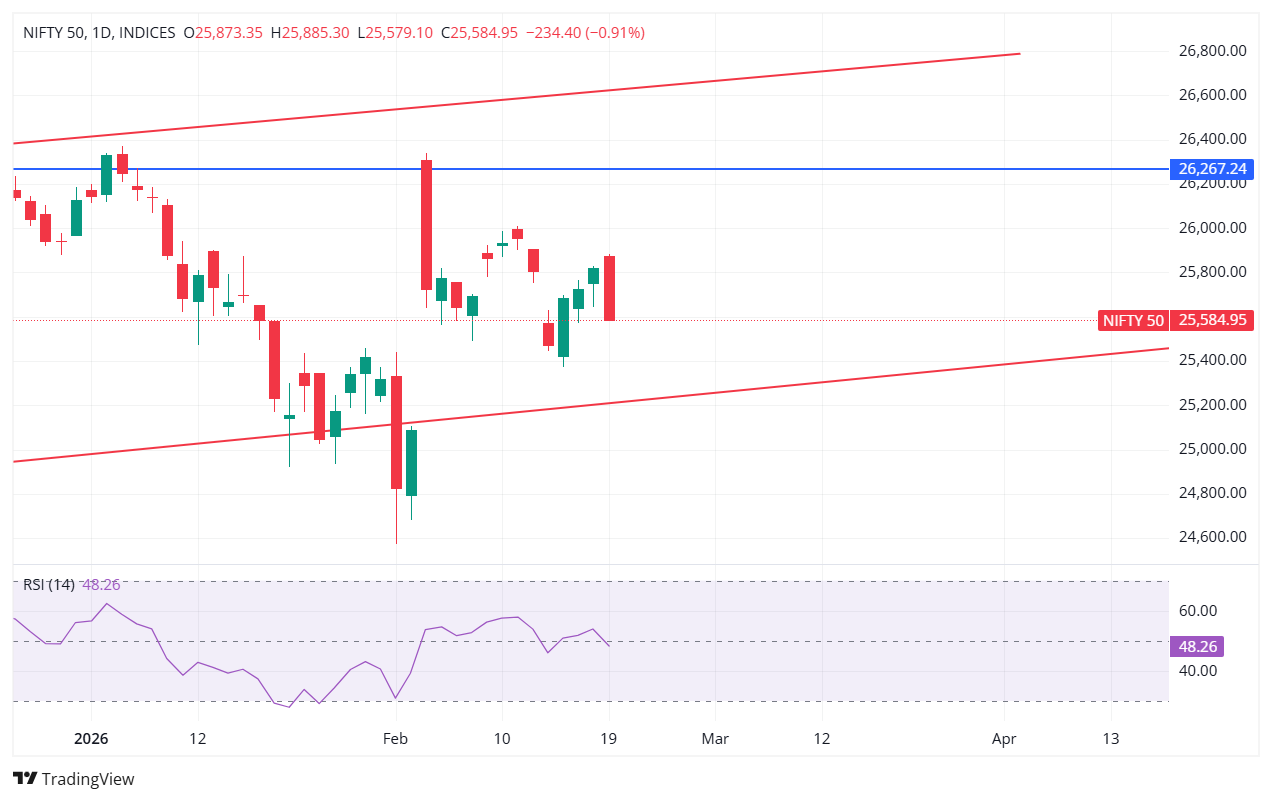
nowadays nifty candle if we see really scare me

2 Likes

Japanese market gave no returns for decades after 90’s boom.

The market can stay irrational longer than you can stay solvent .

5 Likes

Can’t compare. Interest rates in Japan were 0. Plus they were overpriced then. First the correction was required plus after that interest rates came to 0.
Required return is risk free return plus risk premium. So considering that India should give cagr of 10 to 12 percent. But for Japan even 1 percent return is very good return since they had risk free return as 0.

4 Likes

not only japan , china also no return last 8 years , nasdaq has no return 2000 to 2010 , india also will face these , most of the people telling indian market will go there here ,nothing guarantee in market , because its not primary , its secondary market …

never put all money in market

my asset allocation is 50% bond , 20 % reit and invit , rest in equity mutual fund
even in mutual fund only thhese bond AND Reit income only i am investing

2 Likes

these maths even market does in knows - market always irrational

1 Like

Easy to spot “overpricing” in hindsight. Is NIFTY overpriced now? If not, based on what metrics?

2 Likes

I said it before too. I sold all equity when nifty reached 25k in 2024. We did go to 26k also after that. Forget selling all equity I was net short too but that was by buying 26k puts.

In my opinion it isn’t.

My analysis. Top secret. :face_with_hand_over_mouth:

1 Like

Japan also had strong growth expectations and was seen as unstoppable before the 90s crash, yet valuations mattered more than growth stories. If entry valuations are high enough, even a growing economy can deliver poor equity returns for long periods.

Required return isn’t just about today’s risk-free rate it’s also about starting valuation. If India trades at rich multiples and earnings disappoint or re-rate downward, returns can compress sharply regardless of GDP growth.

So structurally India may look different, but from a market mechanics perspective, it’s absolutely possible for India to deliver Japan-like flat returns if valuations and expectations overshoot reality.

3 Likes

Agree. For now I personally dont see it. But I know anything can happen.

1 Like

What changed in 1-2 year that it isn’t overpriced now?

Heard of time value of money? For me nifty is down 15 percent from top.

What were you hoping for - just curious. Investing in US stocks could be a diversification strategy. When did you start investing.

Started when nifty was around 7000, went upto 14,000 and came crashing down to 7000 to 8000 and then peaked to 25,000 over the years. You need to give it time and then you will make money. Just love the present scenario. Wonder when someone will ever say, what a great opportunity to buy when market falls.

3 Likes

The companies I’ve invested in have consistently met or even exceeded their profit expectations, which is clearly reflected in their P&L statements. Yet, their stock prices have dropped 30 - 60%, despite these solid results over 2 years.

Take this example:

A company that was valued at 1,000 Rupees per share when its profit was 1,000 crores now has a stock price of just 500 Rupees, even though its profits have doubled to 2,000 crores. Dividends haven’t affected this, so it’s clear that the market is valuing the company much lower than it did before.

If the market now considers this lower price as the new fair value, then for me to break even at 1,000 Rupees per share, the company would need to generate 4,000 crores in profits. So, despite the management consistently delivering impressive profit growth, the stock price just isn’t reflecting that.

This seems to point to a deeper issue in the market. The usual forces of supply and demand that drive stock prices up alongside profits seem to be broken. Even with strong fundamentals in the companies I’ve invested in, my wealth isn’t growing the way it should based on the profits they’re generating. It’s frustrating to see this disconnect between financial performance and stock price.

And you keep hearing news about companies posting 30% growth quarter over quarter, but if that’s the case, why isn’t investor wealth growing along with it? It just doesn’t make sense.

The companies are doing well, so why aren’t we seeing that reflected in our investments? Does that make sense?

3 Likes

Your point is well taken, but market does not work this way where every stock is valued the way you have correctly described. If the market went solely by the profits and losses they make, there are innumerable companies including large cap which does not justify the price level.

However, people are willing to buy and at the same time and day there are people willing to sell. There are some institutions like pension funds etc who can put money only in Large Caps (this could be their policy just assuming), there could be FII who will invest only in large companies with ample liquidity. I am not an expert but these points matters. I invest in Mirae Asset S&P500 top50 and other similar USD market ETFs. Every single day, I go and check market depth if there is any seller (as most often there is none) and if there is a seller, I will buy, the market price is 15% over the iNAV (approx) still I am buying because I have a personal reason to buy. Today there are ample sellers (not sure why as last full week there were not a single seller) in this ETF and I did buy now. The point being, market does not work based on pure numbers which they generate,
Hope I am correct, I am not an expert.

1 Like

Absolutely correct. Market always prices in 3 to 5 years ahead. So when you pay 1000, there were expectations for good performance from the company. If expectation exceed then it will perform for sure.

It’s not just stocks which prices for future. Let’s say you buy 1kg apple for Rs.100. You buy it because of the satisfaction it will give you after eating it. Your expectation is to get satisfaction of let’s say 10 out of 10. Now even if it gives satisfaction of 9, price of apple comes down to 90.
Look at how EV market had priced in. Tatamo went up when it was loss making. That too 10x times in 2 to 3 years. Now even of it makes profit it won’t go up the same way.

Market is all about avg of all expectations in future.

2 Likes

Hello @TradeB2B ,

Since Bonds are also so fluctuating , How about

Liquid ETF (growth) + REIT only , then fund the mutual fund or equity etf via monthly interest from liquid etf and dividends from Reit
Agree Liquid etf may have 2 perc less growth than bonds (GSECS) …

1 Like