If you’ve noticed the recent rush in ETFs, some are trading away from their iNAV. We shared this thread on X today:
When investing in ETFs, there are two prices to watch: the market price on the exchange and the iNAV (Indicative Net Asset Value), which reflects the fair value of the ETF’s underlying holdings, published by AMCs.
Since ETFs trade on exchanges, their market price can sometimes move away from the NAV due to volatility or demand-supply imbalances. As a result, an ETF may trade at a premium or discount to its fair value.
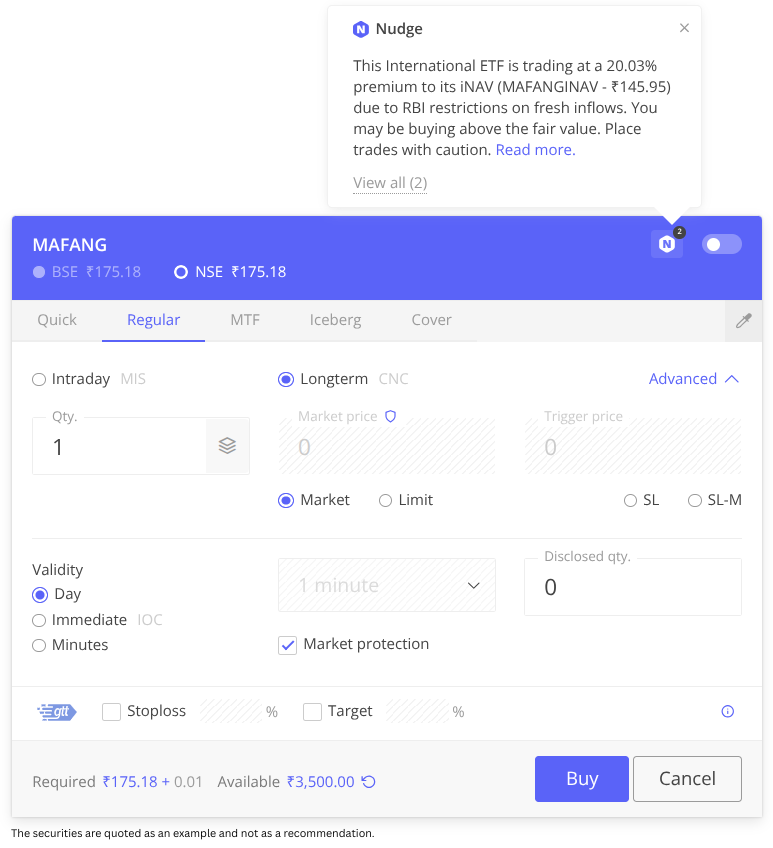
For example, some international ETFs are trading at a premium to their NAV because overseas investment limits have been hit.
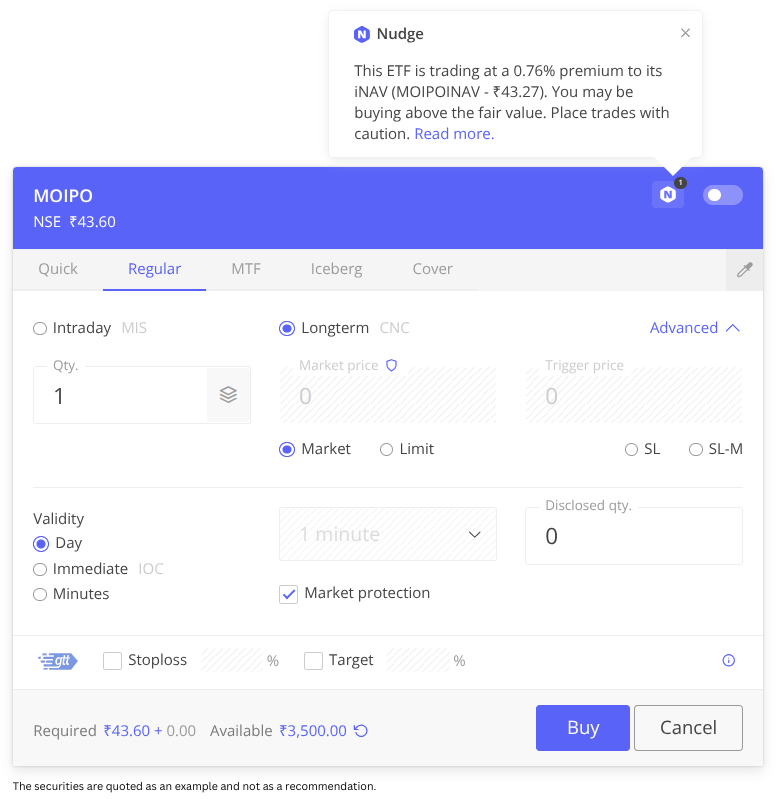
To help you avoid trading away from fair value, we’ve added a nudge on the Kite order window that highlights when an ETF is trading at a premium or discount to its iNAV.
Query
Generally do people trade, I repeat trade an ETF or do they buy as an alternate to Mutual fund, i.e those who have demat account and wish to invest for relatively longer period.
If they buy ETF as an alternate to an Mutual Fund for investing does this iNAV really matter, as you are more worried if you made profit over ur cost i.e the average.
The query is do people trade ETFs like stocks.
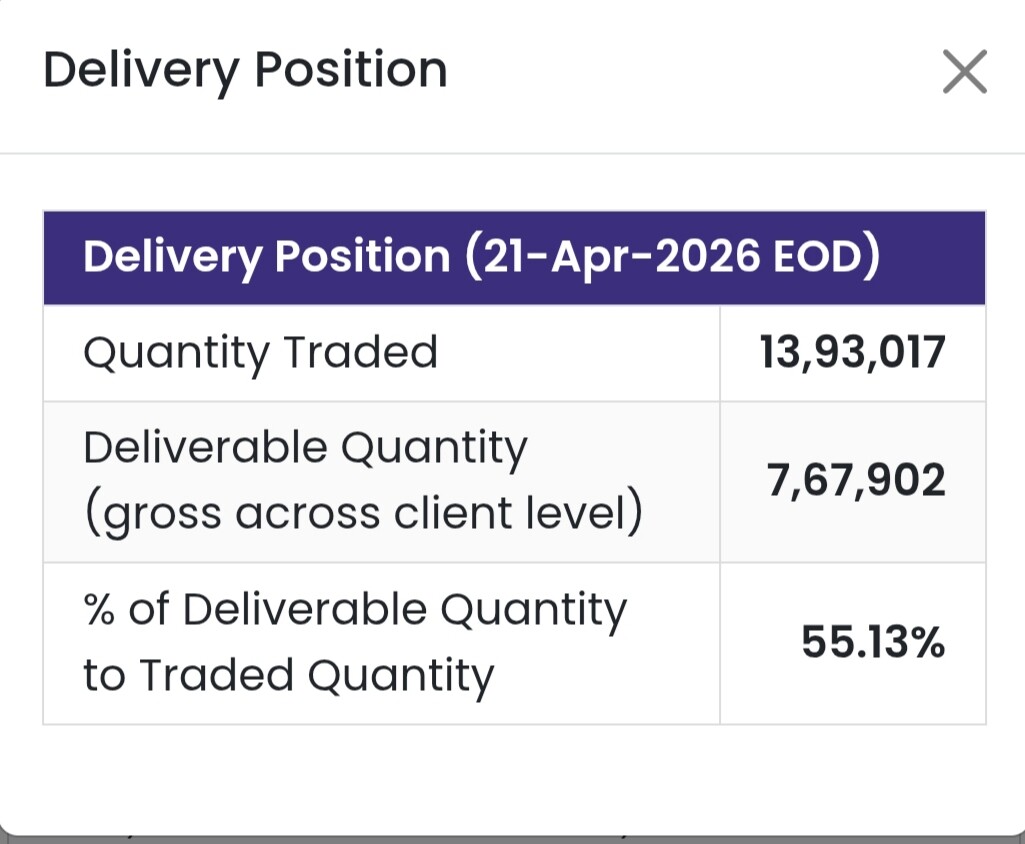
Today, the total traded volume seems to be ~ 13.9 lakhs, of which only ~7.6 lakhs were delivery trades (i.e., 55%), the remaining 45% of the trades were speculative intraday trades (non-delivery).
So yeah, people do trade ETFs and not all the volume traded in a day represent investment/long-term interest in an ETF, some of these volumes could be purely speculative.
No Buyer (but we can sell direct to AMC - But Not done this , I think even for small investor can do ETF redeem to AMC directly)
Personally I think
ETF = “Mutual fund in stock form”
coming to the point , The Buying price may not be much matters to long investors . But just an example
If iNav of a etf is 100 and you are buying at 20 more than or 120 Rs then even in the long term it may affected
For day traders , Swing traders iNav matters , for long term investors its better to watch iNav for a better result.
For long-term investors:
iNAV matters only at the time of buying/selling, not afterward s (for high liquid ETF only ).
But these things affect in terms of each ETF
Tracking error over time (like Funds)
Liquidity of the ETF (rarely happen in funds I think , I have small investment in mutual fund via ICICI but redeem process easy even though the redeemed price is not sure at the time of redeem )
Actually, the INAV or the EOD NAV do matter when investing in ETFs or Mutual funds.
The NAV is the fair value, and anything you pay above or below it is a premium or discount.
Having a lower average cost— compared to the current market price— shouldn’t be used as a reason to rationalize/justify investing at premium prices. When prices are rising, the average cost will always be lower than CMP.
if you are going compare, you should compare the average cost with the NAV, not the market price.
Even if these investments are for long-term, knowingly paying a sky-high premium results in sub-optimal returns.
(I can understand if the premiums are marginal, but they are not)
Due to the current regulatory restrictions around overseas investment for mutual funds, people are willing to pay a premium to invest in international ETFs. But the premiums are sky-high, often more than ~10% and currently going at ~20%.
A lack of alternative options to invest overseas shouldn’t be a justification for paying a high premium for these ETFs.
A change in regulations or new alternative opportunities to invest overseas will bring these premiums crashing down.
Anyway, I understand that we are all free to make our own choices, and we all have our reasons too, so, as long as the investments are based on informed decisions, I guess anything is fine.