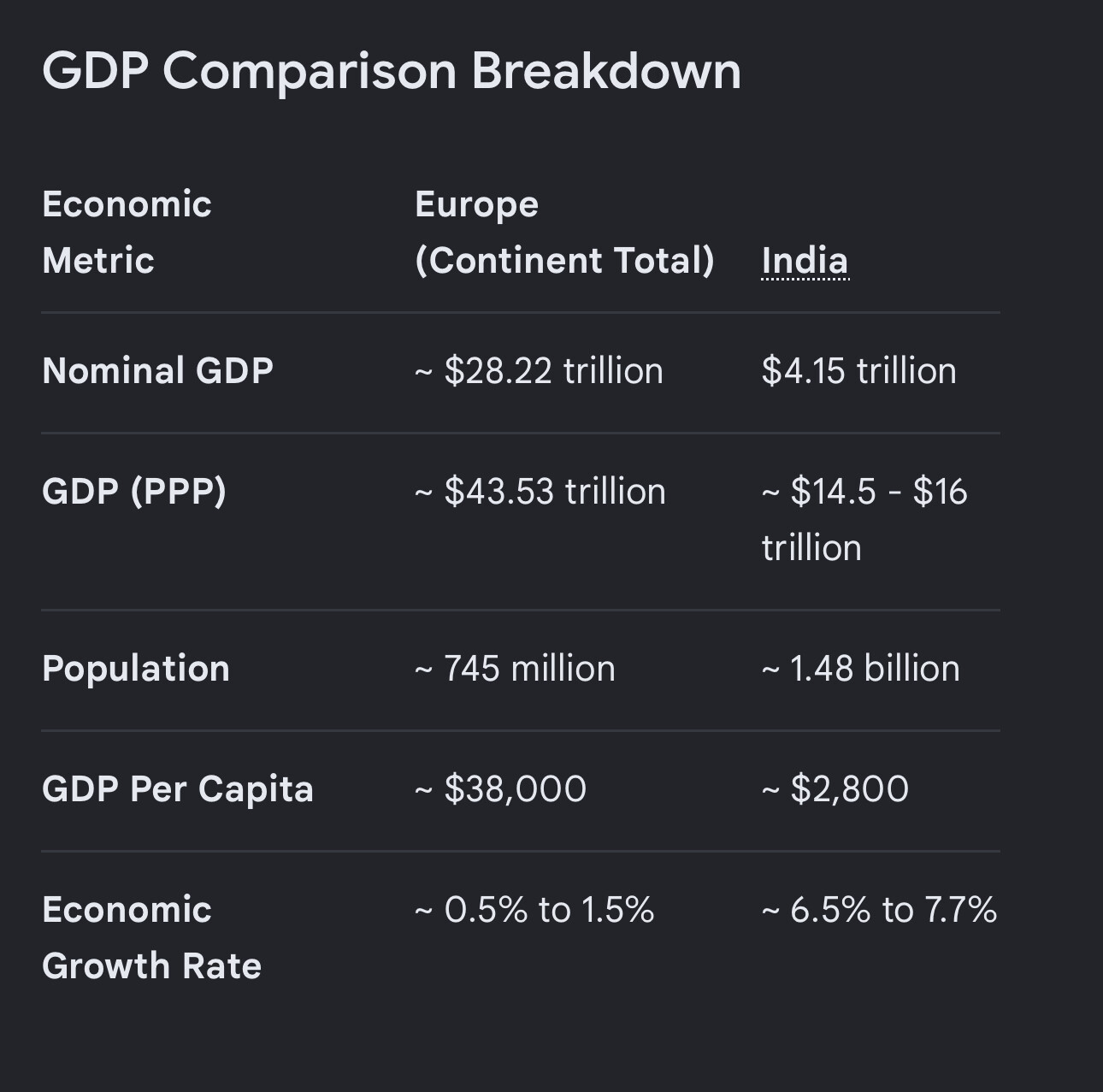
India just crossed the $4 trillion mark in GDP. We’re now officially the 4th largest economy in the world. Sounds like a big deal… and it kinda is. But if you’re like me, your first question is probably:
“Okay, cool… but how does this help me and my Portfolio?”
More investor confidence
Big money loves big economies. With $4T on the scoreboard, global funds may start treating India as a core market — not just an “emerging market”.
Lower borrowing costs (eventually)
Bigger economies usually mean better credit ratings. That means the govt can borrow at lower rates, and (in theory) that trickles down to lower loan rates for businesses and maybe even us commoners
Global influence goes up
More say in world forums like G20, WTO, IMF. Basically, India gets to sit at the adult table more often — not just the kids’ table with “emerging economies” tag.
Boost to local jobs & industries
With growth comes demand — infra, tech, manufacturing, services — all of it needs manpower. So yes, more jobs could be on the way (unless AI takes them first ).
More startup + business action
A larger economy means bigger markets for new ideas. Good time for entrepreneurs to think big.
So yeah it’s not instant magic, but it’s a big deal. Feels like we’re levelling up on the world stage. Now just waiting for my midcaps to notice.
Do you guys really think this $4 trillion actually change something on the ground for us as common man?
Iirc didnt we become 4th last year itself. I remember India overtaking Germany and just below Japan. But now we’re above Japan but below Germany. What happened ? Did Germany wake up?
Nope. Last year we crossed 4trillion and people had started predicting that we will be 4th crossing Japan soon.
We never crossed Germany, and Germany has been above Japan for some time.
GDP PPP per capita is the more relevant metric for India imo. It is closer to $12000 now and needs a lot of improvement.
GDP PPP measures a country’s Gross Domestic Product (GDP) by adjusting for differences in the cost of living and inflation between countries, using an “international dollar” for comparisons.
GDP per capita, on the other hand, divides the GDP by the total population to find the average economic output per person. GDP PPP per capita combines these concepts, showing the average economic output per person in terms of purchasing power.
This is good news for India because the country has become one of the largest economies in the world. Of course, it won’t happen overnight, but it’s a big plus for the country.