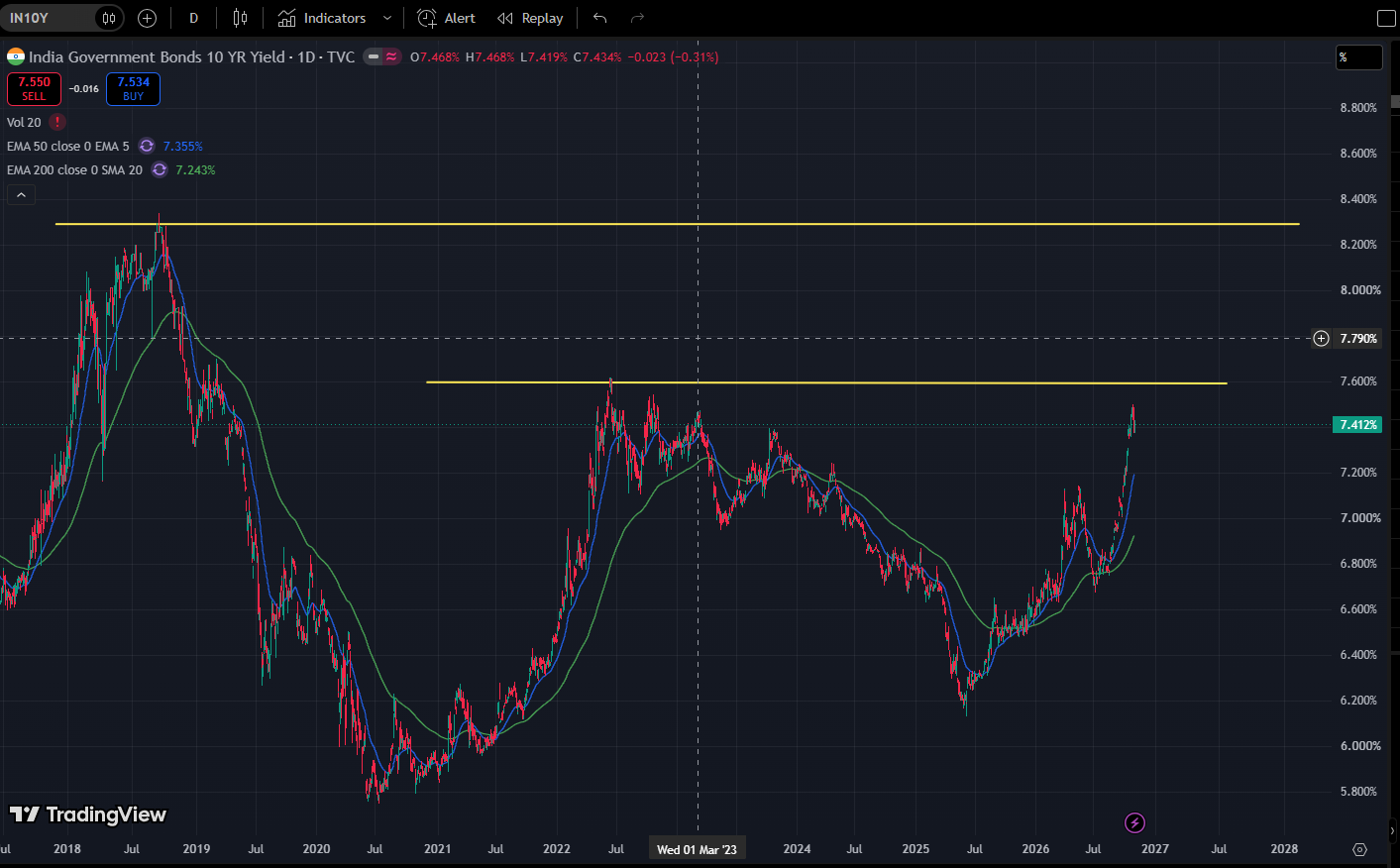
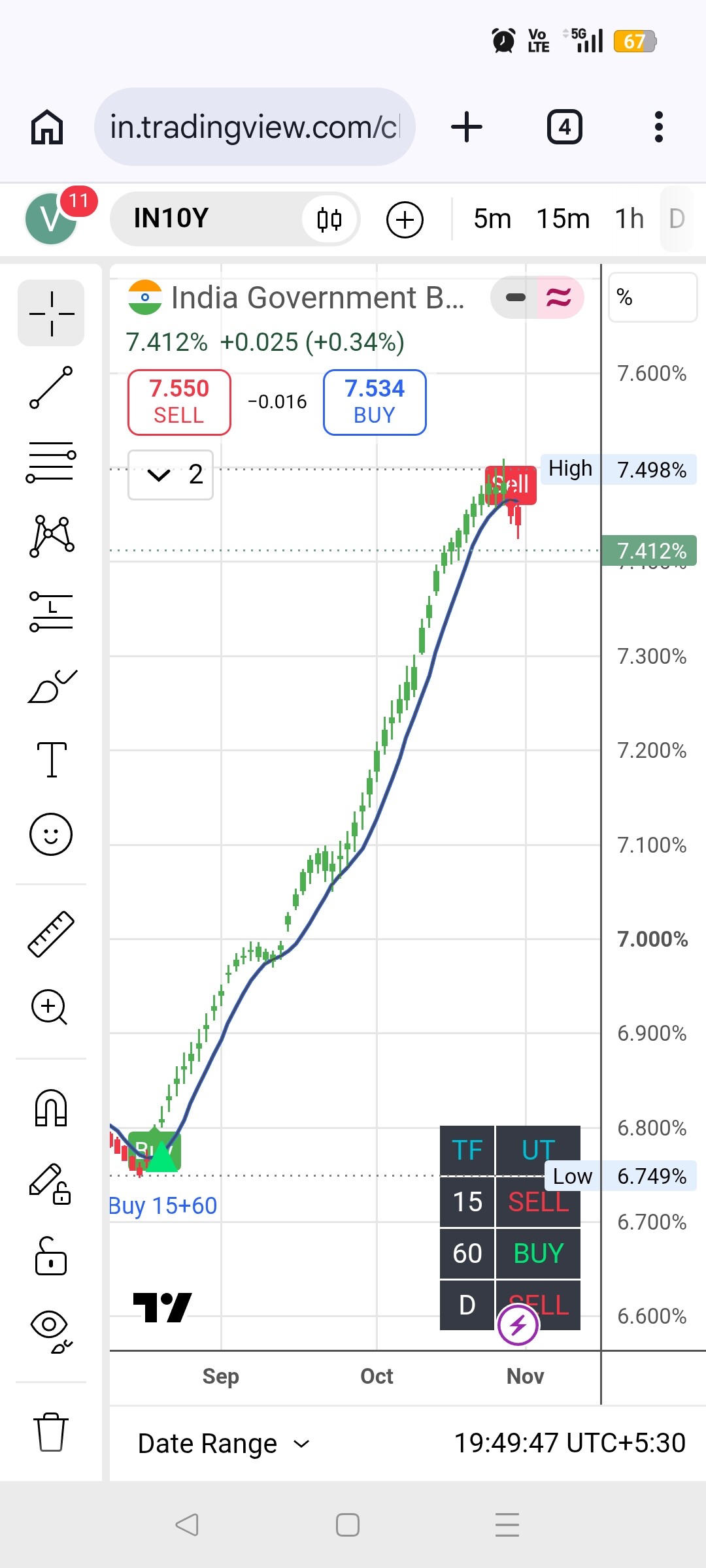
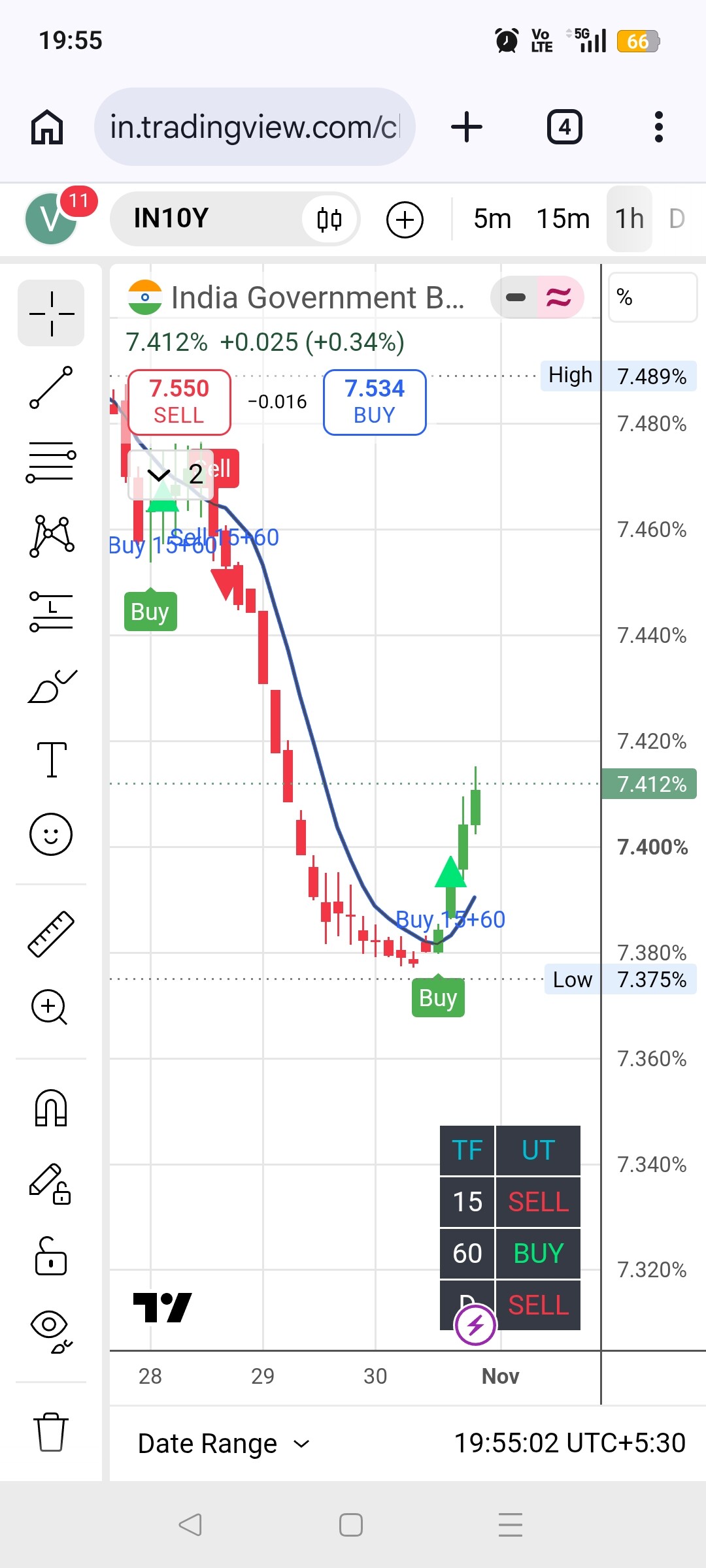
As seen in the below figure, the 10-year G-sec yield is currently hovering close to its 2022 high (7.617%). In case due to more fear, it touches that 2022 high level, it feels like a good investment in GILT funds or ETF’s.
If we ride the 10-year G-sec yield top and then it cooling off subsequently by investing in GILT funds or ETF’s, return of around >10% could be made if we time it well. Thoughts people?
Interesting scenario, when everyone is literally fearful of investing in long term bonds, this seem to be a fair opportunity. Even my screen flashing Sell 10 year Indian Govt Bond yields on Daily timeframe after rising non-stop.
Investing some portion in Gilt Funds now may indeed be a worthy option. Waiting for it to fall below 7.3% for perfect entry.
Yields rise above 7.5% again negates the move completely.
Hey. Actually I have been reading about this since posting the question here. 10 year G-Sec yields itself shouldn’t be an indication of investing in GILT funds I learnt. Since part of them going high is because of rate hike fear but Gilt funds are susceptible to repo-rate hikes.
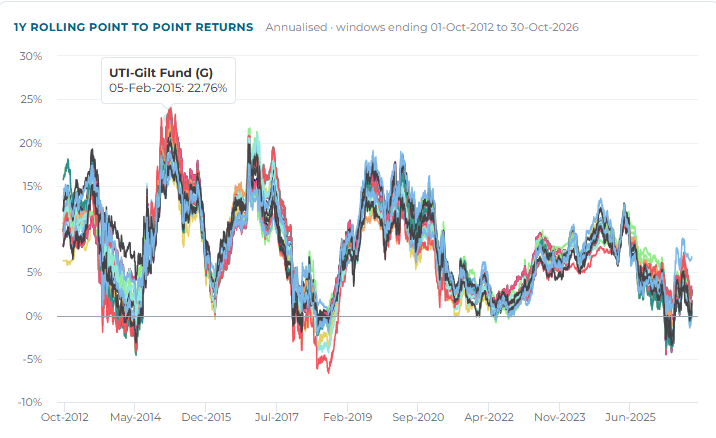
I have been studying the nature of repo-rate behavior since 2010 and measuring the performance of GILT funds through 1-year, 2-year & 3-year rolling returns.
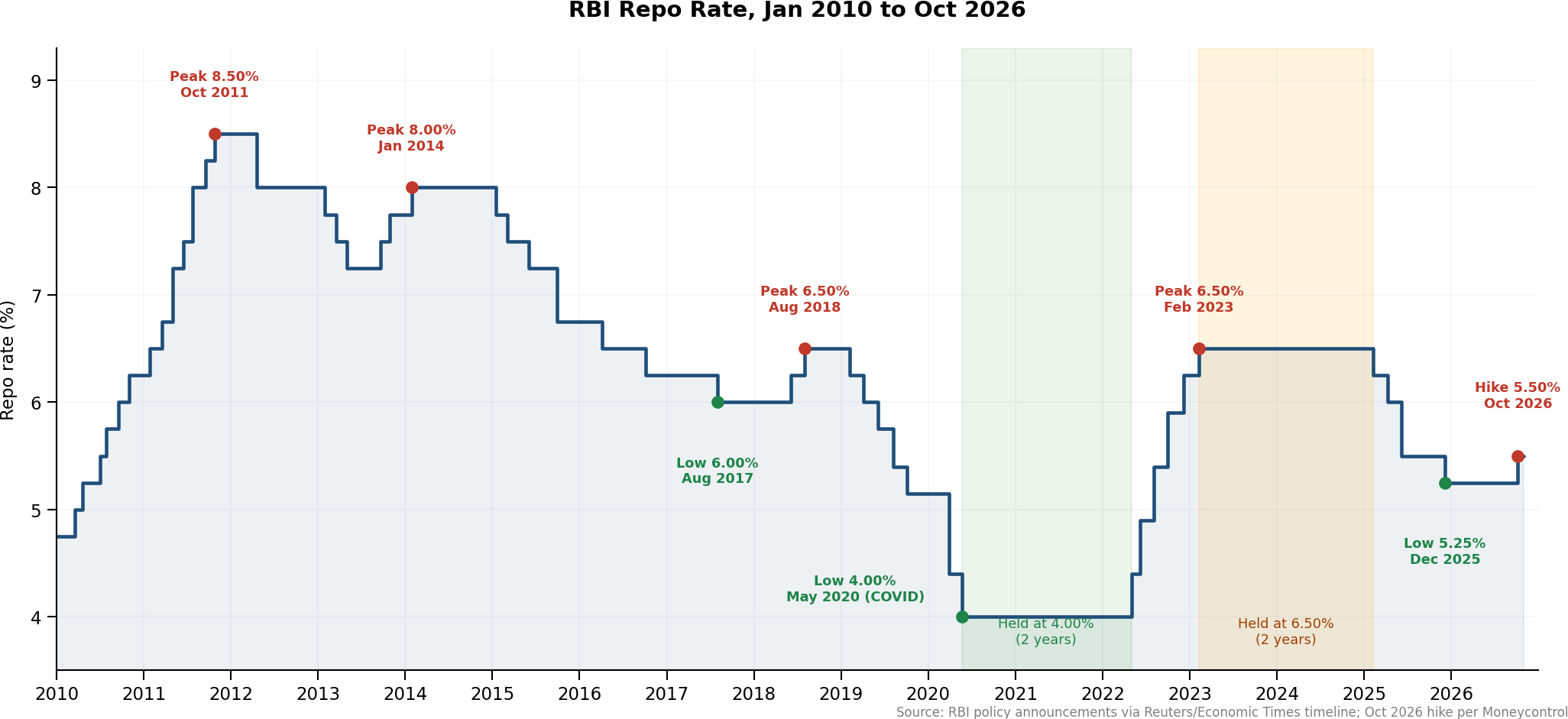
One observation I made was whenever we invested in Gilt funds at repo-rate peak or surrounding it whenever it happened, the 1 year rolling return gave >=10% and some case insane returns (looking at graph below).
Below image represents the repo-rate rate hike graph.
Of course the bigger challenge here is we only knew interest rates peaked after it did and so it is impossible to know what repo-rate number in the coming months would be the peak. We have to closely follow inflation behavior, monetary policies, crude oil behavior etc to be able to predict repo-rate hike behavior.
@Vishnuteja two things worth adding to the rolling-returns work, because they decide what a “good call” actually leaves in hand.
1. Size the bet with duration, both ways. A long-duration gilt fund with a modified duration of roughly 7–8 gains about 3.5–4% in price if yields fall 50 bps, plus about a year of accrual at ~7%. That’s how the >10% years happen. But the same fund loses about 3.5–4% in price if yields rise another 50 bps instead, so the 7.5% → 8% scenario in that ET piece eats most of a year’s carry. Writing down both outcomes before entering helps decide how much of the portfolio this deserves.
2. Tax is different now. Debt mutual funds and gilt ETFs bought after 1 April 2023 are taxed at your slab rate however long you hold them, with no LTCG treatment. At a 30% slab, a 10% pre-tax year is about 7% after tax.
If the idea is specifically “lock in high yields,” buying a long G-Sec directly (RBI Retail Direct or the exchange) is worth comparing: you hold to maturity if rates go the wrong way, and listed bonds held over 12 months are taxed as LTCG at 12.5% if you sell after a fall in yields. The trade-off is liquidity, since the spreads on less-traded papers can be wide.
A simple middle ground some people use is to split the amount into 2–3 tranches over a few months instead of trying to catch the exact peak.