
Our goal with The Daily Brief is to simplify the biggest stories in the Indian markets and help you understand what they mean. We won’t just tell you what happened; we’ll tell you why and how too. We do this show in both formats: video and audio. This piece curates the stories that we talk about.
You can listen to the podcast on Spotify, Apple Podcasts, or wherever you get your podcasts and watch the videos on YouTube. You can also watch The Daily Brief in Hindi.
In today’s edition of The Daily Brief:
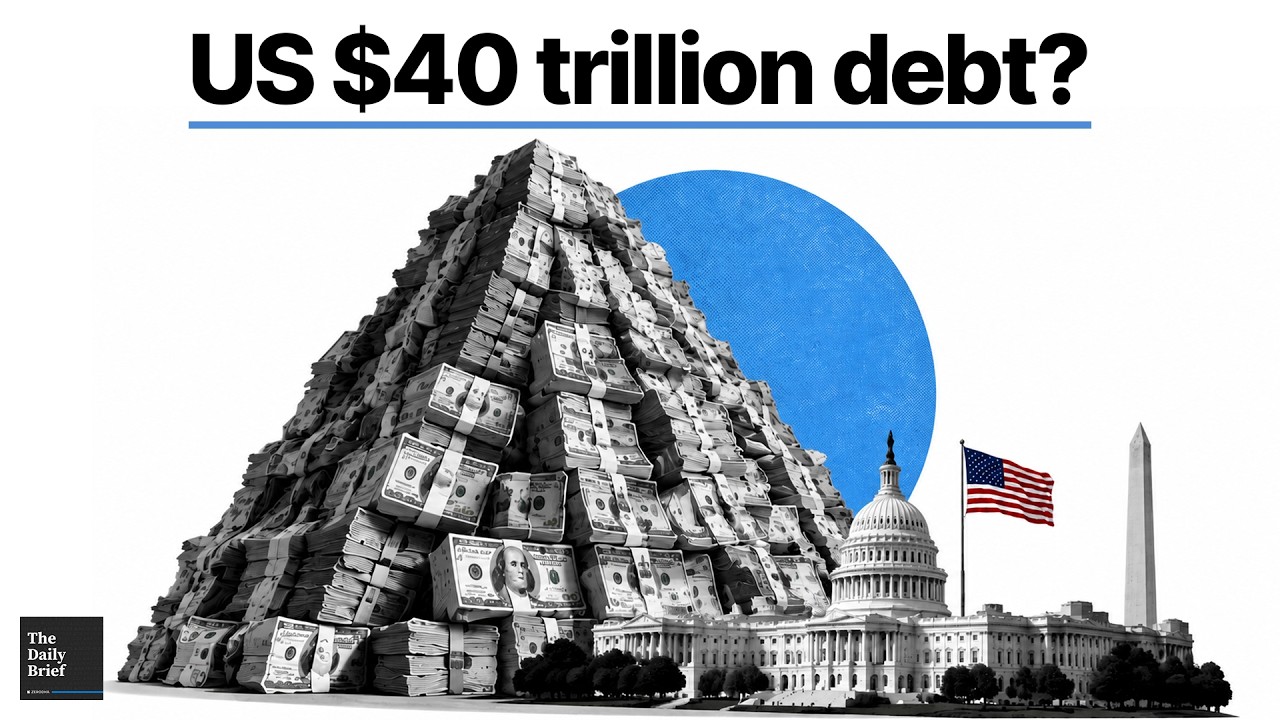
1. Is America’s $40 trillion debt a problem?
US federal debt has crossed $40 trillion, but there is no magic debt level that triggers a crisis. The bigger risks lie in rising interest costs, refinancing expensive debt, and whether investors remain willing to hold Treasuries.
2. India gets closer to satellite internet
India is close to settling how satellite spectrum will be priced, bringing Starlink and other operators closer to launch. But the bigger questions are where satellite internet can compete with fibre and mobile networks, and how much control India should retain over critical connectivity.
Our latest episode on Subtext is with Arvind Chari, chief investment officer at Q India UK. We speak to him about how foreign investors see India, especially as India sees an outflow of foreign capital. It covers why India keeps getting slotted into investment themes it doesn’t fit, what the country’s actual growth rate has been since 1980 and why that number has barely moved through so many events in our history, the arithmetic of the capital gains tax on foreign investors, why Indian corporates aren’t building factories, and more.
Watch the full episode here.
Is America’s $40 trillion debt a problem?
The US government crossed a historic milestone in August. Its total federal debt passed $40 trillion for the first time.
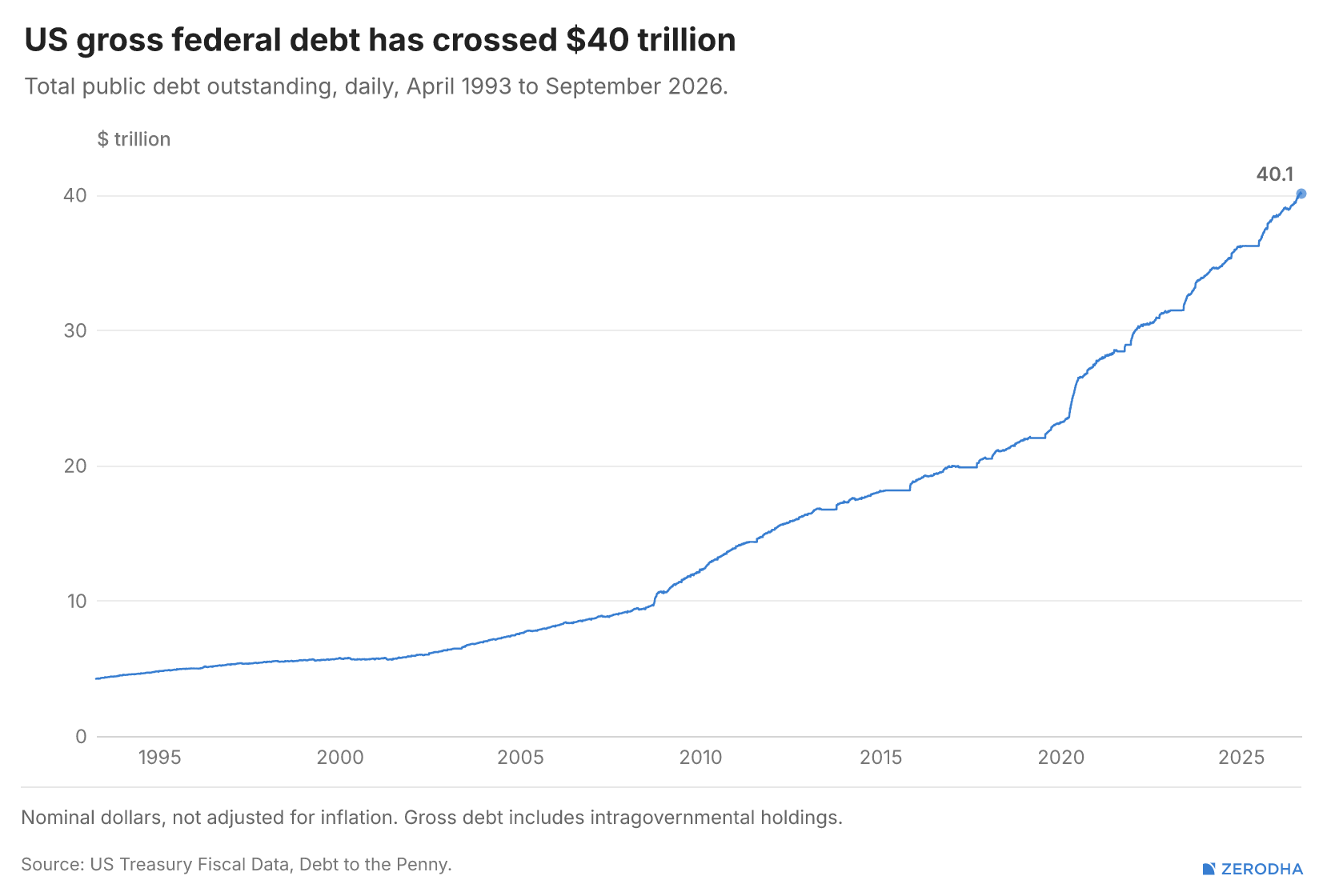
A number that humongous brings a whole lot of doom and gloom, and wild theories: that US bankruptcy is coming, that the dollar is finished, and so on. It seems to happen every time US debt hits a big milestone.
People have been making the same predictions since the 1980s. Yet here we are in 2026, and the US is still around. It still has the world’s largest economy in dollar terms, and one of the most innovative. The dollar is still the world’s main reserve currency. And there’s no debt crisis in sight.
Still, if US debt keeps climbing, it’s natural to ask how long this can go on. Is there a breaking point, where interest costs spiral out of control and the whole house of cards comes crashing down?
Well, there’s no single universal metric, not even the debt-to-GDP ratio. When the IMF checked its own debt warning system, it found the warning thresholds were poor at predicting trouble. Another IMF study found little evidence of a magic ratio beyond which growth falls off a cliff.
That doesn’t mean America’s debt is entirely harmless. The Congressional Budget Office projects that debt held by the public will rise from 99% of GDP at the end of 2025 to 120% by 2036, and it calls that path unsustainable.
Public debt is complicated, to say the least, and one Daily Brief can’t cover all of it. We’re not selling doom or reassurance, just a few things to watch.
There’s one important distinction here. The $40 trillion headline is gross federal debt, which includes money the government owes itself, like the IOUs held by the Social Security trust funds. Take those out and you get debt held by the public: about $32.3 trillion that day. That’s the number CBO watches most, because it’s the borrowing that competes for money in markets.
Incomplete metrics
Let’s start with the most common measure used to check debt sustainability, the debt-to-GDP metric.
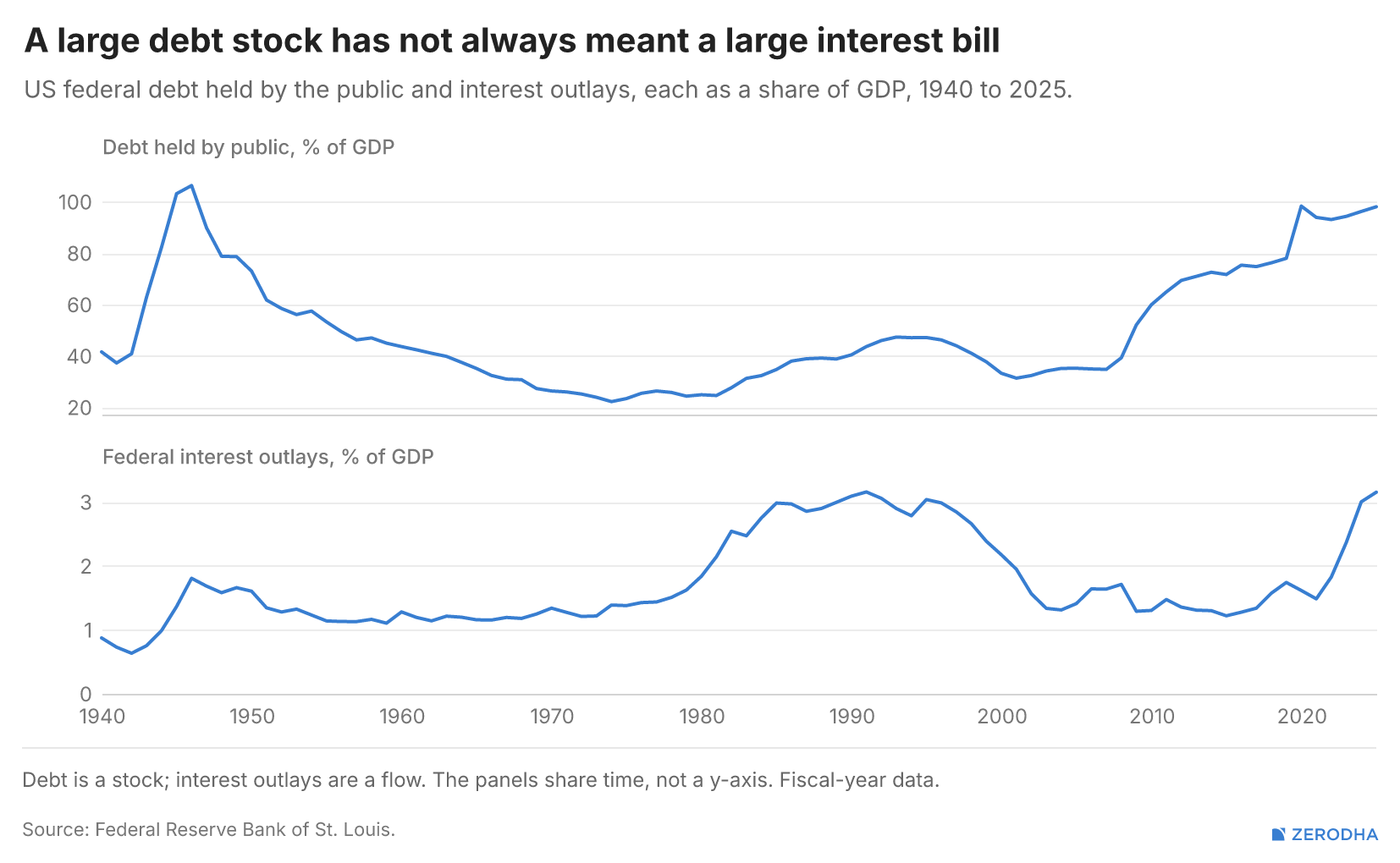
At the end of fiscal year 2025, debt held by the public was about 98% of GDP. That’s roughly a year of everything the US economy produces.
That sounds scary, but this metric is misleading in one crucial manner.
Debt piles up over years, while GDP is one year’s output. It’s like comparing your home loan with your annual salary: that tells you how big the loan is, not whether you can afford next month’s EMI.
Economists Jonathan Berk and Jules van Binsbergen go further. For debt-to-GDP to mean anything over time, debt and GDP need to be tied together, like a man and his dog on a leash. Both can wander, but not too far apart. Economists call this cointegration. Berk and Binsbergen argue that the leash probably isn’t there, because growth and interest rates have shifted so much over the decades. And without that leash, a rising ratio doesn’t tell you how close you are to a crisis.
This is not to say that debt-to-GDP doesn’t matter. But it is only one way of looking at debt, and its value as a measure of a country’s debt sustainability only holds under certain conditions.
The interest bill
Another important measure of debt sustainability is managing interest payments on old debt. After all, what debt costs depends on how much you owe and the rate you pay. A big home loan at a low rate can come with a smaller EMI than a much smaller loan at a high rate.
In a recent paper, Barry Eichengreen, Maxime Menuet and Gregory Donnat looked at data for 12 advanced economies, including US data going back to 1800. They focused on the primary balance, which in simple terms is the government’s budget before interest. A primary surplus means taxes are enough to cover spending. They found that governments tend to run tighter budgets when their interest bill is high. Once you account for that interest bill, the size of the debt itself tells you very little.
This isn’t proof that rising interest costs force governments to act, and the authors say so themselves. In the US since 1913, the pattern shows up mostly in the clean-ups after big wars. But it’s another way of thinking about the problem: not how big the debt is, but what it costs to carry.
In 2025, debt held by the public was more than double its 1991 level as a share of GDP. Yet interest payments still merely hover around 3.15% of GDP, almost exactly where they peaked in 1991. But that cost is climbing. CBO expects net interest payments to more than double, from $1 trillion, or 3.3% of GDP, in 2026 to $2.1 trillion, or 4.6% of GDP, in 2036.
It won’t happen overnight, though. The average interest rate the Treasury pays on its marketable debt bottomed at 1.4% in January 2022 and was 3.5% by August 2026.
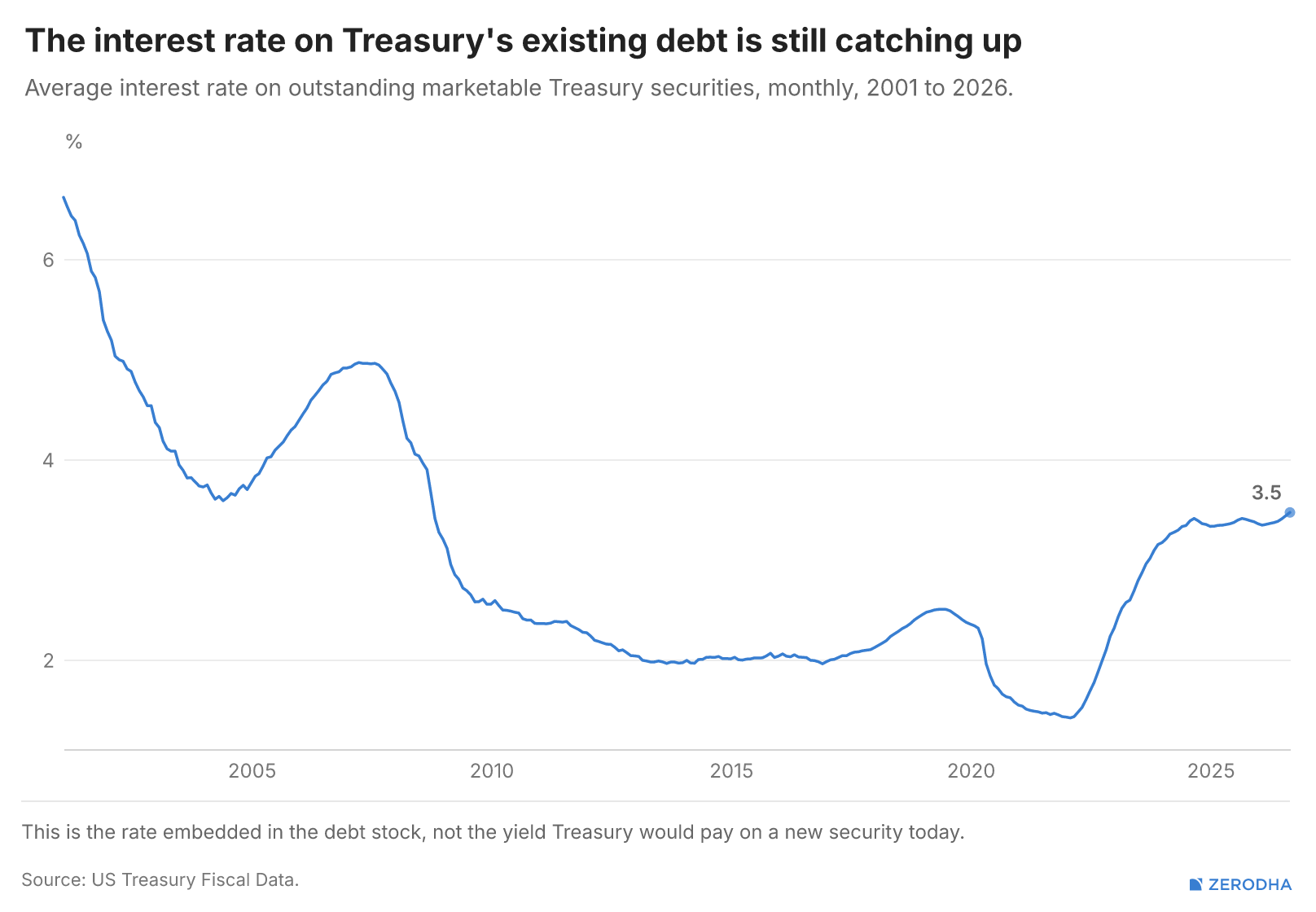
Think of it as a slow-moving reset. When a security matures, the Treasury refinances it at the prevailing market rate. Short-term bills get refinanced quickly, longer bonds slowly, over years. This fiscal year alone, the Treasury has to refinance about $9.7 trillion of maturing debt. So higher yields hurt the budget steadily, without failed auctions or buyers’ strikes.
The other side of the balance sheet
If you’re analysing a company, you wouldn’t look at its debt in isolation. You’d also look at its assets or equity. Now, what if you did the same for an entire country?
That’s what Berk and van Binsbergen do using the stock market’s value as a proxy for a country’s wealth. Our own version, built from FRED data on US corporate equity, puts gross federal debt at about 40.5% of that value at the end of 2025, well below its average of about 62% since 1966.
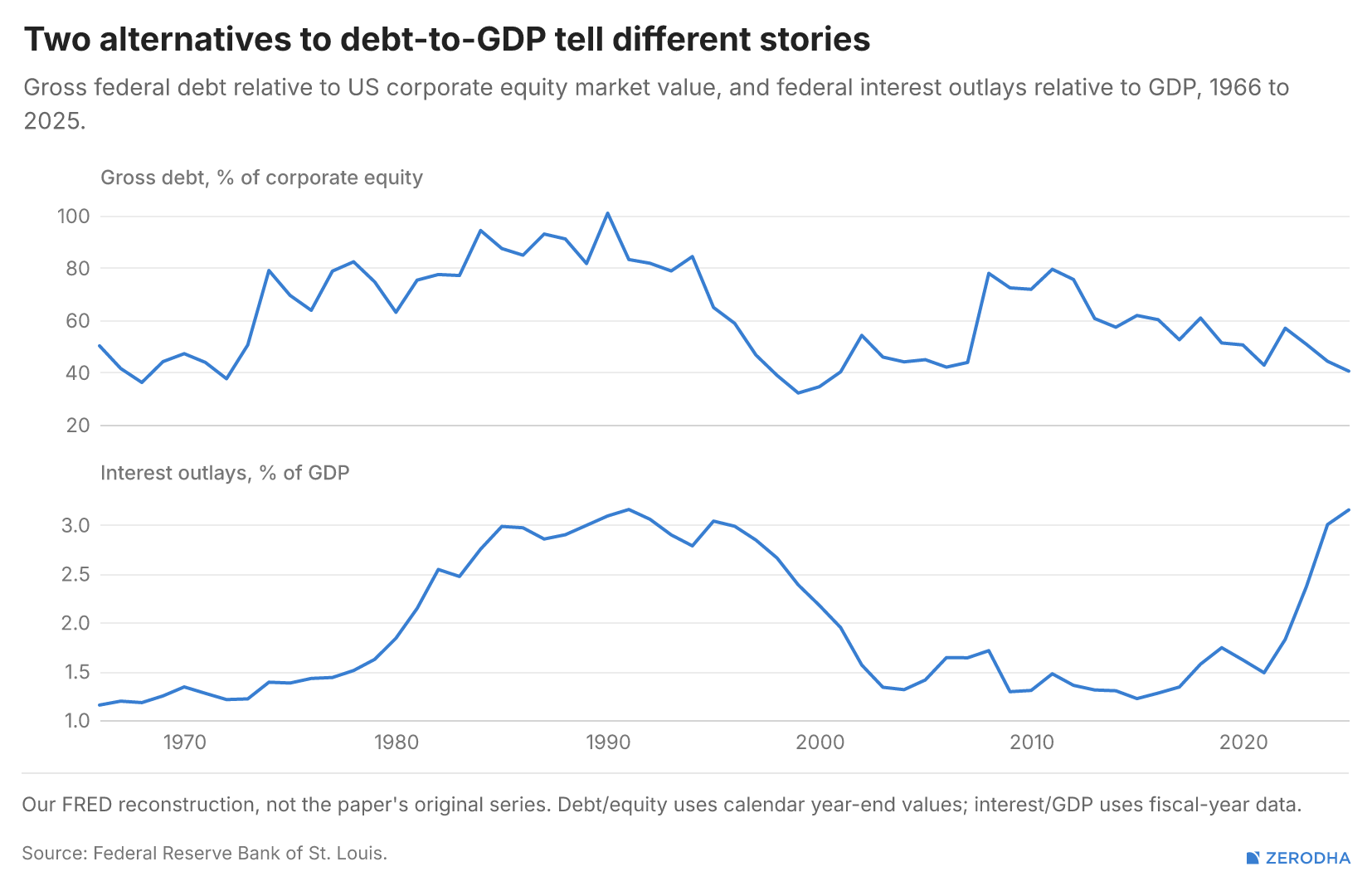
It’s a narrow yardstick. It leaves out property and other wealth, swings with the stock market, and certainly isn’t money the Treasury can get its hands on. But compare debt with wealth instead of income, and the story looks very different.
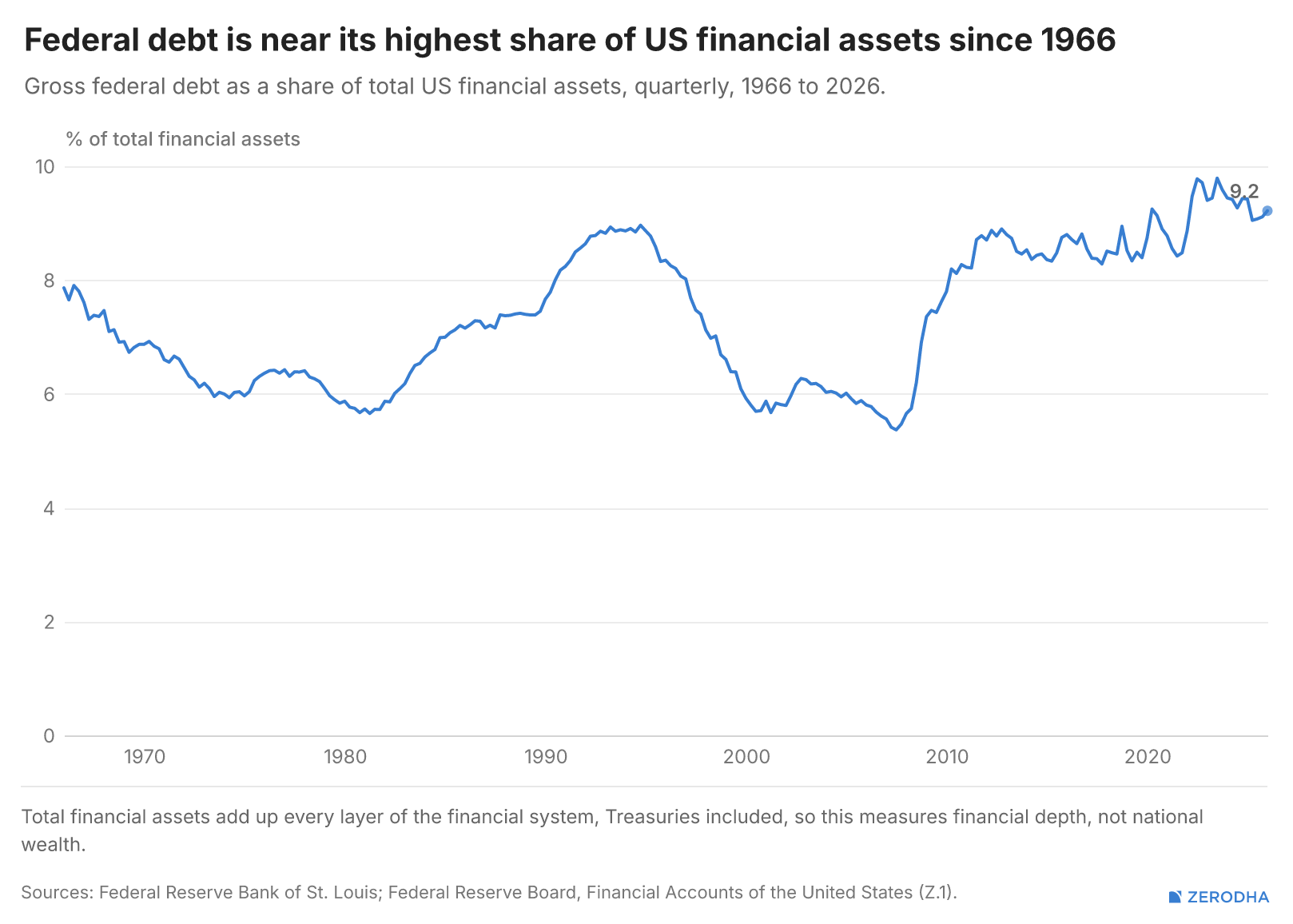
Cullen Roche goes broader, comparing the debt with all US financial assets, which he puts at almost $450 trillion. By his count, federal debt is about 9% of that, up from 5.5% in 2005. The Fed’s own data, about $424 trillion, gives much the same answer, and by that measure debt is close to its highest since the 1960s.
Roche also makes a simple point: one person’s debt is another person’s asset . If you pay off the national debt, you shrink the pile of bonds that the retirees and savers in your country rely on. That means that a country cleaning off its debt entirely isn’t as clean a win as paying off your home loan is.
There’s another view that takes this thought even further.
You see, you and I use the rupee, but we don’t issue it. The US government issues the dollar, so it can’t run out of dollars the way an American citizen can run out of rupees . This view treats the Treasury and the Fed as one entity, and says the real limit isn’t money but real resources like workers, machines, materials. If you spend more than the economy can produce, you risk inflation, and possibly a weaker currency. This is part of what economists called the Modern Monetary Theory (MMT) view.
But there are two limits to the MMT view.
One, the US Congress sets a ceiling on how much the Treasury can borrow. So once the Treasury runs out of borrowing room and cash, it can’t pay bills Congress has already approved by raising more debt.
The second limit is economic. Even if bondholders get every dollar they were promised, those dollars can lose value to inflation.
At the extreme, high debt can tie the central bank’s hands. Say inflation is rising, but the Fed can’t raise rates because that would blow a hole in the government’s finances. Economists call this fiscal dominance. Nothing we read suggests the US is there today, but that’s one fight to watch for if things go south.
What if rising yields are the warning?
Another warning sign could be where bond yields stand today.
Broadly, in the developed world, long-term borrowing costs have risen. As of September 10, 30-year government bond yields were 5.9% in the UK, 5.3% in the US, 5.1% in France, 4.2% in Canada and 3.9% in Germany.
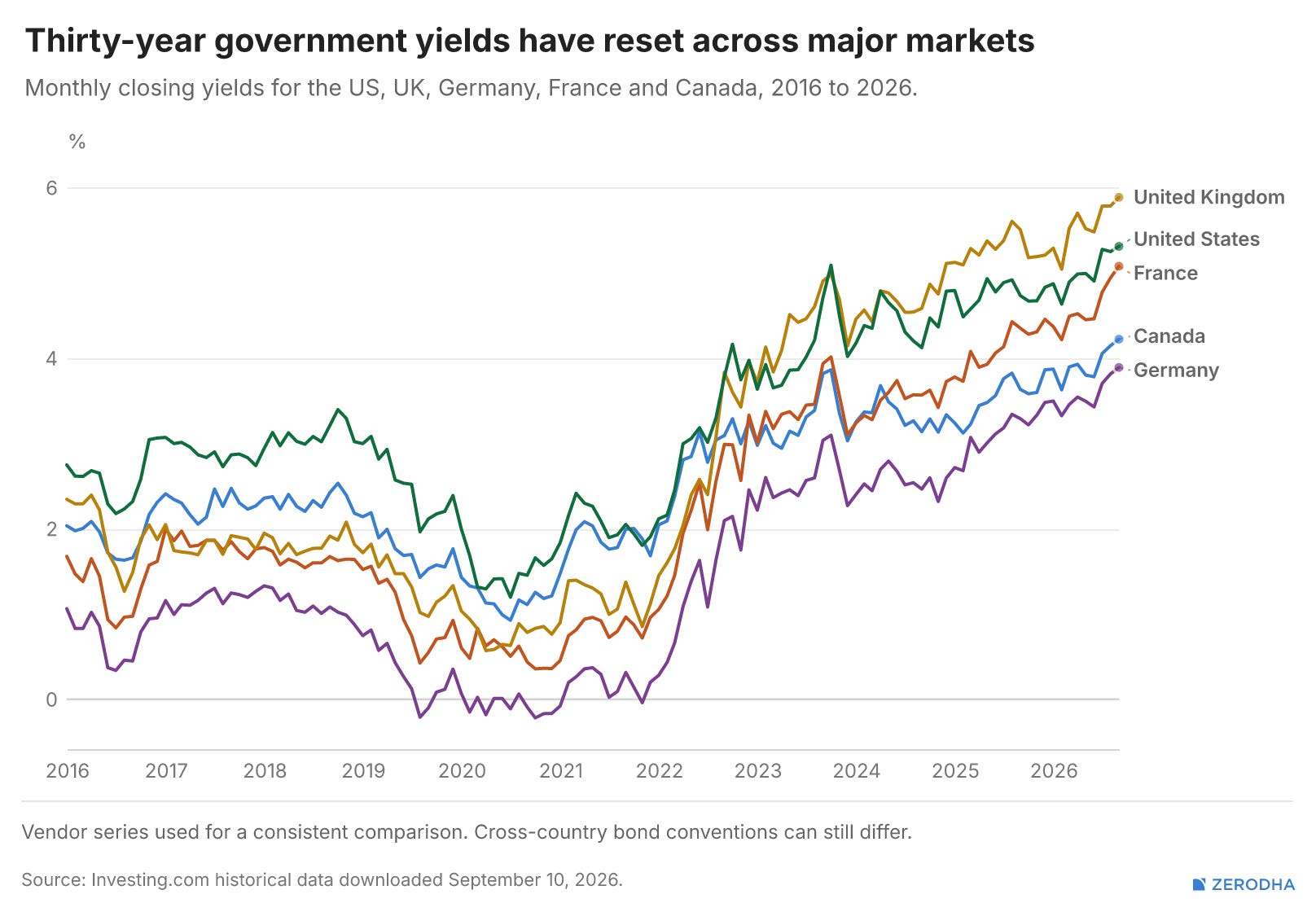
A long-term yield is made of two things: where investors think short-term rates will go over the next 30 years, and the extra return for the risk that rates don’t go as expected (also called a term premium). But a yield doesn’t tell you which of the two pushed it up.
Economist Paul Krugman thinks it’s mostly demand for credit: companies borrowing to build data centres, and the government borrowing to cover its deficits. And he doesn’t see panic. Long-term inflation expectations have barely moved, and credit-default swaps, which are insurance against a US default, have stayed quiet.
However, Hanno Lustig argues instead that the market is too thin, and too exposed to the very default it insures against, to tell us much. He looks at the convenience premium instead, which is the yield investors give up just for the safety and liquidity of Treasuries. Building on work by MIT economist Lira Mota, he estimates it has fallen to roughly zero. That means investors now value Treasuries no more than bonds from America’s safest companies , once those bonds are insured against default.
Either way, this year’s move is smaller than it sounds. The US 30-year yield rose from 4.9% in January to 5.3% in September, and that’s small next to the run-up of 2022 and 2023. The current rate is only high by post-2008 standards. Every day from 1977 to 1997, it was higher.
So what would a real loss of confidence look like?
The UK offers up a case study. In September 2022, after a mini-budget, yields on Britain’s government bonds (or gilts) shot up. Leveraged funds used by pension schemes, known as LDI funds, faced margin calls, so they sold gilts, which pushed prices down further and triggered more calls. The Bank of England had to step in and buy gilts to stop the spiral.
America isn’t Britain. The dollar plays a global role sterling can’t match. But fiscal worry can show up first as a plumbing problem in the bond market, long before a government misses a payment. Britain’s crisis shows another warning sign: government bonds, stocks and the currency all falling at once. That’s what it looks like when markets get spooked by a country’s budget.
Conclusion
How does high debt ever come down? Governments can raise taxes or cut spending, grow their way out, let inflation eat into the old debt, or restructure what they owe. Or they can take another route: financial repression.
Financial repression is when a government uses rules to keep its own borrowing cheap. It pushes banks and other institutions to hold its bonds at below-market interest rates, often below inflation. The debt shrinks in real terms, and savers pay for it without noticing. It works like a hidden tax.
America has done it before. From 1942 to 1951, the Fed capped long-term Treasury yields at 2.5%, even as inflation hit 17.6% in the year to June 1947. Between 1945 and 1955, US government debt held outside the central bank fell by about 46 percentage points of GDP. Some IMF economists credit anywhere between 11 and 23 points of that to financial repression.
So, back to $40 trillion.
Is it a ticking time bomb? Not on the evidence we’ve seen. But it is a sign that America’s choices can get harder. The interest bill is climbing, and the cheap debt of a few years ago is slowly being replaced with more expensive debt.
The easiest way to see when the debt turns into a problem is what it costs, and more importantly, who’s still willing (or not willing) to hold it.

India gets closer to satellite internet
India has moved another step closer to letting companies like Starlink, and even Jio and Airtel, sell satellite internet here.
The Digital Communications Commission (DCC), the telecom department’s top decision-making body, has reportedly backed a new pricing formula for the spectrum these companies need. Spectrum means the radio frequencies that carry data between satellites and equipment on the ground.
Under the reported formula, companies would pay the government 5% of their satellite-service revenue. If they serve hard-to-connect areas, such as remote border, hill or island regions, that charge could fall to 4%. There was another proposal by TRAI, which proposed a lower 4% rate, but with an extra ₹500 a year for every urban subscriber. It got rejected. The government would assign spectrum for five years, with the option to extend it by another two.
Cabinet approval is still pending. Companies will also need their individual spectrum and security clearances before they can launch commercial services.
We have covered that fight before. India had already decided to assign satellite spectrum directly rather than auction it. What remained was the price companies would pay for access.
The rule matters less than it looks
Let’s start with TRAI’s rejected proposal.
When the Department of Telecommunications (DoT) asked TRAI to reconsider the extra annual charge for each urban subscriber, TRAI defended its original proposal with some economics.
Take a company earning ₹1,000 a month from an urban customer. Under TRAI’s proposal, the 4% spectrum charge would cost ₹40 a month, while the existing fixed urban fee would add another ₹42 or so. Together, that comes to roughly ₹82. Under the newly reported formula, a flat 5% spectrum charge would cost ₹50.
The two formulas only become equally expensive at around ₹4,167 of monthly revenue per subscriber. Below that, the new structure actually costs less.
TRAI’s stated rationale was that the urban charge would tilt the economics towards rural connectivity. DoT preferred to lower the spectrum charge for companies serving hard-to-connect areas instead.
But that relief also works in a lopsided manner. One percentage point saves ₹10 on ₹1,000 of revenue and ₹1,000 on ₹1 lakh. So the value of the concession rises with the revenue it applies to, not directly with how expensive a particular place is to connect. And it is possible that since the revenue from urban areas would be much higher than rural ones, the relief offered with DoT’s formula wouldn’t be that great.
Now, beyond the proposal, there are more costs involved.
First is the hardware. TRAI’s records suggest terminals for one large satellite system cost a few hundred dollars. A ₹30,000 terminal spread over three years works out to about ₹833 a month.
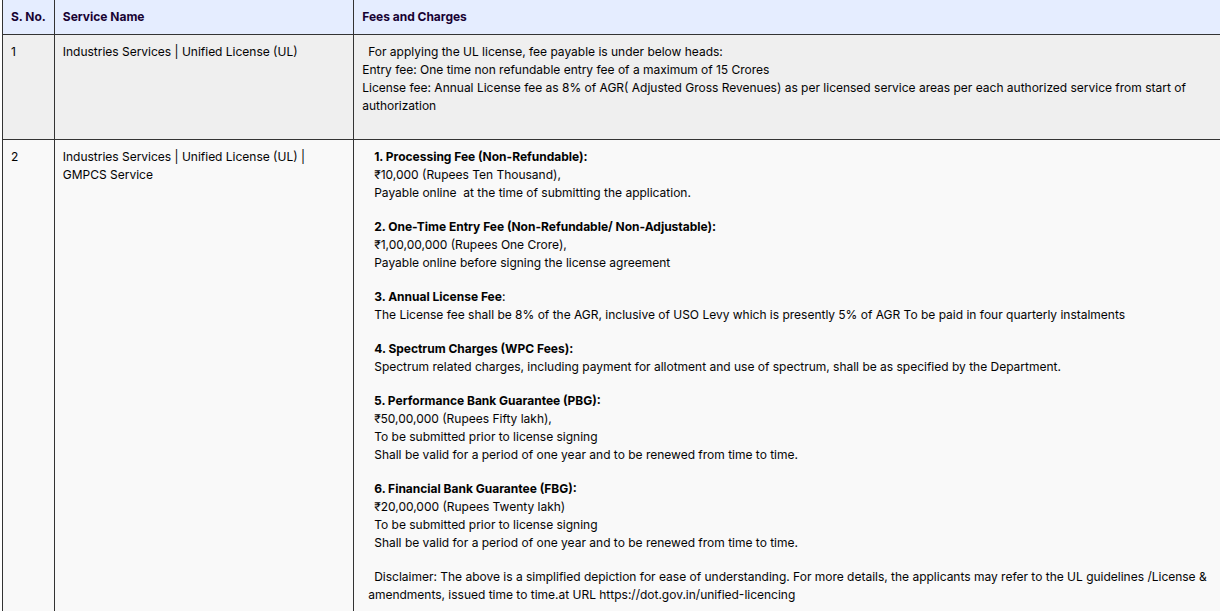
Lastly, operators already pay an 8% licence fee on adjusted gross revenue, separate from what they pay for spectrum.
Eventually, things boil down to the kind of customer satellite operators can actually serve profitably.
The ideal customer
The basic advantage of satellite internet is that it can reach places where laying fibre or building telecom infrastructure is difficult or uneconomical. But it cannot simply replace India’s fibre and mobile networks. A satellite may cover a huge area, but the amount of data it can carry is still limited.
One way satcoms aim to do this is backhaul, which refers to using satellite capacity to connect a remote mobile tower to the wider network. Instead of giving 100 village households 100 separate dishes, an operator can connect one tower and let everyone nearby continue using ordinary mobile service, depending on the applicable authorisation.
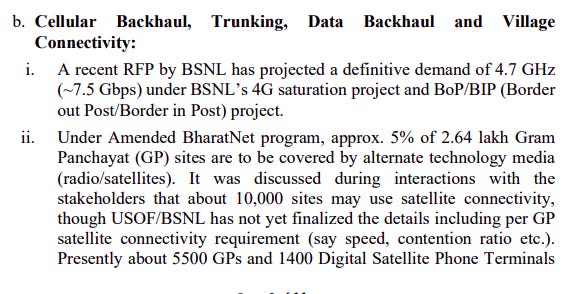
Another type of customer could be enterprises but in very niche zones. Think of an oil rig, a mining operation, or even a tea estate. In comparison, enterprises in urban areas will likely already have access to fiber.
A third case is mobility. How would ships or airplanes have access to towers or fiber? For them, satellites would indeed work best.
Many of India’s satcom partnerships are worded similarly to reflect these customers. OneWeb’s deal with Nelco, a subsidiary of Tata Power, mentions maritime and aviation. Airtel’s Starlink deal names schools and health centres in more remote areas.
The question, then, is which mix of fibre, mobile and satellite connects India most cheaply.
The competitor became the distributor
For a while, India’s satellite-internet debate looked like a straight fight between Starlink and the big telecom companies.
Jio argued that giving satellite operators spectrum administratively could create an uneven playing field with telecom companies that had paid heavily at auction. Starlink pushed back that satellite spectrum works differently because several operators can share the same frequencies. We have covered that fight before.
Then the lines started to blur. Jio and Airtel both signed agreements with Starlink. Jio still has its satellite venture with SES, Airtel remains tied to OneWeb, and Vodafone Idea has partnered AST SpaceMobile.
The reason is simple: satellite companies and telecom operators bring different things to the table. Starlink brings the satellite network and capacity, while Jio and Airtel can bring customers, billing, installation, support and local distribution.
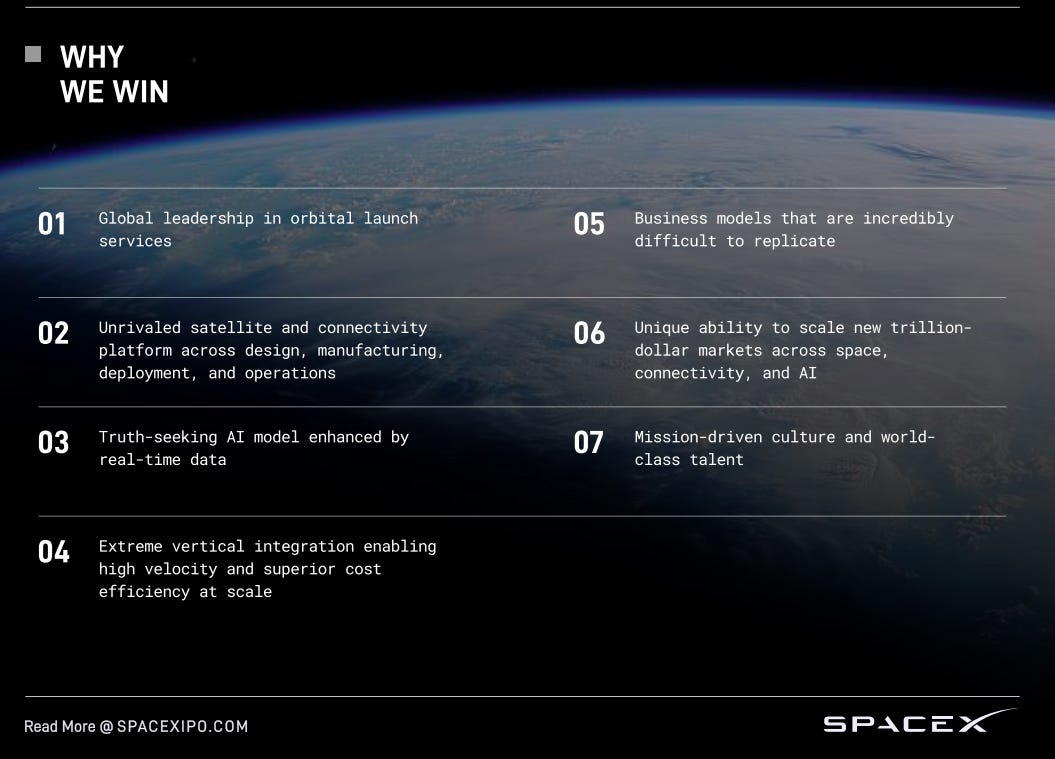
Competition can now happen on two levels: over the network in orbit and over the customer on the ground. Starlink’s edge, in the first sense, is that SpaceX builds its satellites and launches them on its own reusable rockets. That integration turns into a cost advantage.
Who controls the network?
Suppose Airtel sells you a Starlink connection. You pay Airtel, you speak to local support, and your traffic lands through an Indian gateway. But SpaceX still operates the satellites above you.
For an ordinary home user, that distinction may not be very visible. It matters more once the same network connects mobile towers, ships, aircraft, government facilities or emergency communications during a disaster.
India then has to decide how much control it needs over the network. Where is a terminal being used? Can authorities identify it? Can an unauthorized connection be switched off? Can Indian traffic be routed abroad? And what happens if India needs the network during a conflict or shutdown?
DoT’s GMPCS framework builds in some safeguards, requiring Indian gateways and domestic monitoring. That gives India more control over the network on the ground, but not over the satellites themselves.
Owning Starlink doesn’t have to be the only way to reduce that risk. India can rely on several satellite networks, keep emergency capacity available and build more of the ground infrastructure in India. It would give India more options if one provider failed or pulled back.
Looking ahead
So far, we’ve been talking about satellite internet that needs dedicated equipment on the ground. The industry is now trying to remove that requirement.
For instance, Direct-to-device technology lets an ordinary phone connect to a satellite when no tower is in range. Your phone could move between a terrestrial network and a satellite network without needing a separate terminal.

That creates a different regulatory problem. The pricing debate India is close to settling mainly concerns spectrum assigned specifically for satellite communication services. Direct-to-device services can instead use spectrum that mobile operators already hold.
TRAI has already opened a separate consultation on how these networks should fit into India’s telecom system. Jio, Starlink and Amazon Leo have already filed their views.
So the pricing fight is nearly over. What satellite internet in India becomes is still wide open.
- This edition of the newsletter was written by Bhuvan & Mridula.
Tidbits
[1] El Niño threatens Indian sugar output and tightens global market outlook
India’s sugar production is expected to weaken in the 2026–27 season as El Niño brings drier weather to key cane-growing regions. The prospect of lower Indian output is adding to concerns about a global supply deficit and has supported higher raw-sugar prices.
Source: Bloomberg
[2] Embraer wants to make planes in India, not just sell them.
Brazilian aircraft maker Embraer’s government relations head met Civil Aviation Minister Ram Mohan Naidu and Commerce Minister Piyush Goyal to discuss expanding its manufacturing footprint in India. The company has already partnered with Adani Defence & Aerospace to explore a final assembly line for the E175 regional jet, contingent on securing at least 200 aircraft orders.
Source: The Economic Times
[3] Navi Mumbai airport gets one-year landing-charge waiver for international flights
The Airports Economic Regulatory Authority has approved a full waiver on landing charges for international routes from Navi Mumbai International Airport during their first year of operation. The incentive is aimed at attracting airlines and building international traffic at the new airport.
Source: The Economic Times
[4] Indian Railways to upgrade older passenger trains with 6,000-HP locomotives
Indian Railways plans to procure new 6,000-HP energy-efficient locomotives for older non-Vande Bharat passenger trains. The engines will support push-pull operation, improve journey times, and eliminate the need for separate generator cars.
Source: The Economic Times
[5] Government tightens e-commerce rules to curb dark patterns and price manipulation
The Ministry of Consumer Affairs has amended the Consumer Protection (E-Commerce) Rules to introduce stricter checks against dark patterns, fake sponsored listings, and price manipulation, effective January 2027. Under the new framework, platforms must partner with the National Consumer Helpline and clearly display the lowest prior price from the preceding 30 days when announcing discounts.
Source: The Economic Times
Want more tidbits? Catch up on last week’s recap!
[
Weekly Tidbits #4
](Weekly Tidbits #4 - The Daily Brief by Zerodha)
·
12 Sept

Hi everyone, I’m Mridula, and welcome to the fourth edition of Weekly Tidbits.
Beyond Today’s Brief
There’s always more happening at Markets by Zerodha.
- The Chatter: What regulatory signals are the RBI Governor and Deputy Governor sending to financial institutions? How is KEI Industries navigating demand across power and infrastructure cables? And what does Cochin Shipyard’s order pipeline reveal about India’s defense and maritime momentum?
- What We’re Reading: Everything from Palak Shah’s inside story on covering SEBI to structural shifts in global trade networks to the hidden mechanics of institutional financial risk.
- Points & Figures: How severe is the backlog facing India’s judicial system, and what do 5.4 crore pending court cases reveal about institutional capacity and economic friction?
Join us on WhatsApp , where we share interesting soundbites from concalls, articles, and everything else we come across throughout the day. You’ll also get notified the moment a new video or article drops so that you can read or watch it right away.
Thank you for reading. Do share this with your friends and make them as smart as you are 