Our goal with The Daily Brief is to simplify the biggest stories in the Indian markets and help you understand what they mean. We won’t just tell you what happened, we’ll tell you why and how too. We do this show in both formats: video and audio. This piece curates the stories that we talk about.
You can listen to the podcast on Spotify, Apple Podcasts, or wherever you get your podcasts and watch the videos on YouTube. You can also watch The Daily Brief in Hindi.
In today’s edition of The Daily Brief:
- Iran exacts an oil toll on the world — or does it?
- India’s ₹4,000 crore bet on digging mud from the sea
Iran exacts an oil toll on the world — or does it?
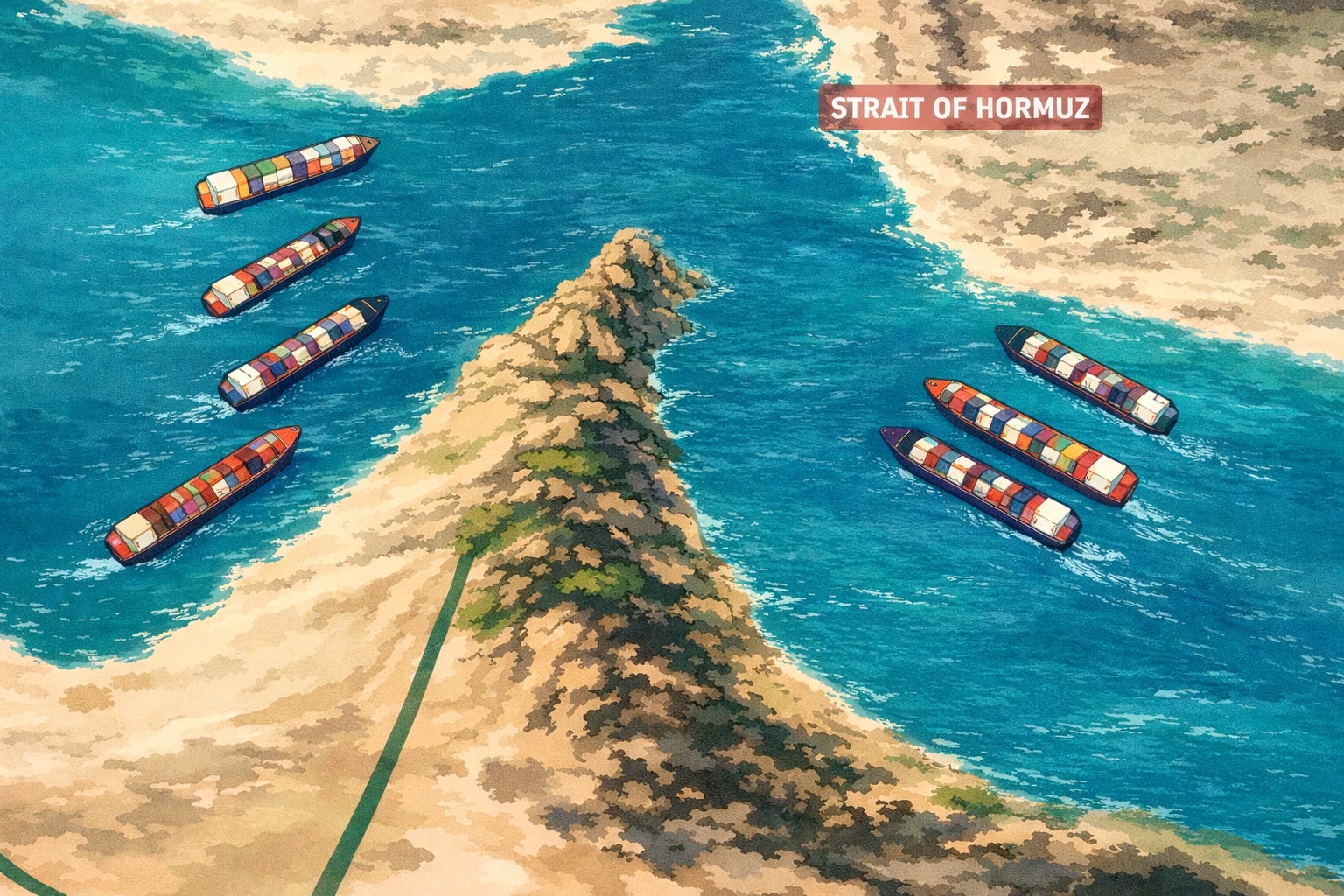
20% of the world’s oil passes through a 21-mile-wide strip of water between Iran and Oman. For decades, that passage was free — guaranteed by international law, enforced by the US Navy.
But over the last week, reports from Bloomberg, Lloyd’s List, and the Financial Times suggest that may no longer be the case.
Iran, they say, has started charging ships up to $2 million each to pass through. Iranian lawmakers claim it’s already happening. A bill to formalize the toll is reportedly moving through parliament.
However, this claim doesn’t escape debate — and some of the counters ironically come from parts of Iran’s own state machinery. For instance, Iran’s embassy in India says the reports are “unfounded.” Meanwhile, Iran’s Foreign Ministry refuses to comment.
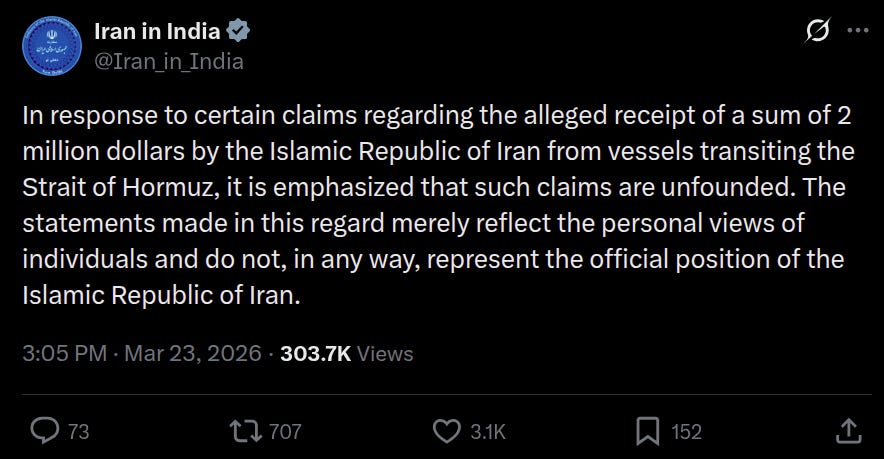
So is Iran running a toll booth on the most important chokepoint in global energy? We don’t know, and that’s part of the story . We’ll be saying some version of the words “if this is true ” a lot of times in this story. That’s how blurry the line between fact and fiction — and the line between legal and informal — is.
But ultimately, such scenarios and counterfactuals exist because their underlying context is real. And that’s what we’ll be exploring.
The space between
If the reports are to be believed, The Strait of Hormuz toll exists simultaneously in two forms.
The first form is an informal, operational system that’s already extracting payments from ships. In parallel, there may be a formal parliamentary bill in the works to legally enshrine the system. The ambiguity lies in the gap between the two.
In the informal system, reportedly, ships are being routed through a narrow corridor between Iran’s Qeshm and Larak islands, passing through Iranian territorial waters under the supervision of Iran’s Islamic Revolutionary Guard Corps (IRGC). The IRGC verifies vessel details and, according to Lloyd’s List, extracts a passage fee. At least two vessels reportedly paid around $2 million each.
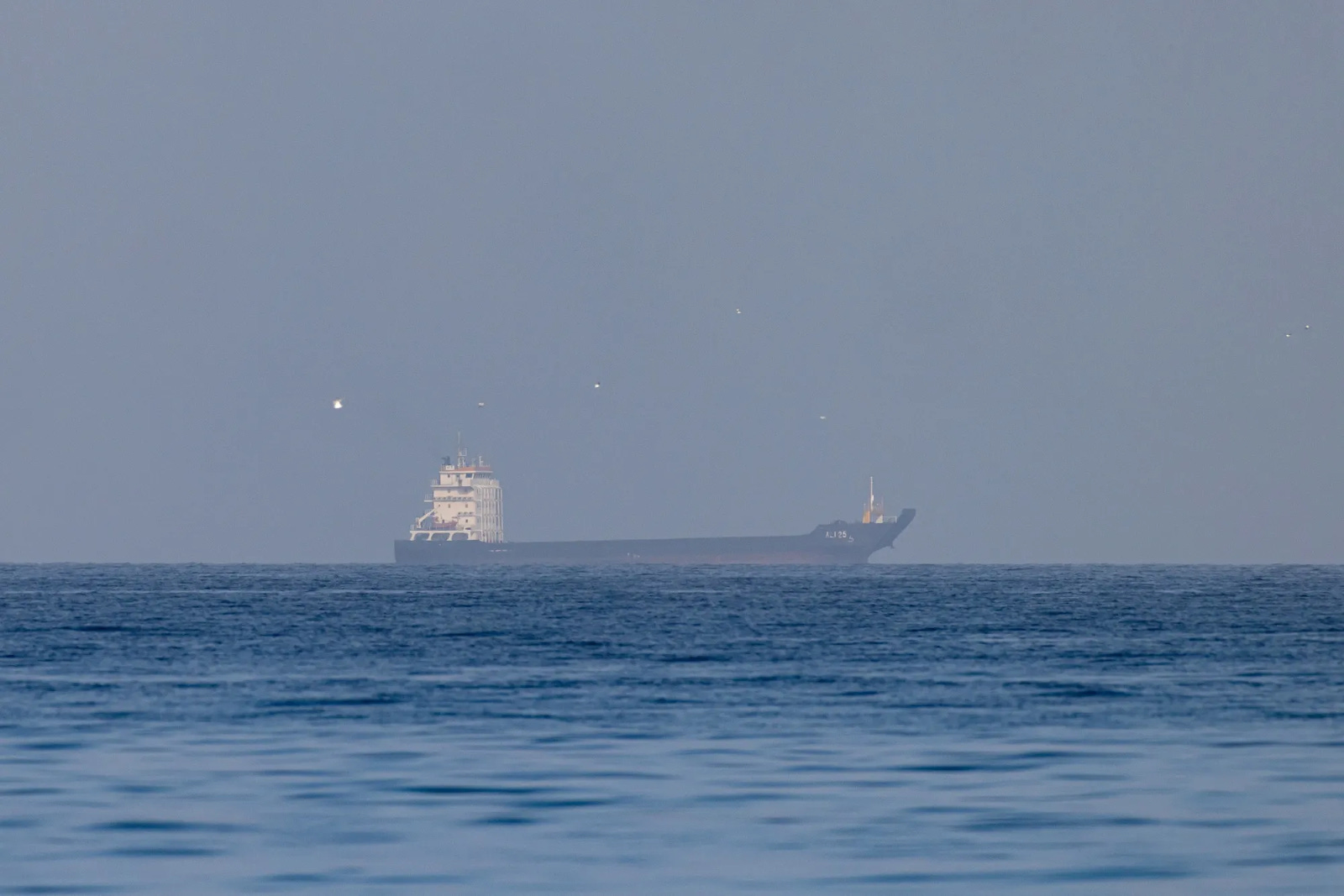
Cargo vessel stranded near Strait of Hormuz
Now, over to the formal side.
There’s a strong push to pass this bill that will formalize the toll system. One member of parliament told Iranian media in mid-March that countries should “pay tolls and taxes to the Islamic Republic if the Strait of Hormuz is used as a secure route “. Another went on state TV claiming the $2 million fee was already in effect, framing it as a demonstration of Iran’s strength. Iran’s parliament speaker stated flatly that the strait’s pre-war status quo would not return.
Iran’s diplomats officially deny all of it, but that doesn’t necessarily mean it isn’t happening. If anything, the denial might be the message. Publicly acknowledging a toll on an international strait would invite legal challenges, give the US a clearer justification for military escalation, and alarm countries like India that Iran still needs as customers. In that view, as Iran, you’d rather deny it while quietly collecting the money. This ambiguity may not be so much of a bug as it could be a feature of the leverage Iran holds.
The parliamentary bill fits this reading too. It isn’t creating a toll from scratch. Instead, it’s positioning Iran to formalize something that may already be happening on the water, at a time of its choosing. The lawmakers making bold claims on state TV, meanwhile, could be perceived as providing nationalistic morale to a domestic audience that is worried about its nation’s defenses.
The international reaction has been fractured, to say the least.
President Trump issued a 48-hour ultimatum on March 22 demanding Iran fully reopen the strait, then postponed strikes for five days, citing “productive conversations “ with Tehran. The US military has destroyed over 130 Iranian naval vessels and still can’t guarantee safe passage. US Navy officials told the shipping industry that military escorts are “not an immediate option “.
On the other side a 22-nation coalition including the UK, France, Germany, and Japan condemned Iran’s actions, but largely to appease Trump, while most European nations explicitly refused military participation.
Saudi Arabia went furthest — expelling Iranian embassy staff, opening airbases for US operations, diverting oil exports to its Red Sea port, and explicitly reserving the right to take military action. India’s Shipping Ministry, for its part, called the reports “baseless” under international law.
All of this is happening fast. It seems that Iran’s strategy has evolved in distinct phases since the war began. First came outright closure, with mines, missile threats, and halting all freight. Then came selective passage for states Iran deemed “non-hostile “. And now, if the reports are accurate, they’re charging for the privilege of transit.
Iran can’t win a conventional war against the US. But it can sit on a chokepoint and charge rent.
Can Iran even do this?
Legally, Iran shouldn’t be allowed to do this.
UNCLOS — the UN Convention on the Law of the Sea — is pretty clear on this. All ships enjoy the right of “transit passage” through international straits. That passage “shall not be impeded,” and no charge may be levied on foreign ships by reason of their passage alone. Iran has signed but never ratified UNCLOS, which gives it a narrow technical argument. But most international law scholars regard transit passage as customary international law, binding on all states regardless. The International Court of Justice established that principle as far back as 1949, well before UNCLOS existed.
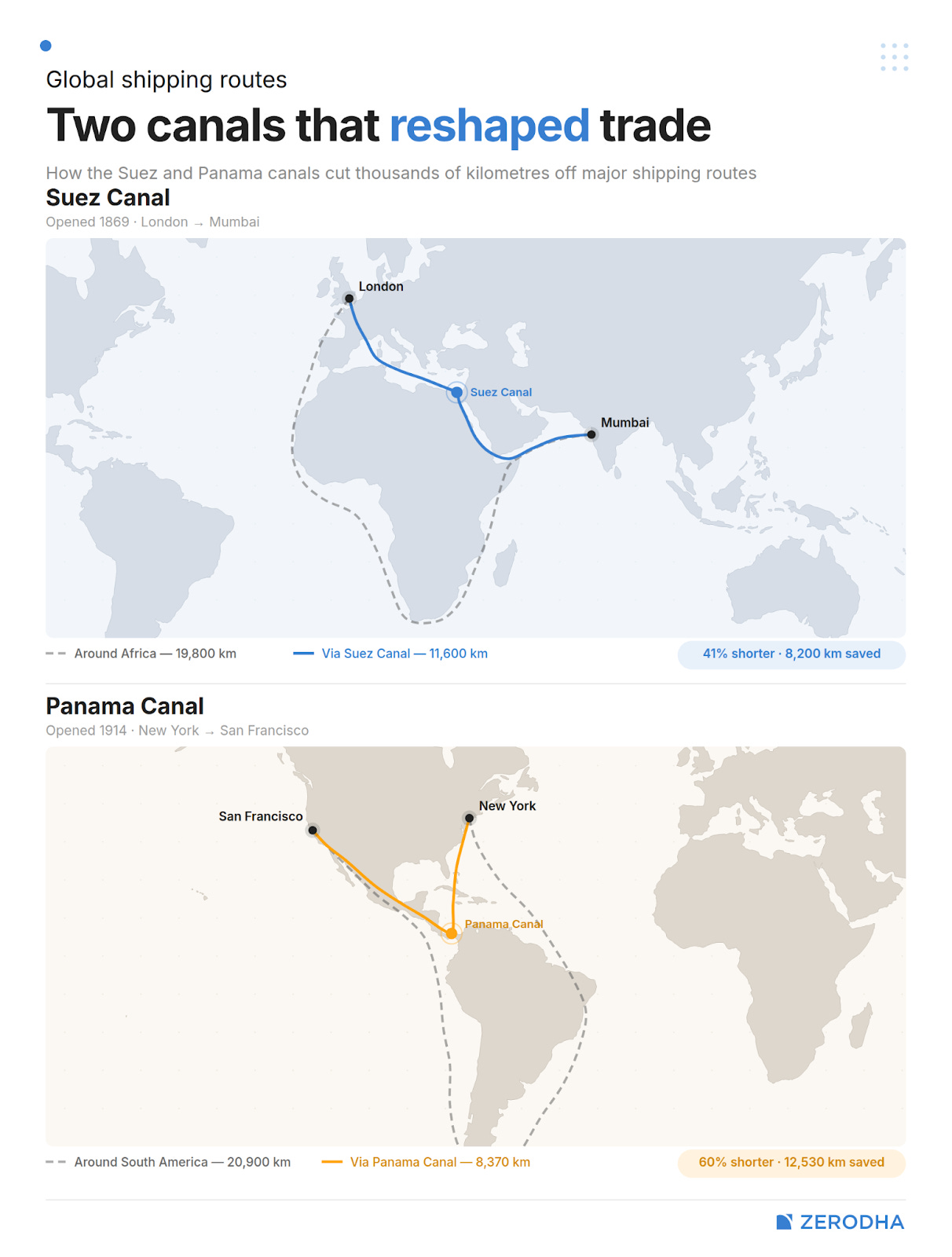
Iranian lawmakers have cited the Suez Canal, the Panama Canal, and Turkey’s Bosphorus as precedents for the kind of toll they’re looking to set up. But each of these actually undermines their argument.
Suez and Panama, for instance, are man-made waterways — the fees compensate for the cost of building and maintaining the infrastructure. Turkey’s Bosphorus charges modest service fees under a specific 1936 treaty that predates and is grandfathered into modern maritime law. The Strait of Hormuz, in contrast, is a natural waterway with no infrastructure to maintain and no treaty authorizing fees.
But how much does international law matter during war? Who even has the power to enforce a country to adhere to the consequences of not following it?
International maritime law assumes a functioning order where states respect norms because the costs of violating them — diplomatic isolation, trade retaliation — outweighs the benefits. But when you’re already facing sanctions against the world’s most powerful military, what’s your incentive to follow it? Iran doesn’t see how it can gain anything by adhering to the laws, or lose anything by breaking them. It isn’t weighing the legal risks of a toll against a stable status quo, but against American and Israeli air strikes.
The perverse economics of a $2 million toll
But more than the geopolitics, what makes the story interesting is that the toll might actually be cheaper than the chaos it replaces.
Before the current crisis, war risk insurance for a ship transiting the Strait of Hormuz cost roughly 0.02–0.05% of hull value — roughly $40,000-$100,000 for a large oil tanker. By mid-March, those premiums had surged to around 5% of hull value. For a Very Large Crude Carrier (VLCC), the workhorse ships that run global oil trade, that’s roughly $5 million per transit, just in insurance. Charter rates also quadrupled.
The total additional cost per voyage — including insurance, charter premiums, routing changes — reached $4–6 million. In that context, $2 million for guaranteed safe passage starts to look like a perverse kind of bargain. You’re paying for certainty in an environment where the alternative is no passage at all.
The revenue potential, at scale, is enormous. Pre-crisis traffic through Hormuz was roughly 138 ships per day, carrying about 20 million barrels of oil — around 20% of global supply. An Iranian newspaper proposed that a 10% toll could generate $73 billion a year — a wildly theoretical number. It would incentivize investments by others to build bypass routes. However, it reveals how big Iran’s ambition is.
The current bypass options, meanwhile, are limited.
Saudi Arabia has a pipeline from its eastern oil fields to its Red Sea port of Yanbu, which can handle up to 7 million barrels a day. The UAE has a similar pipeline to Fujairah, carrying over 1.5 million barrels a day. Together, that’s maybe 8–9 million barrels of bypass capacity. The gap, which is roughly 14 million barrels a day, have no alternative route. Iraq, Kuwait, Qatar, and Bahrain have no bypass infrastructure at all.
This is also why the Gulf states have reacted with such aggressive hostility towards Iran. After all, their own oil exports are taxed by a hostile neighbour that happens to sit at the mouth of their only maritime outlet.
What this means for India
India is arguably the most exposed major economy in this entire situation.
We import roughly 88–89% of its crude oil, 45% of which transited the Strait of Hormuz before the crisis. But it’s not just crude — about 90% of India’s LPG imports, over half its LNG, and roughly 40% of its fertilizer come through the strait. India’s crude oil basket has surged from ~$63 to $146 a barrel in a matter of weeks. Goldman Sachs has cut India’s 2026 GDP growth forecast to 5.9%, and the rupee has fallen to record lows.
PM Modi called the strait’s closure “unacceptable” in Parliament. But India’s actual approach has been quietly bilateral rather than confrontational. India has not joined the US-led coalition, nor has it condemned Iran by name. It has not engaged in discussions with the US about deploying naval vessels to force the strait open. Instead, Modi held two phone calls with Iran’s president Pezeshkian, and the results have been tangible.
In mid-March, two Indian-flagged LPG carriers owned by the Shipping Corporation of India were granted safe passage through the strait after loading from Qatar. Bloomberg reported that the Iranian Navy actively guided one of them through, staying in radio contact, verifying the ship’s flag, crew nationality, and destination before escorting it along a pre-approved route through Iranian waters. On March 23, two more LPG carriers followed the same route, and are expected to reach Indian ports between March 26 and 28. As a goodwill gesture, India also gave refuge to the crews of Iranian warships that were stranded in the Indian Ocean when the war broke out.
Crucially, none of this involves any reference to a transit fee. India’s External Affairs Minister Jaishankar told that there is no “blanket arrangement” for Indian ships — “every ship movement is an individual happening “. Twenty-two Indian-flagged vessels remain stuck in the Gulf. India is navigating this one tanker at a time, through direct bilateral engagement with Tehran. Iran needs India to keep buying its oil, and India needs Iran to keep the strait passable. For now, this mutual dependence is holding.
The toll itself — whether it’s real, aspirational, or somewhere in between — is best understood as a bargaining chip. Iran’s stated demands for a ceasefire include lifting all economic sanctions, obtaining international legal guarantees, and establishing a “new legal regime” for the strait. The toll gives Iran something concrete to trade away.
India’s only worry is whether the strait stays open tomorrow.
India’s ₹4,000 crore bet on digging mud from the sea
A few days ago, the Dredging Corporation of India announced it wants to more than double its revenue to ₹3,000 crore over the next five years. The Prime Minister has committed ₹4,000 crore to modernise its fleet. The company is buying 11 new dredgers.
All of this money is dedicated to just doing one thing: clear sand, silt, and rock from the bottom of harbours, rivers, and shipping channels, so that large ships can pass through. That, simply, is dredging.
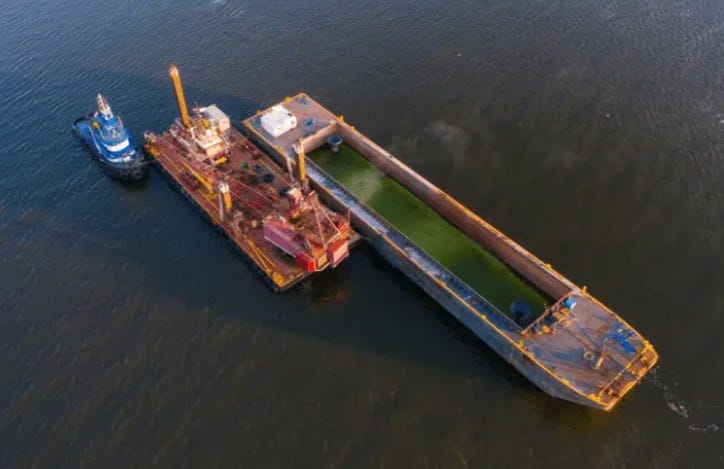
India’s own dredging guidelines estimate the country will need roughly 3 billion cubic metres of dredging over the next decade. Sediment builds up naturally, and every major port in India depends on regular dredging to stay open.
To see where that demand comes from, let’s start with what happens at India’s biggest ports.
Why India dredges so much
Between 2017 and 2019, India’s major ports moved roughly 159 million cubic metres of sediment. And the Kolkata port (now called Syama Prasad Mookerjee Port) is the most dramatic example of how intense dredging an Indian port is.
The government’s 2021 Dredging Guidelines show the port as having among the highest siltation and dredging volumes of any Indian port. The reason for that lies in the Hooghly estuary near the port, which connects the Hooghly river to the Bay of Bengal. The river carries enormous quantities of silt from the Ganga system, depositing it across the shipping channel without pause. The port spends ₹300-500 crore annually just fighting this.
Yet, it is still not always enough. The port has two docks: one at Kolkata, one 100 km away at Haldia. Ships heading to Haldia sometimes have to partially unload cargo at neighbouring ports first because the river is too shallow for fully loaded vessels.
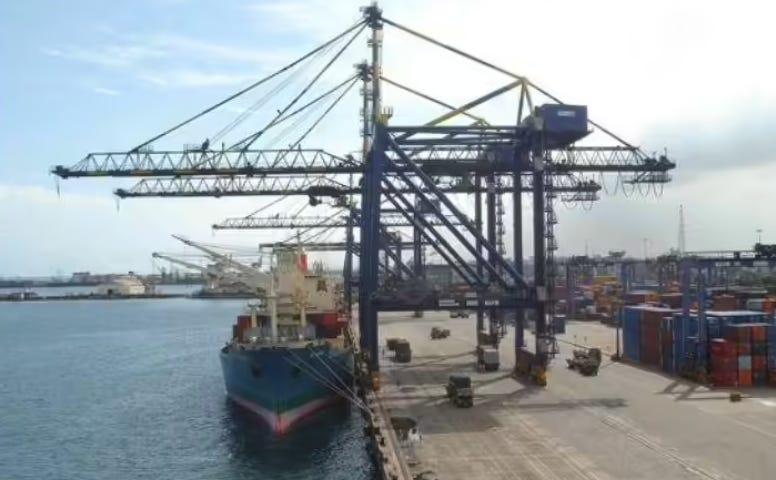
Now, on the other end of the country lies the Cochin port. And it faces a different version of this fight.
At the port, every monsoon, the river mouth silts up heavily, making it one of the ports with the highest dredging demand in the country. At ports like these, dredging is not a one-time job. It is a permanent running cost, like electricity or wages. If you stop dredging for a season, the channel becomes too shallow for commercial ships to parse through.
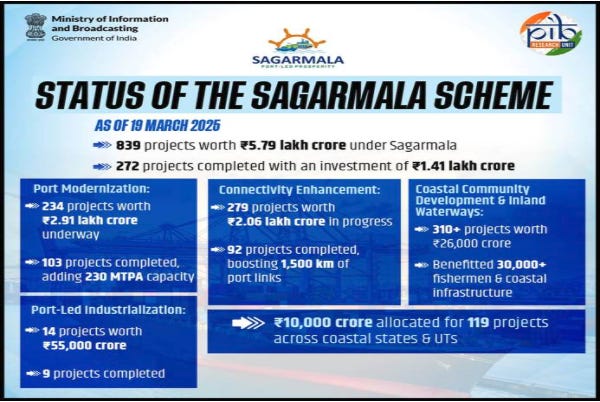
India is also becoming more ambitious, and it needs nature to support those ambitions. We want bigger ships to dock at its ports, and bigger ships need deeper channels. Under the Sagarmala programme, the government has identified 839 projects worth ₹5.79 lakh crore aimed at port-led development. A significant chunk involves deepening channels and building new docking points. All of it starts with moving sediment out of the way.
The cost problem
However, dredging isn’t merely about moving soft mud. It’s not one machine doing one thing. It is an entire chain: surveying the seabed, cutting or sucking up the sediment, transporting it, dumping or reusing it, and then surveying again to confirm the required depth has been achieved. Every step adds to the cost bill.
More importantly, the seabed doesn’t always cooperate with the original digging plans, and that makes the whole exercise a particularly expensive affair.
As per a feasibility study by the Mumbai Port Trust, dredging soft soil costs roughly ₹110 per cubic metre, while dredging rock costs ₹4,000 per cubic metre. That’s a 36-fold gap between the earning potential and the actual costs. An unexpected rock layer beneath the seabed is one of the most feared discoveries in Indian port engineering. One mistake in the initial soil survey can blow a project’s budget by orders of magnitude.
The 2021 Dredging Guidelines explicitly warn that disputes frequently arise from inadequate soil information and wrong dredger selection . A contractor bids based on the port’s soil survey. But if the survey itself has holes, then the costs inflate beyond what’s on paper. And more often than not, this also leads to cases in court disputing the survey, and deciding who should bear the new, inflated costs.
Perhaps, what’s more telling is the government’s delayed payments to ports, who are the main customers of any dredging company.
For instance, the government has reportedly not paid over ₹1,000 crore in dredging subsidies to the Kolkata Port that were approved over a decade ago. The Ministry’s position is that profitable ports should fund dredging on their own. But the port’s counter is that if they do so, they’ll pass the cost to exporters and importers through higher shipping charges. As a result, trade suffers.
This, perhaps, is a common problem in infrastructure projects where the government has a heavy hand, or is the biggest customer.
Old fleet, new rival
For the longest time, dredging has been a public monopoly, led by the government-owned Dredging Corporation of India. Established in 1976, DCI dominates maintenance dredging at India’s major ports. It has always been the anchor for the government’s wishes to improve India’s sea infrastructure.
Being a public-sector enterprise, DCI often runs on losses, or really low profits. Its fleet has an average age of more than 20 years — some vessels have crossed their useful life entirely. Old dredgers mean higher fuel consumption, lower productivity, frequent breakdowns, and disqualification from contracts that set age limits on equipment.
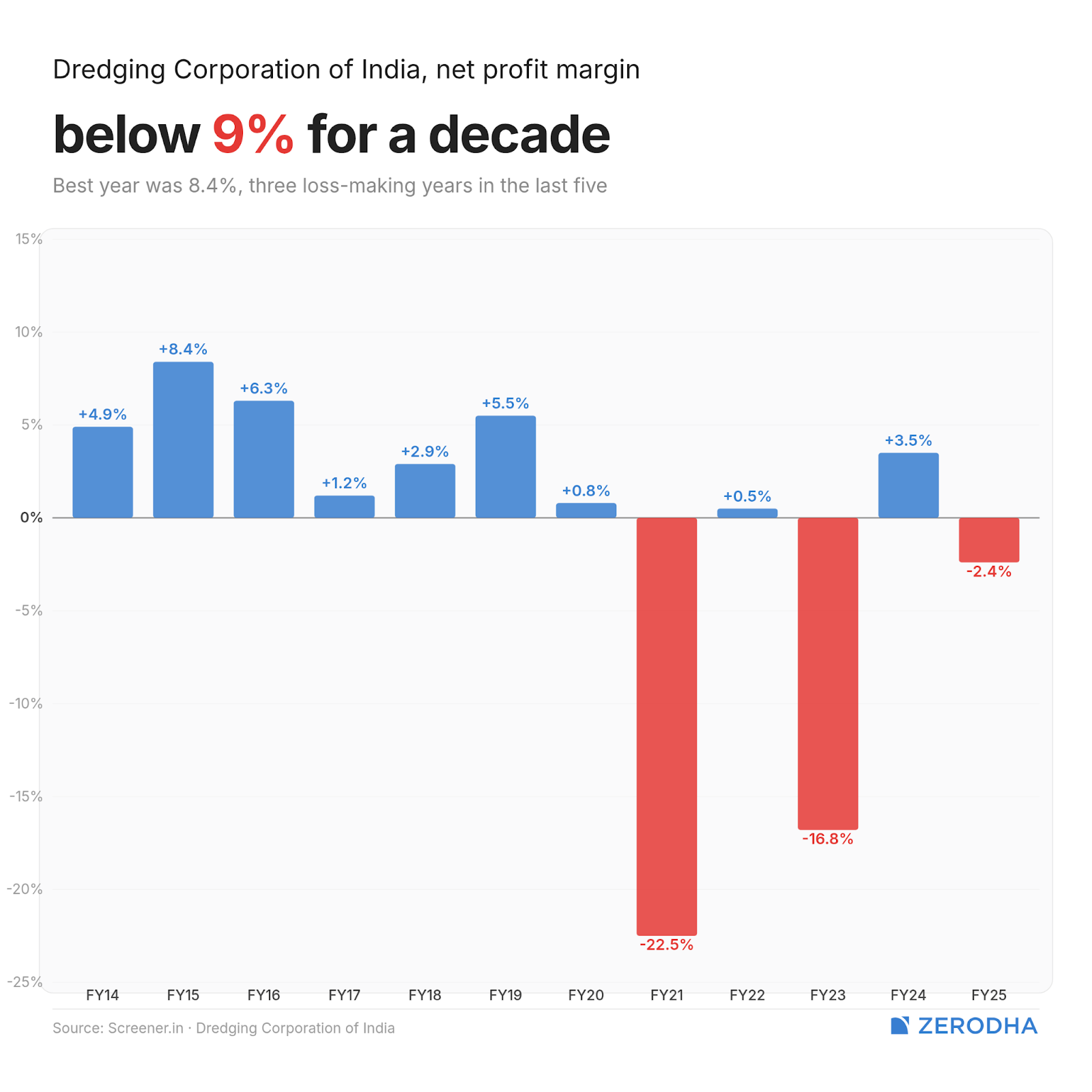
In this context, DCI is undertaking a ₹4,000 crore fleet overhaul and procuring 11 new dredgers. The first, with a 12,000 cubic metre capacity, is being built at Cochin Shipyard and expected by June 2026. But even with these new vessels, DCI’s total fleet will still be modest against the scale of work India is planning.
Meanwhile, a much smaller private company is growing fast in the same space.
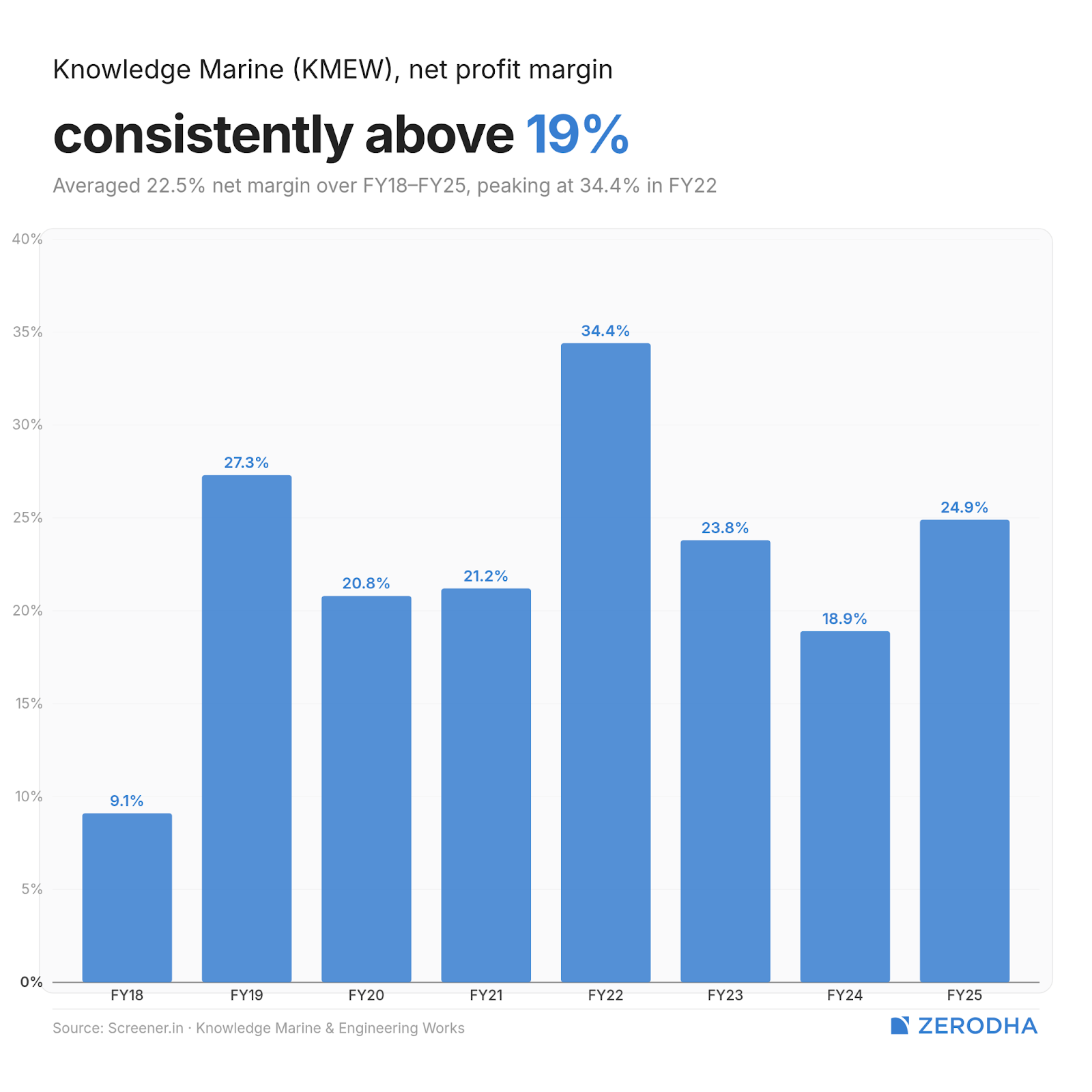
Knowledge Marine & Engineering Works (KMEW), founded in 2015, is the only other publicly-listed dredging company. It operates a younger fleet focused more on river and inland dredging. It is a fraction of DCI’s size, but it has a heavier focus on profits. Its fleet runs at 100% utilisation, with dredgers operating 270-300 days a year. Its order book has swelled to ₹1,500 crore. It is leaner and moves much faster than DCI. Some of its high net margins may be due to base effects, but it certainly also benefits from higher efficiency.
Eroding shorelines
The cost of India’s port expansion is not only fiscal. It is also borne by the people who live along the coast.
At Vizhinjam, on Kerala’s southern coast, the construction of the international seaport has been linked to faster erosion along nearby fishing villages. The port’s large stone barriers, which extend into the sea, disrupted the natural movement of sand along the coast, starving beaches to the north.
Protests turned violent, with around 80 people injured. The port authorities have maintained that they followed all environmental clearances, but the fishers point to their disappearing shorelines and say the clearances were not enough.
However, a few kilometres north of Vizhinjam, at Muthalapozhi, the story is a complete mirror image of the situation at Vizhinjam.
Fishers there have demanded regular dredging of the harbour mouth because dangerous siltation, which they blame on the port’s impact on coastal patterns, has capsized boats. Their demand is not “stop dredging “ but “dredge more, and dredge here too “. On one hand, the port is the problem, and dredging is the solution, while on the other hand, the inverse is true.
Every port expansion changes how sand moves along the coast. But the consultations meant to address this are rarely balanced. A port authority backed by national development goals sits across the table from fishing communities whose livelihoods depend on a coastline being reshaped by forces they cannot control.
Conclusion
DCI’s first new dredger arrives at Cochin Shipyard by June 2026. Ten more are in the pipeline. KMEW is planning ₹183 crore in fleet expansion over three years and has entered shipbuilding. The Kolkata subsidy dispute remains unresolved. And on the coast of Kerala, fishers and port authorities continue to argue over who should bear the cost of a changing shoreline.
The mud will keep coming back, as it always does. What is less certain is whether India is building the institutions to deal with it appropriately.
Tidbits
1) IMA seeks tighter control on GLP-1 weight-loss drugs
The Indian Medical Association wants the government to limit GLP-1 prescriptions to specialists like endocrinologists. It says these drugs are being misused for cosmetic weight loss, and risks could rise further as cheaper generics enter the market.
Source: Economic Times
2) Waaree approves ₹3,900 crore solar glass plant
Waaree Energies has approved a ₹3,900 crore investment to set up a solar glass plant and will increase its stake in Waaree Transpower. The move strengthens its position in the fast-growing solar manufacturing space as competition increases.
Source: Saur Energy
3) United Spirits to sell RCB for ₹16,660 crore
United Spirits will sell the Royal Challengers Bengaluru franchise to an Aditya Birla-led group in a ₹16,660 crore all-cash deal. The sale helps the company focus on its core alcohol business while transferring a major IPL franchise to new owners.
Source: BusinessLine
- This edition of the newsletter was written by Kashish and Vignesh.
What we’re reading
Our team at Markets is always reading, often much more than what might be considered healthy. So, we thought it would be nice to have an outlet to put out what we’re reading that isn’t part of our normal cycle of content.
So we’re kickstarting “What We’re Reading”, where every weekend, our team outlines the interesting things we’ve read in the past week. This will include articles and even books that really gave us food for thought.
 Subtext by Zerodha
We’re now on WhatsApp!
We’ve started a WhatsApp channel for The Daily Brief where we’ll share interesting soundbites from concalls, articles, and everything else we come across throughout the day. You’ll also get notified the moment a new video or article drops, so you can read or watch it right away. Here’s the link.
See you there!
Thank you for reading. Do share this with your friends and make them as smart as you are 