Our goal with The Daily Brief is to simplify the biggest stories in the Indian markets and help you understand what they mean. We won’t just tell you what happened; we’ll tell you why and how too. We do this show in both formats: video and audio. This piece curates the stories that we talk about.
You can listen to the podcast on Spotify, Apple Podcasts, or wherever you get your podcasts and watch the videos on YouTube. You can also watch The Daily Brief in Hindi.
In today’s edition of The Daily Brief:
-
The OYO IPO: Through a new Prism?
As Oravel prepares for its third IPO attempt under the new “PRISM” brand, its pivot from a pure-play budget hotel chain into a complex, five-engine global distribution platform has finally generated cash-positive operations, though a lingering ₹3,000 crore debt load and shrinking direct demand raise questions about whether its business can truly justify its ambitions. -
The economics of ship-breaking in India
India is attempting to revitalize its Alang scrapyards by rolling out the world’s first Shipbreaking Credit Notes and upgrading to global green standards, yet persistent geopolitical shocks, a weaker rupee, and the lucrative demand for aging tankers in sanctions-evading “shadow fleets” continue to incentivize owners to keep old vessels sailing rather than sending them to the beach.
Suyash Singh on the madness of the space business
Space is hard, a cliché that becomes reality when you try to build hardware that operates in a vacuum, extreme radiation, and wild thermal cycles with zero tolerance for failure. For Earth observation companies, this difficulty is compounded by a business reality: satellite imagery is essentially a data business hampered by inconsistent supply due to cloud cover. To make sense of all this, we spoke to Suyash Singh, Co-founder and CEO of GalaxEye, who is attempting to solve this by building India’s first OptoSAR satellite. Our conversation dives deep into the technical hurdles of synchronizing optical and SAR sensors traveling at seven kilometers per second, the realities of miniaturizing radars for drones as a frugal testing ground, how the IN-SPACe reorganization catalyzed the Indian private space ecosystem, and what it is actually like to book a launch slot with SpaceX.
You can also listen to the full conversation on Spotify and Apple Podcasts. Watch the full podcast episode below, where Suyash breaks down the technical hurdles of space hardware and the economics of Earth observation.

The OYO IPO: Through a new Prism?
You’ve probably heard, already, that Oravel — the company behind Oyo — is gearing up for an IPO.
This is the company’s third attempt at going public. It first flirted with the idea back in 2021, when it was reportedly looking for a valuation of $12 billion. It pulled back then, only to file a new offer document in 2023. It’s trying yet again. But this time, its offer documents talk of a different-looking business.
One hint of that shift comes from its name itself. In its previous avatar, the company rested heavily on the ‘Oyo’ brand. Last September, though, it rebranded itself as “PRISM” — after the software that runs its hotels. The choice was meant to reflect a new reality: the company had pivoted to running a “diversified ecosystem” of brands under its umbrella. Oyo was now just one brand among many.
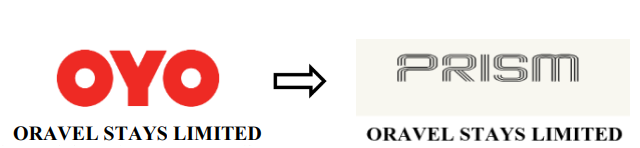
Oravel’s changing DRHP branding, from 2021 to 2026
Nine months hence, the company has made a new set of filings to go public. This time, it wants to pick up ₹6,650 crore, entirely from selling new shares. Neither its founder, Ritesh Agarwal, nor SoftBank, its largest shareholder, is selling any shares.
How investible is Oravel, now, in its third attempt? For that, it’s worth looking at the business it has now morphed into, and what dreams it is chasing.
The case for Oravel
Oravel’s investment pitch rests on the incredible potential of the market it is in.
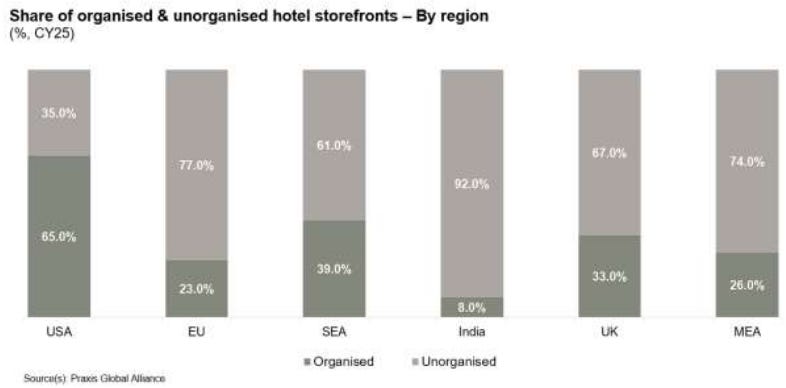
The world’s hospitality industry is worth roughly $1.3 trillion. Most of that is broken and unorganised; made of independent, unbranded properties, which run without a technological backbone, or a way to reach customers. This is true of India, of course — where 92% of hotel storefronts are unorganised. It is also true of advanced markets like Europe, where 77% are in the same boat.
Oravel wants to become the software and distribution layer to this massive market. Any small hotel can sign up and list on its service. Within half an hour, the listing shall be up on the OYO app, as well as 230-odd other travel sites. Oravel will handle check-ins, keys and payouts, all for a share of the booking amount.
Oravel promises a large base of direct demand for anyone who signs on. Around seven in every ten bookings come to the company through its channels. They save the 15-20% commissions other sites charge on each of those. The company boasts a high number of returning customers, and a loyalty program with 16.64 million members in India.
Till recently, most of its offerings were limited to budget Indian hotels. Then, it began to expand its footprint. It captured a foothold in the United States by acquiring G6 Hospitality, which ran the Motel 6 chain. It also picked up vacation-home brands in Europe. More than 80% of revenue now comes from outside India. But most of its staff still sits in India, and is paid Indian salaries.
This is the dream. For the first time, it can back the dream with earnings as well. Oravel’s operating profit has gone from ₹274 crore two years ago to nearly ₹2,000 crore in the latest nine months, as its bookings have doubled.
But can its business really match its ambitions, the way it currently stands?
The machine, up close
Looked at up close, Oravel barely seems like a single business.
On the surface, Oravel claims to operate nearly 3 lakh storefronts, across 35 countries. Few of those resemble what you think of when you hear “Oyo hotel”, however. Just over 24,000 of those storefronts — or around 8% — are “hotels”. In contrast, it runs almost 1.25 lakh “homes”, most of which are vacation homes in Europe, managed by firms like Belvilla and DanCenter. It also has over 1.44 lakh third-party listings, all of whom pay it a flat fee to sit on its platform.
Based on offerings alone, Oravel is partly a hotel booking website, and partly a company that manages short-term rentals in Europe — with a small hotel arm appended to it. Each business makes money in a different way.
Start with hotels.
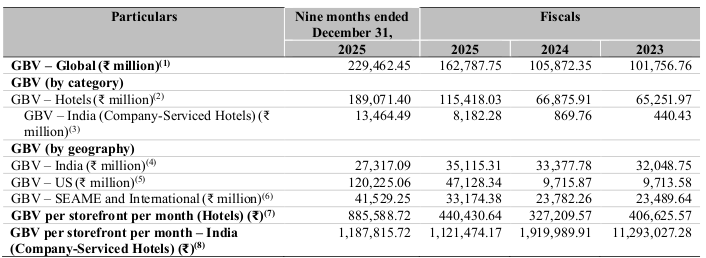
The simplest is the classic “OYO room” you’re probably familiar with. Once an independent owner signs up under a brand like OYO, Oravel takes over the pricing and the listing. From this point, Oravel is the one selling the room. It sets the price. It recognises everything a guest pays as its own revenue. Later, the hotel owner is paid separately. Between April and December last year, it recorded almost ₹4,300 crore in revenue from this vertical.
This model came with a problem, though: as long as its hotels were run by others, they would be plagued by quality issues. Rooms would be unclean, or wouldn’t match the photos uploaded online. They infamously even had privacy issues. Being “asset-light” may have appealed to investors, but it didn’t guarantee customer delight.
To get around this, Oyo began a new vertical: leasing hotels itself, or signing management contracts to run them directly. These were listed under its upscale ‘Sunday’, ‘Townhouse’ or ‘Clubhouse’ brands. Its business model, here, is different: the costs shift from the hotel owner to Oravel’s own books. As recently as March 2023, the company just had four properties of the type. By the end of last year, that had ballooned to 1,573 properties — making up almost half of all its Indian bookings. This shift marked a huge change to the costs the company was bearing. In the less than two years between March 2024 and December 2025, for instance, its lease liabilities went up more than tenfold — from ~₹240 crore to nearly ₹2,800 crore.
In December 2024, then, Oravel added a completely different creature to its P&L statement: when it added the American chains Motel 6 and Studio 6 to its portfolio. On paper, they practically doubled the booking values Oravel received overnight. But that didn’t translate directly into revenue . After all, while the brands were owned by Oravel, the motels themselves were run by franchisees. Guests would pay them directly. Oravel would only get a royalty for their brand and booking systems. Of the nearly ₹11,000 crore these rooms received in bookings, Oravel’s own revenue was just over ₹1,000 crore.
These are three entirely different business models under Oravel’s “hotels” vertical alone.
Homes, meanwhile, run on different economics. Like with Oyo hotels, guests book through Oravel, and pay Oravel for their stay. But Oravel must pass most of that through to the homeowner. It only gets a commission, and a few add-ons like cleaning fees and cancellation insurance. Of the nearly ₹3,900 crore this vertical generated between April and December last year, almost ₹2,900 crore went to homeowners.
For listings, on the other hand, Oravel isn’t paid by the booking at all. Property owners simply pay Oravel a flat subscription fee to appear on its platform. Even though these listings make up more than half the “storefronts” the company talks about, they together netted just ₹144 crore of subscription revenue between April and December 2025.
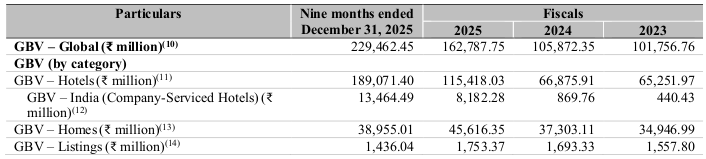
This is what makes Oravel such a complex company to study: under the hood, there are five businesses they run at once.
Does the money hold up?
For all this complexity, there’s one thing Oravel can now boast of, which it couldn’t before: the company has been cash-positive for every year since 2023. Between April and December last year, it brought in almost ₹1,600 crore in cash.
The problem, however, is that most of that cash would drain back out immediately.
Take rents. Over those same nine months, for instance, the company paid out over ₹400 crore as lease principal, and almost ₹300 crore, in addition, as lease interest. This was simply the cost of keeping those company-managed hotels in its hands. The company also paid nearly ₹700 crore in interest payments. With all those outflows, it could barely hold on to ₹215 crore in cash.
This interest, in particular, has been bogging the company’s books down.
Consider this, the company has been making operating profits before you consider interest and tax since March 2024 — at ₹1,080 crore. But the burden of its interest has constantly pushed it into the red. In FY 2024, it saw a pre-tax loss of ₹184 crore. The next year, its pre-tax loss had grown to ₹334 crore. It’s only between April and December last year that, for the first time, the company finally saw a pre-tax profit — of ₹230 crore. But a generous portion of that — ₹225 crore — came from other income, rather than running hotels.
This is, perhaps, one of the major reasons the company even wants to go for a public issue. Three-fourths of the ₹6,650 crore it plans to raise — or nearly ₹5,000 crore — shall go into repaying its dollar debt. But even that wouldn’t eliminate the debt load. Even with all that fresh IPO money going to lenders, the company will be left with roughly ₹3,000 crore in borrowings. That will keep adding the drag of interest to its books.
The challenge, for Oravel, is to make enough profit, once its debt load becomes manageable, that it can keep the company growing fast enough to justify its valuation.
A pitch too high?
Let’s return to the investment pitch we began with: that there were hotels scattered all across the world, and all the company had to do was bring them under its own platform. Perhaps that was the vision the company once started with. That vision, however, was beginning to blur well before this IPO.
In fact, even as far back as 2024, the company’s revenue from hotels was beginning to fall. The company’s own channels — the Oyo app and website, corporate channels, partnerships, etc. — have been bringing in a steadily smaller share of bookings. This “direct demand” has fallen from over 72% two years ago, to under 68% last year. This is despite the fact that the company spent over ₹1,150 crore in marketing alone between April and December last year.

The original Oyo promise, it seemed, had created a company that was struggling and perpetually in debt.
Perhaps this is why the company felt the need to create a constellation of brands for itself. In India, the company began buying more control, even at the cost of lease liabilities. Abroad, it began assembling new properties — acquiring a franchise network in America, servicing vacation homes in Europe. But these are heavily contested markets, and its share is small. It currently holds under 1% of Europe’s homes market and about 1.8% of the hotels in the markets it competes in. If it does well, this is a massive runway ahead. But it’s nowhere near being dominant, anywhere it does business.
In fact, many of its western businesses aren’t even booked through its platform — for more than six in ten nights, its European rooms are booked through other travel websites.
This doesn’t resemble the picture Oravel wants you to see, of a technology platform turning into an entry point into a massive, broken hospitality industry. This is not India’s answer to AirBnB.
For all that, Oravel is maturing as a business. It is finally chasing profits instead of a thesis. And as its reward, it is finally breaking even. But what business is it maturing into? Is this still a tech company that touches hotels? Or is it yet another hotel company offering budget stays across a few geographies?
That’s the question this IPO forces you to answer.

The economics of ship-breaking in India
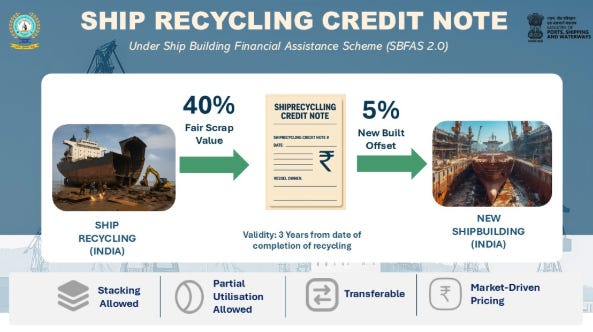
In May, India’s shipping ministry issued the world’s first Shipbreaking Credit Note to Bella Shipping India Pvt Ltd, which recycled a bulk ship carrier, at an Indian yard. The note was worth ₹29.81 crore, valid for three years, and freely tradeable.
Once the scrapping is complete, they receive a credit note equal to 40% of the vessel’s fair scrap value. This can only be spent on building a new ship at an Indian shipyard, which has to be registered under the Shipbuilding Financial Assistance Scheme (SFAS).
We will get into details of what the credit note entails. But what’s more fascinating is the process the credit note is established for: ship-breaking, or ship recycling. That’s what our story today is about.
What is ship-breaking?
See, commercial ships are commonly recycled after roughly 25-30 years. After that period, corrosion sets in, machinery starts failing, and repair costs climb to the point where keeping the vessel sailing costs more than it earns. At that point, the owner sells the ship to a recycler, who breaks it and sells the pieces.
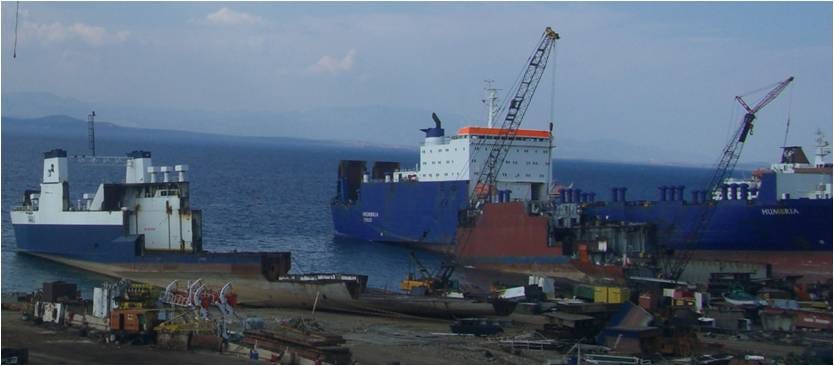
Like other recyclable objects, ships are bought and sold for scrap by weight, but the difference is that they are weighed in light displacement tonnage (LDT). This measures the ship’s own physical mass, its hull, machinery, equipment, and spares. But this metric excludes the fuel, cargo, or crew on board.
Roughly 90% of a ship’s LDT is steel, which is split into two grades. About 60% is re-rollable , meaning it can be reshaped into new bars and plates without first being melted down. The other 30% is melting-grade , and goes to furnaces for recasting. The rest non-steel 10% is machinery, cabling, furniture, and fittings, almost all of it resold rather than landfilled.
The trade exists for a simple reason. Shipowners like Bella Shipping get one last payout on an asset about to be written off, and recyclers get large volumes of high-grade steel at a fraction of the cost of making it from iron ore. The International Maritime Organization notes that recycled steel uses roughly one-third of the energy required to make steel from raw material.
In India, the Shipbreaker, or the ship-breaking plot operator, buys the ship outright and owns whatever comes off it. A plot is simply a part of the beach that the operator takes on lease from the Maritime Board. Some names include Leela Group and Shree Ram Group.
Now that’s clearly a win-win situation. But, obviously, ships are huge entities, and it is difficult to suddenly transport them by any means to a scrapyard. That, in itself, is another process that’s limited to very specific shipyards that could actually be far away from the origin city.
A concentrated industry
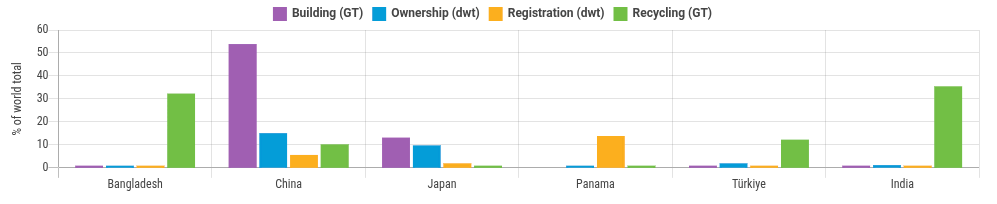
The world’s ship-breaking industry is unusually concentrated. In 2025, 80% of global shipbreaking by tonnage was handled by India, Bangladesh, and Turkey. India alone accounted for~ 35% of the global total. In other words, roughly one-third of all ship tonnage recycled globally in 2025 was processed at Indian yards.
Within India, the industry is almost entirely one yard: Alang-Sosiya , on Gujarat’s Gulf of Khambhat coast, which handles about 97% of the country’s ship recycling. The Alang cluster began operating in 1982–83, stretches across around 10 km of coastline, and has dismantled more than 8,800 ships since its inception. It has 150 plots of land to host old ships, of which 128 are operational. Its main global peers are Chittagong in Bangladesh, Gadani in Pakistan, and Aliağa in Turkey.

So, why is the ship-breaking industry cluster just in a handful of coastal towns in Asia?
One reason is economic: ship breaking is labour-intensive rather than capital-intensive.
Alang uses a ship-breaking method called beaching, in which, at a suitable high tide, the vessel is manoeuvred, sometimes with tug assistance, onto a gently sloping beach and grounded close to the recycling plot. As the tide recedes, workers begin dismantling the whole ship section by section. That needs a lot of cheap labour in a beach town, along with adequate shipping infrastructure. Not many places can provide for all three conditions.
The second reason is regulatory: developed countries have tightened environmental rules over the decades. An old ship can often be packed with hazardous materials, such as asbestos in the insulation, oil in the tanks, and toxic paint on the hull. Handling all of that to meet Western environmental standards is expensive. Western companies eventually stopped doing it because they couldn’t make money out of it.
As a result, the work moved eastward where cheaper labour was available environmental rules were looser at the time. India has since tightened its own rules regarding ship-breaking, but the migration had already happened. And even then, our rules are less strict than what Europe imposes on its own recyclers.
Where does the scrap go?
The scrap steel from Alang doesn’t travel far; it’s just transported roughly 50 km inland to Bhavnagar, which has grown into a steel-processing town around the yard. The town contains more than 60 induction furnaces and 80 re-rolling mills. When India passed the Recycling of Ships Act in 2019, the government said ship recycling could meet about 10% of India’s secondary steel needs.
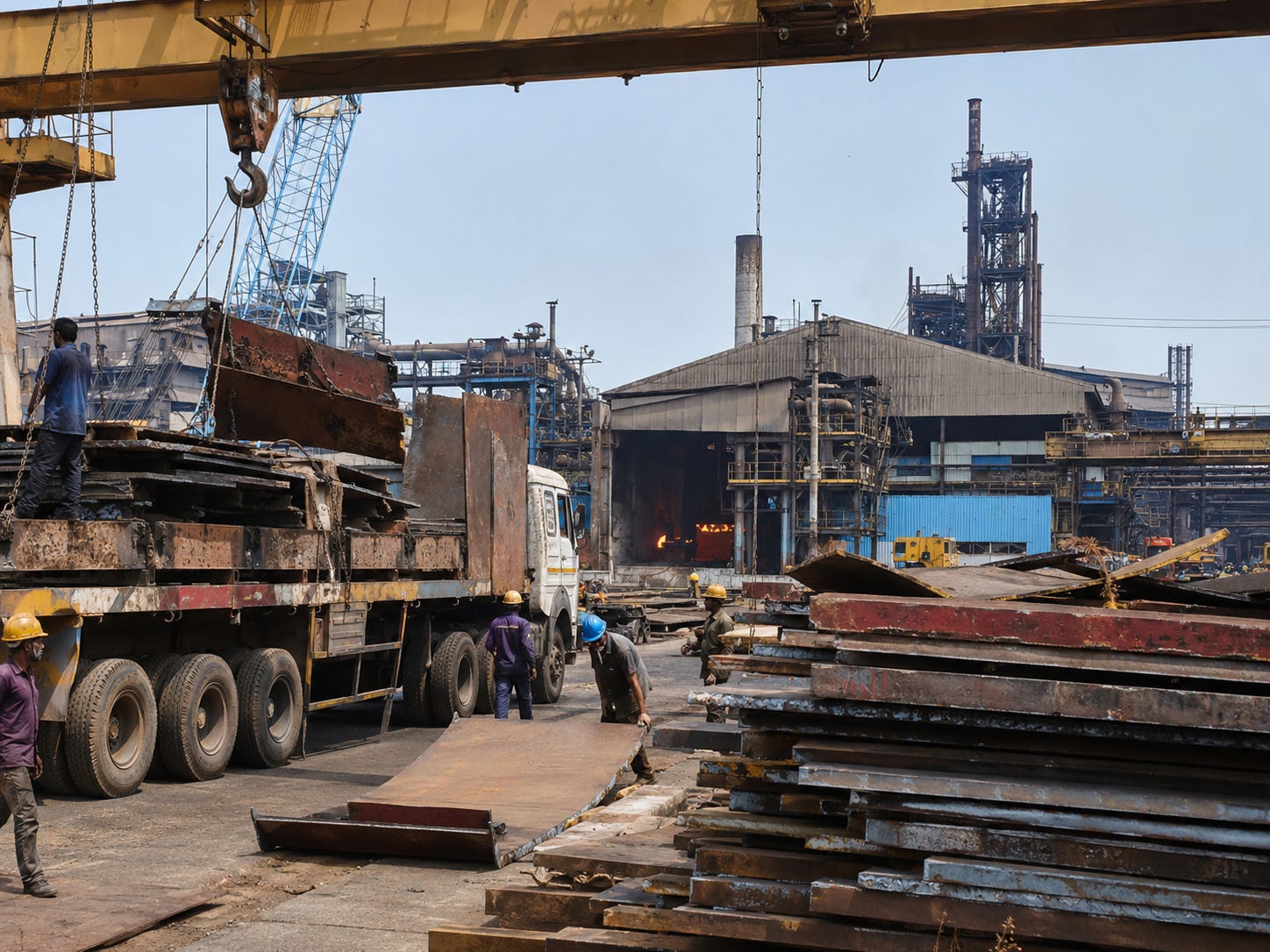
The re-rollable steel has two possible destinations: it can either be melted down and recast into fresh steel, or it can be reheated and reshaped directly into construction rebar without a full melt. The second route pays more per tonne because rebar is a finished, higher-value product that, with a few more steps, can be ready to use in buildings.
However, the construction industry itself wasn’t ready for it.
For years, most re-rollable steel from ships ended up in the melting route. That’s because Indian building rules didn’t allow ship-derived steel in construction rebar because rebar has to meet strict strength standards. Even if it did, construction players needed to verify where a ship’s steel came from or how it was originally made, and they couldn’t do that. In the absence of any buyer for rebar made from scrap, re-rolling mills o only resorted to melting.
In January 2026, there were reports that the Centre was planning to relax these norms. This would allow ship-derived steel to qualify for re-rollable bars based on its composition, quality and strength tests, rather than where it comes from. If implemented, this could raise the price that Alang’s recyclers receive for the steel.
Beyond steel, everything else off the ship moves through a chain of buyers. As workers strip items down, the shipbreaker sells them in bulk to dealers. Some buy entire cabin contents, others deal in engines, mechanical parts, or electrical fittings. The dealers then hold silent auctions where local shopkeepers write down what they will pay and the highest bidder takes the lot. Those shops line roughly 10 km of road running inland from Alang. Anyone can walk in and buy anything from tea sets, to mattresses, to ice cream machines and lifeboats.
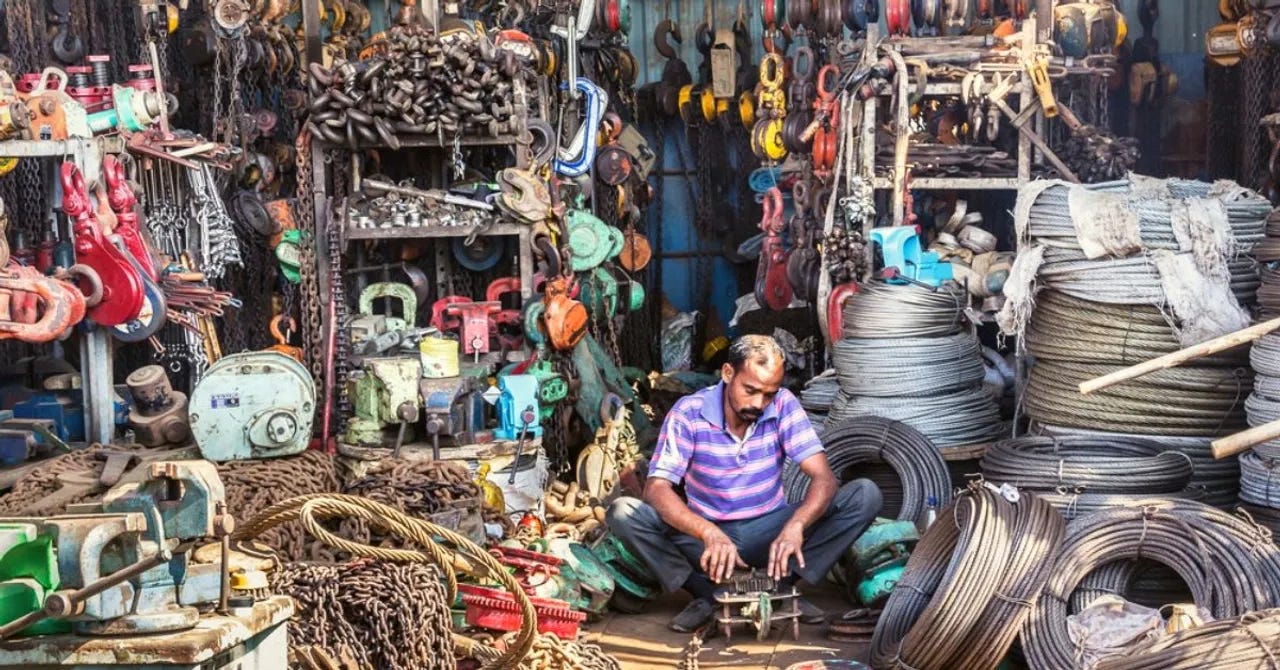
The whole ecosystem employs about 15,000 workers directly and supports another 150,000 in ancillary businesses.
External shocks
For years, Alang has been operating at a fraction of what it was built to handle. In 2011–12, the yard dismantled a record 415 ships in a single year. FY25 saw only 113, its lowest in over a decade, before a marginal recovery to 119 in FY26.
It’s not because of a single reason, though. There have been several overlapping shocks that have pointed in the same direction, keeping old ships in service rather than scrapping them.
For one, the Red Sea, which is a popular shipping route, has been disrupted since 2023 because of attacks from the Houthis, who are backed by Iran. So, most large carriers had to divert around the Cape of Good Hope in South Africa, which added nearly 2 weeks of travel to ships on Asia–Europe voyages. Container shipping, which dominates the route, felt the brunt of this the most. Since a ship now completes fewer round trips per year, carriers had to keep older vessels in service to move the same volume of cargo.
In the first seven months of 2025, only five container ships were sent for recycling worldwide, a fraction of the usual rate.
The second reason is a factor that loves playing spoilsport for shipping: geopolitics . The US and EU have banned imports of Russian, Iranian, and Venezuelan oil. To keep exporting anyway, those countries move their oil on old tankers whose real ownership is hidden. This “shadow fleet “ consists of nearly 1000 tankers that have been used since 2021, most of which are older than the global fleet average and would otherwise have been scrapped.
There’s a currency problem, too. Alang’s shipbreakers buy old ships in US dollars but sell the recycled steel in rupees. When the rupee weakens against the dollar, the ships cost more to buy while the steel earns the same or less. That, of course, had become an acute problem earlier in the year with the rupee’s depreciation.
India has done two things to try to fix this. The first is the credit note scheme itself, meant to make scrapping in India more attractive. Once recycling is complete, the vessel owner receives a transferable credit note equal to 40% of the vessel’s fair scrap value. It can partly be redeemed against a new vessel ordered from an Indian shipyard.
The second is Hong Kong Convention compliance, which is the universal standard for ship scrapping. India passed the Recycling of Ships Act in 2019 to align its domestic law with the treaty. As part of compliance, each Alang yard reportedly invested between $560,000 and $1.2 million (₹5-12 crore) to meet its environmental and safety standards. That premium is what Indian yards are betting will attract shipowners who face growing pressure to scrap only at compliant facilities.
Conclusion
The bet behind both the credit note and the compliance push is that a wave of scrapping is coming. BIMCO estimates that as many as 16,000 ships could be recycled globally over the next ten years, about twice the number recycled during the previous decade. If India’s compliant yards are ready when that surge arrives, Alang could capture a much bigger share of it than it does now.
But the forces that have suppressed volumes over the last few years are still somewhat active: longer routes, sanctions-driven demand for old tonnage, and a weaker rupee. As long as it pays to keep old ships sailing, they will keep sailing. India’s credit note nudges that but it doesn’t fully rewrite it.
What the credit note could do is make sure that when the calculation eventually shifts, Alang is where shipowners bring their tonnage. And perhaps, if the demand rises, there is a possibility that the Indian ship-breaking industry expands beyond a single yard.
Tidbits:
[1] India’s First Hydrogen Train Begins Operations
India crossed a milestone in green transportation with its first hydrogen-powered train commencing commercial service on July 19, 2026. The train currently operates between Jind Junction and Sonipat Junction in Haryana.
Source: ET Now
[2] Ethanol Could Soon Power Indian Kitchens
The Indian government is developing a policy to introduce ethanol as a mainstream, clean cooking fuel to reduce the country’s reliance on imported LPG. The plan could include dedicated spaces at fuel stations where consumers can purchase the fuel for specialized household stoves.
Source: The Economic Times
[3] China’s AI Startup Moonshot Plans IPO
The Chinese AI company Moonshot, maker of the popular Kimi chatbot, is planning to go public in Hong Kong soon and could be valued at over $30 billion. This major move comes after the company reached $300 million in revenue following the launch of its newest AI model.
Source: Bloomberg
[4] Centre Launches ‘White Rabbit’ Tech for Secure Indian Standard Time
To reduce India’s dependence on foreign GPS systems and protect critical infrastructure like digital banking, the government has launched a new network using “White Rabbit” technology to safely broadcast India’s exact time across the country.
Source: Business Standard
[5] Apple Overtakes Nvidia as World’s Most Valuable Company
Apple has overtaken Nvidia to reclaim its spot as the world’s most valuable company, driven by investor excitement over its upcoming AI-powered iPhones.
Source: The Hindu
- This edition of the newsletter was written by Pranav & Vignesh.
Points & Figures by Zerodha
We’re always chasing the day’s biggest stories. But every now and then, we come across a dataset that deserves a closer look than a Daily Brief allows.
That’s what Points & Figures is for.
It’s where we step back from the news cycle and use data visualisations to tell stories about the Indian economy, financial markets, and investing. Our latest edition traces how India’s power landscape is transforming, using electricity generation, capacity, and emissions data to reveal why simply building solar panels isn’t enough to dethrone coal.
What we’re reading
Our team at Markets is always reading, often much more than what might be considered healthy. So, we thought it would be nice to have an outlet to put out what we’re reading that isn’t part of our normal cycle of content.
So we’re kickstarting “What We’re Reading”, where every weekend, our team outlines the interesting things we’ve read in the past week. This will include articles and even books that really gave us food for thought.
The Chatter by Zerodha
Our team at Markets spends a lot of time reading earnings call transcripts and listening to management interviews. Along the way, we come across plenty of interesting insights that are worth sharing.
That’s what The Chatter is for.
It’s a weekly newsletter where we dig through what India’s biggest companies are saying and bring you the most interesting insights into businesses, industries, and the wider economy.
Join us on WhatsApp, where we share interesting soundbites from concalls, articles, and everything else we come across throughout the day. You’ll also get notified the moment a new video or article drops so that you can read or watch it right away.
Thank you for reading. Do share this with your friends and make them as smart as you are 