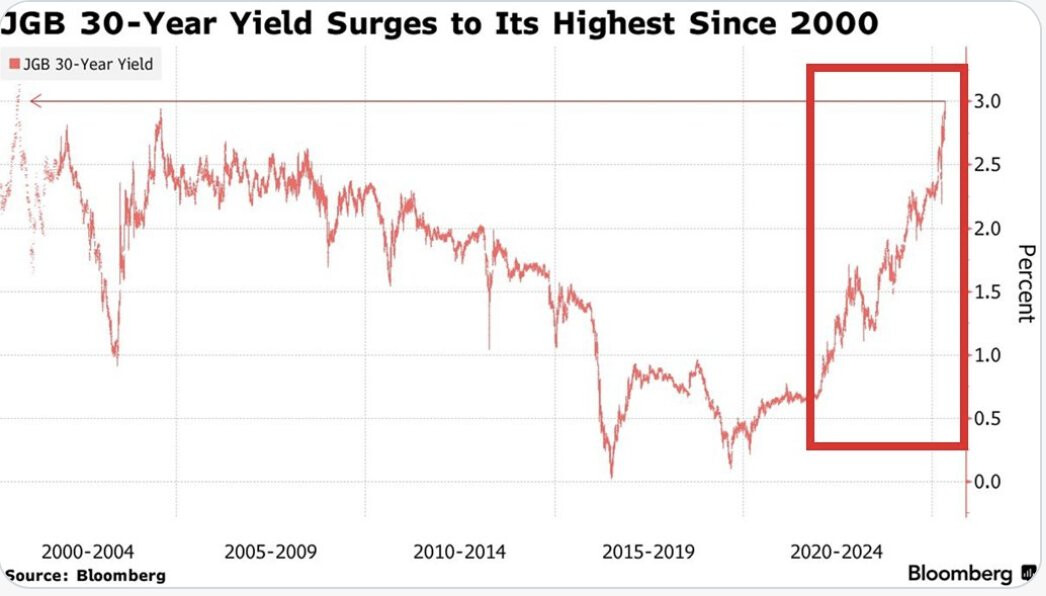
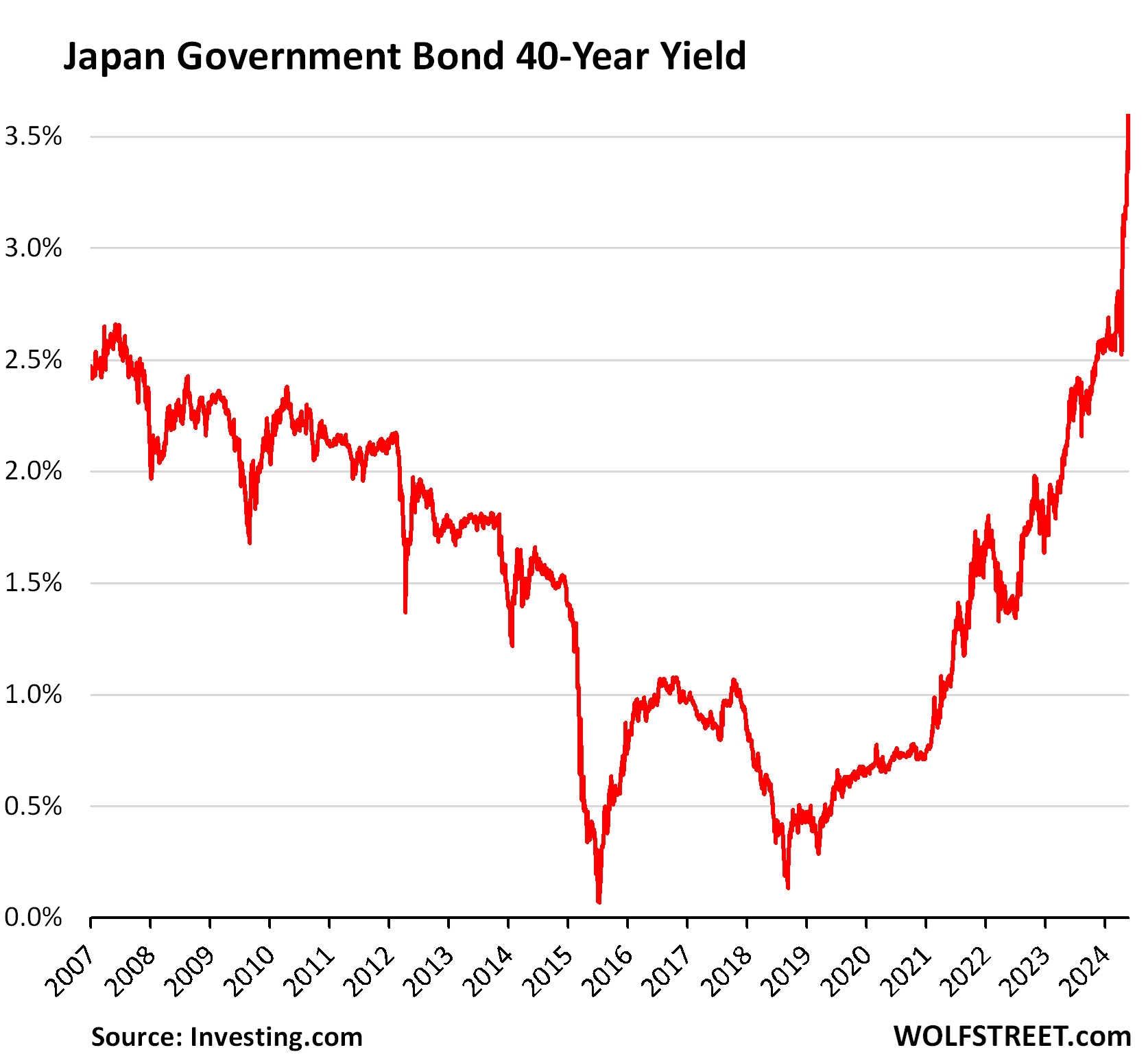
2. Japanese Prime Minister Ishiba says "Our country’s fiscal situation is undoubtedly extremely poor, worse than Greece’s.”
“It’s important to recognise the dangers of a society and a world with interest rates. The government is not in a position to comment on interest rates, but the reality is we are facing a world with them. Our country’s fiscal situation is undoubtedly extremely poor, worse than Greece’s,”
Key questions that market may worry about
Will this spillover to US bond markets where Japan holds the most treasuries?
So, is Japan pulling out its money from US treasuries, because it needs it now ? As the cost of raising fresh funds will become costly now, due to yield spikes.
Or is the downgrading of US debt, causing the ripple effect in the Japanese bond market ? Because Japan holds close to a trillion in US treasuries.
Or these two are totally unrelated, and happening independently, due to country specific reasons ?
Need not be Japan directly. In fact lot of global investors raised money in Yen (as interest were super low for long time) and used that money to invest in US market and other global market.
Term popularly called as Yen carry trade
Yup, I’m aware of the concept of Yen carry trade and it’s unwinding.
The unwinding of Yen carry trade, explains to some extent the rising yields/falling bond prices in the US market, as traders are selling US bonds to square their borrowings, to prevent any losses due to Yen’s appreciation.
This coupled with the US credit rating downgrade and lack of demand for fresh issue, could keep the yields high.
I was wondering, why the yield on Japanese bonds were rising too, as money should be flowing into Japan due to repayments, if the carry trade was unwinding.
Came across this article, that explained the reason behind the rising yields of both Japan and the US.
The rising bond yields in Japan may also have a cascading impact on US bonds.
Since Japanese investors are one of the biggest holders of US bonds, amounting to $1.13 trillion, the rise in Japanese yields will be most felt in the US Treasury market, predicts Vishal Goenka, Co-founder of IndiaBonds…com.
“The fear is that Japanese investors may now sell UST to buy JGBs at yields not seen since 2000. This may put further pressure on US yields for the long end of the curve and cause second-order effects on global yields going higher,” Goenka said.
It is also worth noting that Jamie Dimon, CEO of JP Morgan Chase (USA’s largest bank) said that there are cracks forming in the bond market. He said something will happen but he doesn’t know if it will be in 6 months or 6 years.
The Governments of a lot of Developed nations have become addicted to Debt. USA, UK, Japan, Most of the EU are all running government deficits. While deficits aren’t bad in general, the debt has started to reach to cross 100% of GDP in a lot of cases. Furthermore, some of these countries continue to borrow record amounts of money. With higher interest rates, the cost of this debt is also a lot higher than in the previous decade. It is politically unpopular to increase taxes (so people on the right don’t want to cut the deficits) and cut spending (so people on the left don’t want to cut the deficits).
The goal for these governments now needs to be to forget about simply cutting the deficit and aim for a surplus (by whatever means necessary) to pay of this crazy debt pile they have accumulated. This would also lead us back to the low interest rate era.
Governments should spend big in times of crisis when the private sector spending is low. Think 2008 or 2020. But when everything is good, they should operate in surplus to save up for the times of the crisis. The target debt to GDP should be 50-80% but if we don’t see the developed countries who have deep and open capital markets go towards this, an economic meltdown is unavoidable.