a.k.a. Extracting signal from noise: How to find value in posts with shallow(er) reasoning on this forum.
TL;DR : Checkout this 12 year old post on one way to
reliably model irrational behavior based on incomplete information.
Before we begin, a brief note on the unpredictability of long-term outcomes.
Recently, the parable of the Chinese farmer kept popping-up in my mind during multiple discussions on this forum [1] [2]. Highlighting the futility of attempting to determine whether something is truly a positive or negative in the long run.
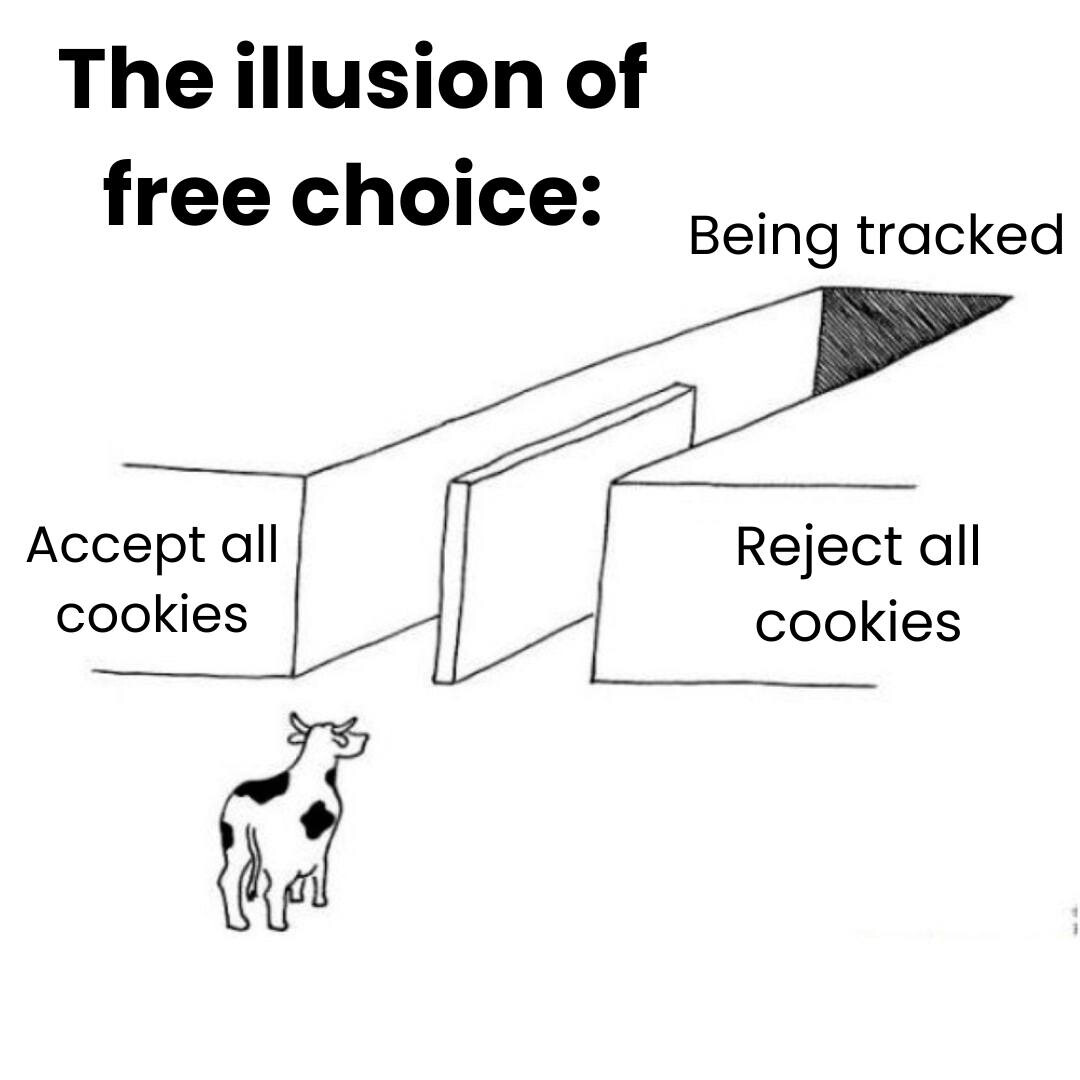
However, in financial markets, we aren’t always predicting outcomes.
We are often predicting what other people think the outcomes will be.
Given that completely opposite conclusions can be reached
depending on the “depth” i.e. how many “moves ahead” one chooses to think/model/analyze,
the ultimate question becomes -
How deep should one go when modelling financial scenarios?
Why this now?
Compared to most other forums, while we have managed to (have been lucky enough to?) limit shitposts on this forum, a common recurring theme in topic-threads on this forum has been rational participants with diverging opinions, talking at cross purposes, leading to inconclusive deadlocks.This post is one attempt to understand/reconcile
what initially appeared to me as a declining quality of discourse at first sight
but actually might not be so…
- i.e. why some discussions often reach a stand-off,
- and how to extract a valuable signal from such discussions.

Looking back at some of the the posts on this forum that i have found perplexing, a recurring pattern in those posts was the reluctance to think beyond the obvious.
Why perplexing?
The line of reasoning used in such posts often came across (to me) as -
"I (the author of the post) cannot be bothered to spend the necessary effort to properly think this through.
Nor can i be bothered to expend any effort to find, nor review the conflicting evidence shared.
Here are the obvious/instinctive thoughts that came to mind.
Since, i cannot be bothered to think of anything more nuanced,
whatever conclusions i have already arrived at, must be true!"
A more charitable (and perhaps a more accurate) interpretation of such a shallow reasoning would be -
"The simplest and most obvious answer is usually the right one.
As it supports my claim/assertion,
over-complicating the scenario with "what-if"s is NOT necessary,
and the claim/assertion is true."
Even if the logic is circular, it highlights an important reality.
Everyone is operating under different real-world practical limitations/constraints.
Simply understanding a complex situation doesn’t mean one can act on it.
Deep knowledge is only useful if one can actually act on it.
In the absence of actionable choices,
it is logical for folks to prefer an alternate simpler reasoning
if only because such a world-view offers options that their can realistically pursue.
When posed with an argument built on a refusal to think deeper, i.e. with multiple participants in a discussion analyzing a scenario at different depths and ending-up with diverging conclusions, a direct debate often leads to a frustrating deadlock.
However, there is some value to be gained
by paying attention to even the shallower depth of reasoning -
Determining/Knowing the logical conclusions
at various levels/depths of thinking/reasoning.
Why is this especially relevant in financial markets? Keynesian Beauty Contest.
However, to utilize such info, one must also know/estimate the level/depth of thinking/reasoning prevalent in a market, i.e. one that’s dominating the volumes. A model based on reasoning at that precise level/depth is most likely to accurately predict how the market behaves in aggregate.
Applying this for markets, one conclusion can be that when the market participants tend to concentrate towards economists, game theorists, more knowledgeable persons / institutions, then the level of thinking starts to increase and those higher level thinking people tend to be right more often.
While when the participants starts to concentrate away from that group towards the general population, the same higher level thinking people become less and less right.
It also shows why it is so difficult to match / beat the markets consistently over short time horizons, because the behavior of market participants can change rapidly, from having higher level of thinkers to lower levels, leading to completely different results.
Source: This 12 year old post that describes this very intuitively.
A potential corollary of the above observation is that as the term/horizon increases, a higher depth of reasoning starts to dominate, and is likely to be a more accurate predictor of the “market sentiment” - provided the participants and the market continue to exist.
The exception being popularly expressed as -
- The market can remain irrational longer than you can remain solvent.
- Self-Fulfilling prophecies (…and reflexivity).
A somewhat systematic way to look at the above train of thought,
would be the following decision-table -
| Shallower reasoning dominates if… | Deeper reasoning dominates if… | |
|---|---|---|
| Who’s participating? | Mostly general population, emotionally driven, low prior context. | Mostly domain experts, specialists, or systematic thinkers. |
| How close is the resolution? | No clear end state, or resolution is far away. | A specific decision point, deadline, or outcome is imminent. |
| Is the narrative self-reinforcing? | Collective belief itself shapes the outcome (the story is the reality). | Outcome is determined by underlying facts, independent of what people believe. |
| How dispersed is the information? | Everyone has the same information; edge comes from reading the crowd. | Specialized or asymmetric knowledge dominates; having it beats reasoning about it. |
Further, even in scenarios where deep(er) reasoning is expected to dominate,
can one act on it, or is one constrained/forced to operate on shallow(er) reasoning ?
| Constraint | Deeper reasoning is NOT actionable if… | Deeper reasoning is actionable if… |
|---|---|---|
| One’s staying power | Constrained, under pressure to show results now, can be forced out early. | Secure, patient, able to wait for the outcome to materialize. |
| Room to act | High friction, limited ability to act on your conviction at meaningful scale. | Low friction, can commit resources proportional to your conviction. |
| Signal clarity | High noise drowns the signal; being right is indistinguishable from luck. | Low noise; the edge reveals itself within your time horizon. |
These tables are a map of that rational behavior made explicit.
Even if most people don’t label it as such, they already behave this way.
A more interesting implication :
When someone shares an opinion on a widely-known topic,
they reveal far more about the constraints they are thinking/operating under,
than they do about the topic itself.
PS: This is by no means to justify engaging in shit-posting or sharing AI-slop.
Simply dressing-up half-baked ideas through an LLM in not validating them.
PPS: What this is, is an attempt to view what might otherwise be dismissed as “low-effort” posts, as serving a different purpose. A source of modelling the thought-process of market-participants operating at a different shallower depth of reasoning, either by choice, or even due to operating under different constraints of time/attention amidst their other competing responsibilities/priorities.
A popular market sentiment on a widely known/understood topic can be used as an indicator of sorts to gauge the depth of reasoning of the broader market, and its attempt to interpret information in real-time.