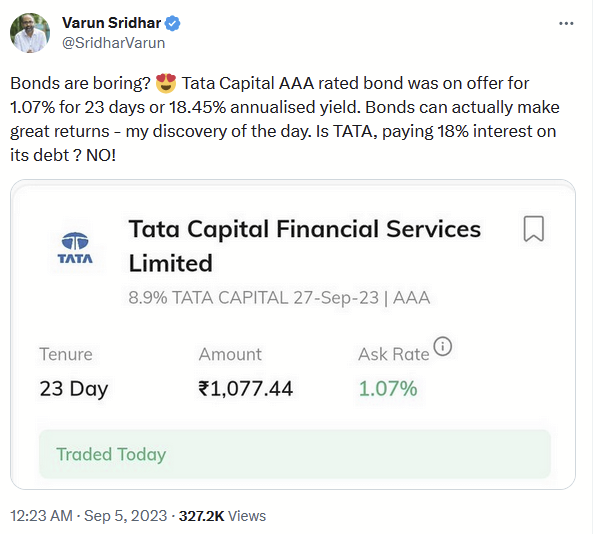
I find the phrasing in the tweet more confusing than enlightening. 
Am not quite sure what they wanted to emphasize. 
Would the bond buyer have to pay income tax on full Rs 89 (8.9% interest) at marginal rate?
Yes. That is the interest which will be received and taxed as per one’s slab-rate.
would they be able to claim the capital loss on redemption?
Since bought at Rs 1077.44 and redeemed at Rs 1000
Also yes, as this is a capital-loss.
The NCD in question is TCFSL-ND (ISIN = INE306N07KF1)
Here are the Shelf Prospectus and Tranche Prospectus for more details.
Overview:
- Face-Value: INR 1000
- Issue-Date: 28-09-2018
- Coupon-Rate: 8.9% (for individuals)
- Coupon-Frequency: Annual
- Record-Date: 12-09-2023 (for upcoming interest payment on 28-09-2023)
- Last Traded Price,Volume: 13,000 units around INR 1075 - INR 1080 (on 06-09-2023)
Summary:
- one who purchased 1 unit of this NCD at INR 1079 today (06-09-2023) and holds the NCD till maturity,
- would receive an interest payment of INR 89 on 28-09-2023.
- and would also receive a principal repayment of INR 1000 on 28-09-2023.
i.e. ( -1079 + 89 + 1000 )
NOTE: IMHO, this 15.3% is nothing spectacular for a corporate NCD,
as sovereign guaranteed treasury-bills (i.e. zero credit-risk) that were maturing later this month
were traded on NSE today yielding as high as 13% returns.
…and to further clarify the question posted in the tweet,
Is TATA paying 18% interest on its debt?
No. TATA is paying 8.9% as per the coupon rate in the NCD issue.
The rest is borne by the folks willing to sell this NCD on the secondary market at ~ INR 1079 today.
So, one naturally tends to think / ask - “Seller paagal hai kya??”
Why would anyone sell this NCD at 1079 today?
One reason would be to book assured profits today,
instead of waiting later this month for slightly higher returns
and also bear the tiny (but non-zero) risk of delay/default by the issuer later this month.
(Maybe the sellers know aboutsome impending disaster on the issuer of the NCD,
which the buyers don’t know yet.)
Another reason, a more likley one in this case,
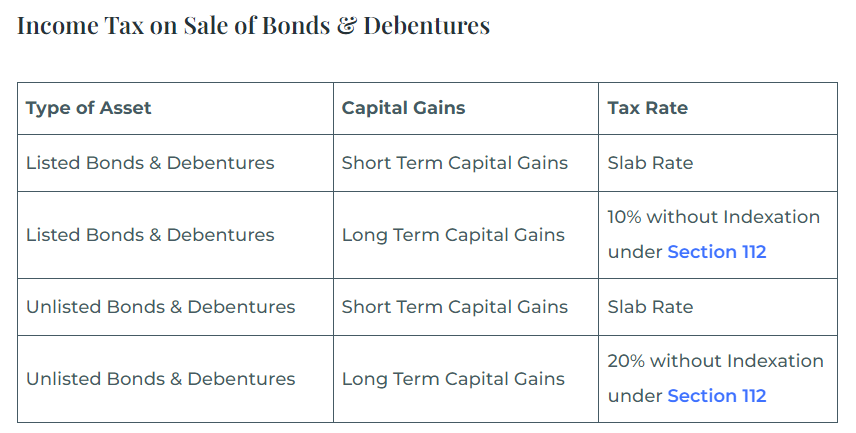
would be that the folks who are willing to sell off the NCD at a premium (INR 1079 for an NCD of face-value INR 1000), are receiving their returns in the form of capital-gains (presumably long-term too as the NCD issue is 5 years old). This enables such folks to get a favorable tax treatment on the returns (20% LTCG tax with indexation compared to being taxed on any interest received as per tax-slab (potentially >35% for HNIs).
(0.8 x 7.9) > (0.65 x 8.9)  !
! 
Apparently, no indexation benefits on listed NCDs. So the note within this expandable section does not apply.
Note: Furthermore, IIUC, applying indexation, one who bought the NCD at issue and sold it today,
would have zero LTCG tax liability on 7.9% gains (1000 —>1079) over 5 years
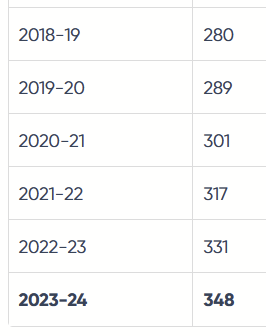
as the CII for these 5 years is around 24% (348/280).
Cost Inflation Index table from 2018 to 2023: