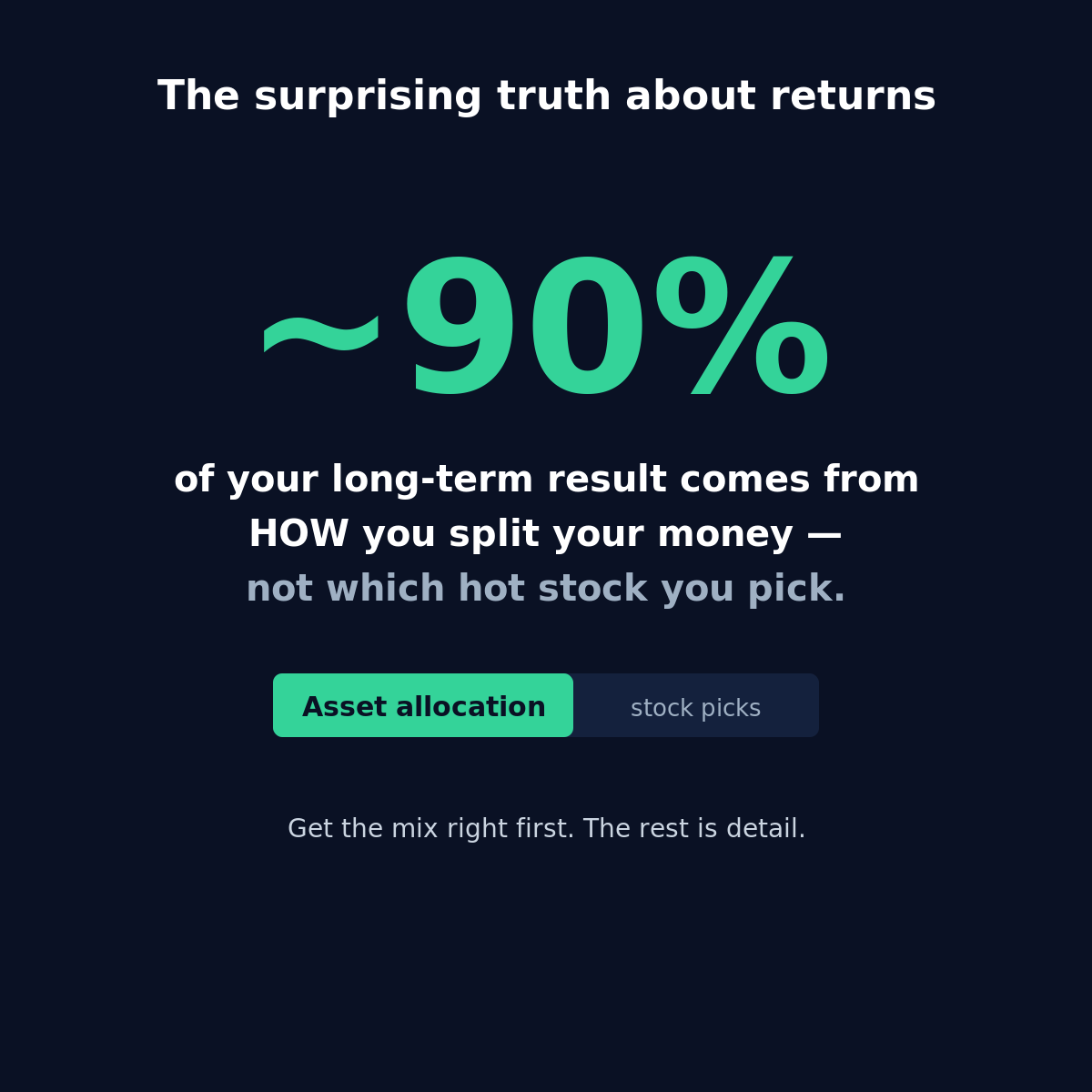
Ask most people what drives their portfolio’s return and they will say stock selection - picking the right winners. Experience (and a lot of research) points somewhere less exciting: your asset allocation - how you split money between equity, debt, and cash - explains most of how your portfolio behaves over time.
Why it matters more than it feels like it should:
- Your equity-vs-debt split decides how hard you get hit in a crash and how much you gain in a rally. That single choice usually swings your outcome more than which large-cap you picked.
-
- It is the one lever you fully control. You cannot control whether a stock beats the market, but you can decide to hold, say, 70/30 and rebalance back to it.
-
- It quietly enforces buy-low-sell-high. Rebalancing to your target trims what has run up and tops up what has lagged - without you predicting anything.
None of this makes stock selection pointless. It just sets the order: first, get your asset mix right for your goals and temperament; then worry about individual names.
- It quietly enforces buy-low-sell-high. Rebalancing to your target trims what has run up and tops up what has lagged - without you predicting anything.
If your portfolio keeps you up at night, the fix is often not a better stock - it is a different allocation.
Curious what splits people here run at different ages or stages?