The U.S. relies heavily on imported generic medicines, with India being one of its largest suppliers. The proposed policy is designed to encourage pharmaceutical companies to manufacture these medicines within the United States instead of importing them.
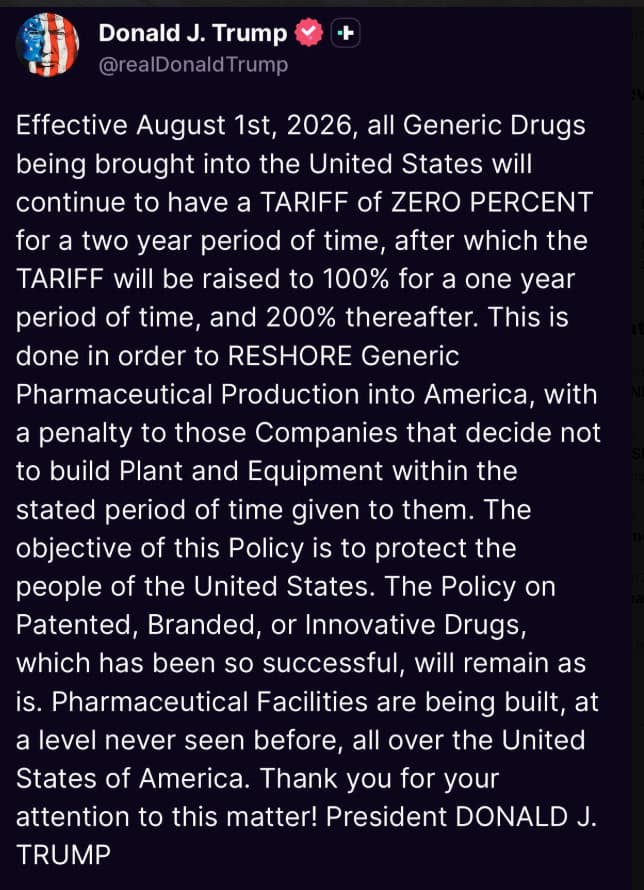
Here’s how it works:
- August 1, 2026 onwards: Generic drug imports into the U.S. would continue to enjoy 0% tariffs for two years, giving companies time to set up manufacturing in the U.S.
- After the two-year window: Companies that continue importing instead of producing in the U.S. would face 100% tariffs for one year, which would then increase to 200% thereafter.
- Patented, branded, and innovative medicines are not covered by this proposal and would continue under the existing policy.
Why is this important?
- The policy aims to reduce U.S. dependence on imported generic medicines, strengthen domestic pharmaceutical manufacturing, and improve supply chain resilience.
- Indian pharmaceutical companies such as Sun Pharma, Dr. Reddy’s, Lupin, Aurobindo Pharma, Cipla, and Zydus derive a meaningful portion of their revenue from U.S. generics. If implemented, companies without significant U.S. manufacturing capacity could face higher costs or pressure to invest in local production.
- For investors, this could be an important development to track, as it may influence the earnings outlook and valuations of pharma companies with significant exposure to the U.S. generic drug market.
In short, the proposal is less about raising revenue through tariffs and more about using tariffs as an incentive for pharmaceutical companies to establish manufacturing facilities in the United States.
