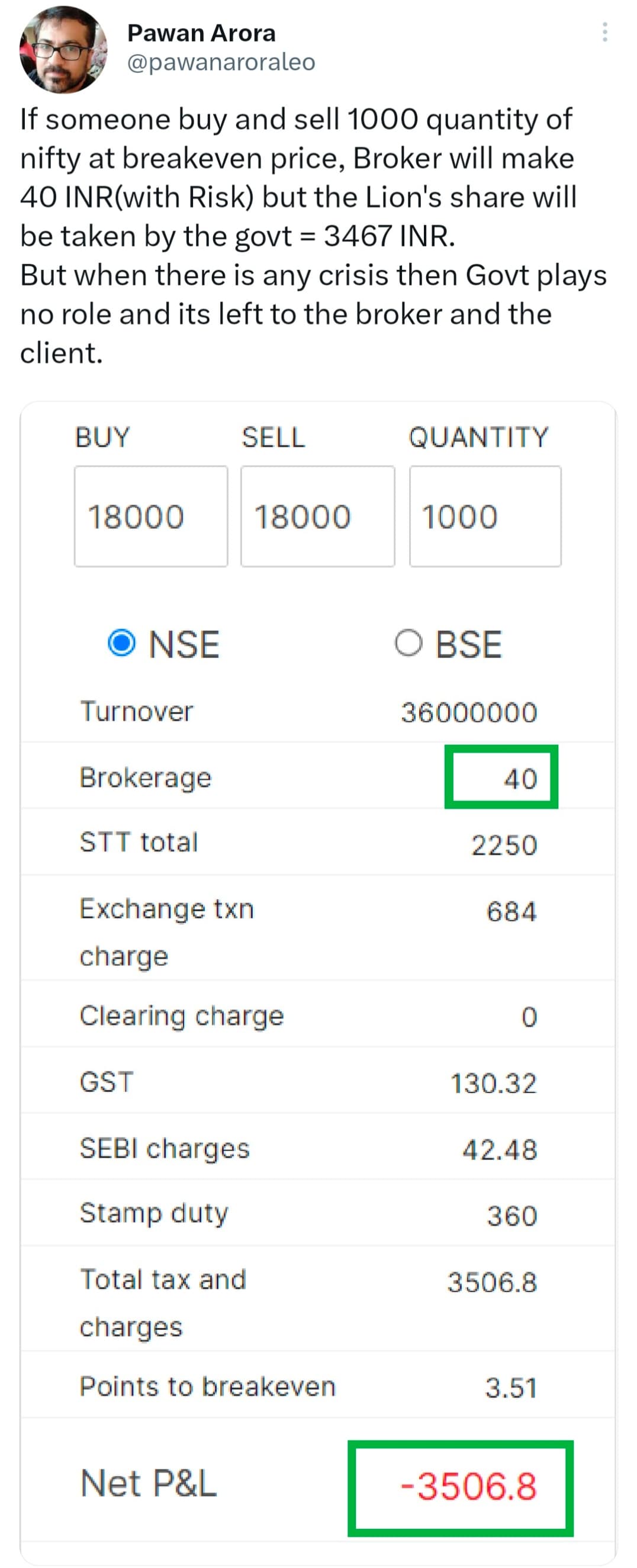
Granted that in profits or losses brokers make money. But atleast one may argue that there is some value they are creating.
What most of us miss is the amounts that we all as traders pay to government especially traders who trade in multiple lots. Other charges are multiple times more than brokerage and the worst part is zero value addition by government.
Note:
This is common with every government. The nature is to exploit wherever they can.
Other than all the extra charges that we pay them, if we are profitable by mistake, we have to pay income tax, capital gains tax and so on…
Happily or sadly that is life. I would be happy if Government didn’t waste the tax payers money on some frivolous stuff and spent it responsibly thinking for long term beneficial of the country and people.
Yeah effective tax rate can easily cross 50% including STT for active traders. To add further insult to injury, we are limited to trading only within the country and so are subject to their whims and have concentrated regulatory risk. We also have reduced options ( esp liquid scrips) to diversify.
Only way out is to make enough and leave country if at some point in future trading becomes not worth it in India ( say STT hiked by too much or say api banned etc). Or invest/trade HTF and be happy with what you get.
ofc, developed markets are also much more competitive, so it wont be an easy transition even if you do that.
F&O is like Cigrette. Cash cow for Government. No matter how much it’s taxed or the Government warns that it’s not good for people, volumes are bound to go up only.
So nobody cares
yeah, basically edge per trade or the margin you have above costs matters too. Esp in tough markets, if we tune it too much towards more trades with lower edge per trade, then system can suffer a lot.
But still STT + slippage takes away a lot of my returns in stocks cash intraday. And high STT probably also = high slippage as liquidity providers also need to make money over costs. Higher timeframe systems will have much less impact from this.
Many things to balance - calmer, returns, edge per trade etc