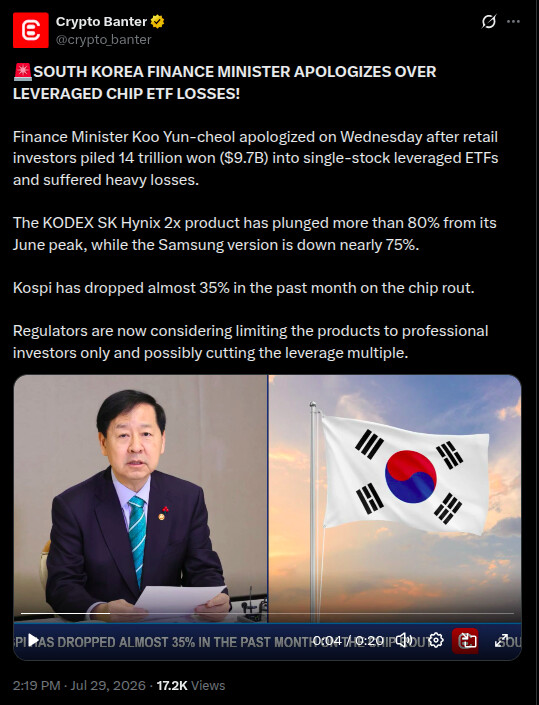
The fallout has been severe:
KODEX SK Hynix 2x ETF: down over 80% from its June peak.
Samsung 2x ETF: down nearly 75%.
The KOSPI has also declined almost 35% over the past month amid the semiconductor sell-off.
In response, regulators are considering restricting these products to professional investors and reducing the maximum leverage allowed.
It’s a pattern we’ve seen before.
During bull markets, financial innovation is often welcomed and leveraged products gain popularity. But when markets turn, the conversation quickly shifts toward investor protection and tighter regulation.
The bigger question is whether this remains a South Korea-specific response, or if other regulators begin taking a closer look at highly leveraged products available to retail investors.
Should regulators step in to limit access to these products, or should investors remain free to take those risks as long as they fully understand them?
Because at the end of the day, leverage doesn’t create losses it simply magnifies both gains and losses.