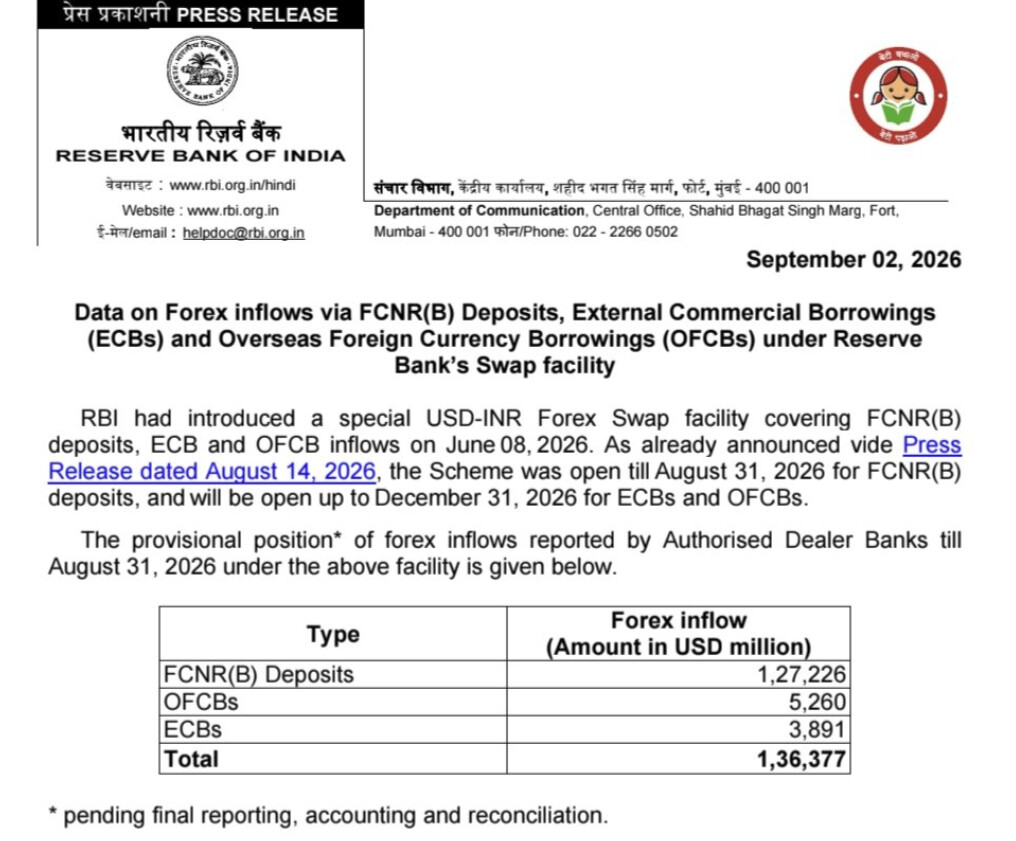
Last week, RBI announced a special FCNR(B) swap facility for banks. While it didn’t get as much attention as other policy measures, it could end up being one of the most important announcements for India’s forex reserves this year.
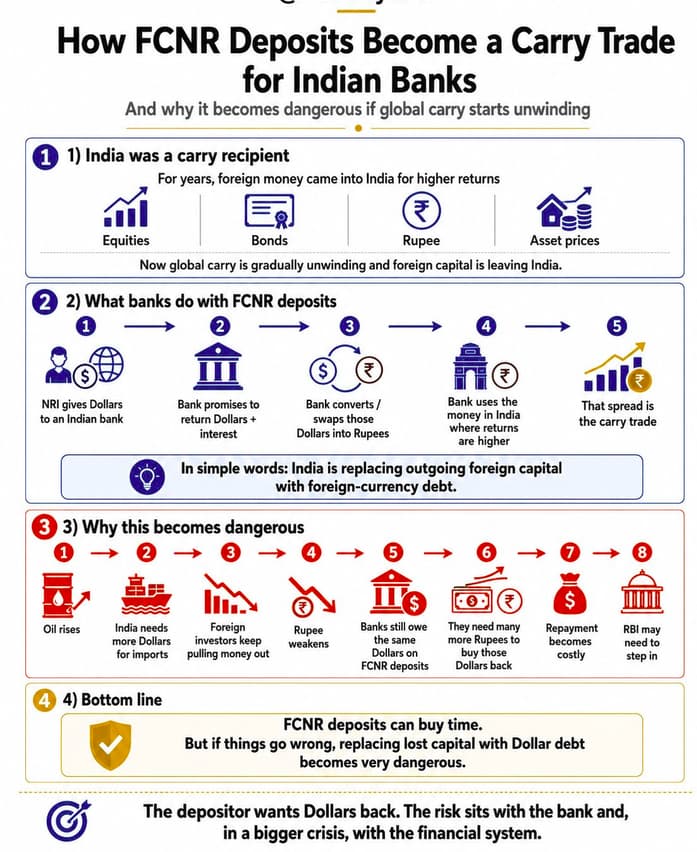
Banks can now raise fresh FCNR(B) deposits from NRIs and swap those dollars with RBI under a special facility. The key benefit is that RBI will absorb the hedging cost, which normally makes these deposits expensive for banks.
Why does this matter?
Because banks can now afford to offer much higher interest rates to NRIs holding US dollars.
For NRIs, the proposition is attractive:
• Higher USD returns than before
• No INR depreciation risk since deposits remain in foreign currency
• Interest is tax-free in India
• Principal and interest are fully repatriable
For India, the objective is simple: attract more foreign currency into the banking system.
Every dollar that comes in through FCNR(B) deposits strengthens forex reserves, improves dollar liquidity, and provides an additional buffer against global uncertainty.
This isn’t the first time RBI has used this strategy.
In 2013, during the taper tantrum, a similar FCNR(B) window helped attract over $30 billion in inflows and played a major role in stabilising the rupee.
The current situation is nowhere near as severe. But the fact that RBI has chosen to bring back the same playbook shows the importance it places on strengthening external sector stability before potential global volatility returns.
Most people will look at this as an NRI deposit scheme.
It’s actually a forex reserves strategy.
And if banks start offering significantly higher FCNR(B) rates over the coming weeks, this could become one of the most attractive USD parking options available to NRIs in 2026.
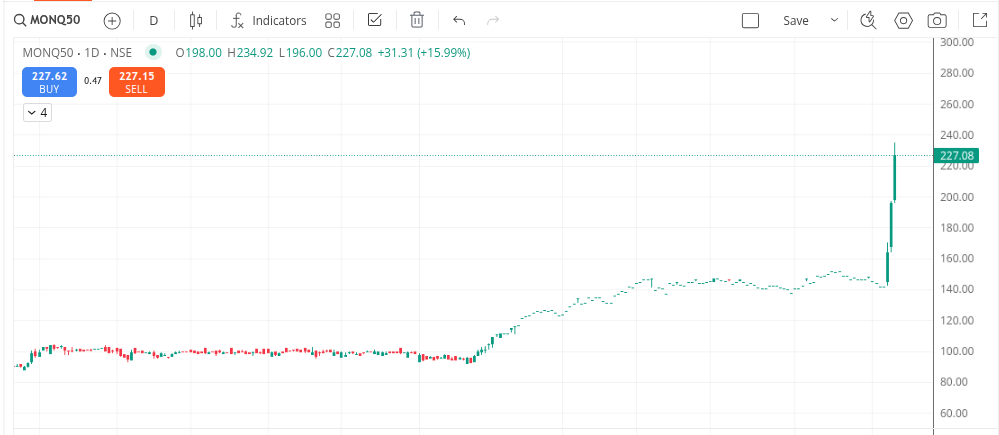
 People have gone all in maybe too